
On a Saturday night in late November 2026, the political landscape of Victoria underwent a seismic shift. For twelve years, the Labor Party had held the reins of the state, governing for much of the last 27 years. But as the votes were tallied, that era came to an abrupt conclusion. The electorate, driven by local frustrations over state debt, infrastructure corruption, and service failures, delivered a decisive electoral drubbing to the incumbent government.

The collapse of the Labor government was not merely a matter of shifting percentages; it was personal for its leadership. Premier Ben Carroll, who had steered the party through its long tenure, saw his own position vanish as he lost his seat in Niddrie. In the wake of the results, Carroll conceded defeat, acknowledging that the public's appetite for change had become insurmountable.
"Victorians have spoken, and their message is clear: they want change," Carroll remarked, accepting responsibility for the party's loss. The scale of the retreat was stark. Labor, which previously held 54 seats, was projected to win far fewer than the 45 seats required to form a government. With a primary vote of just 17 percent, the party found itself sidelined in a state it once considered a bastion.
The Greens emerged as a formidable force in the urban landscape, with some counts suggesting they had won as many as seven seats.
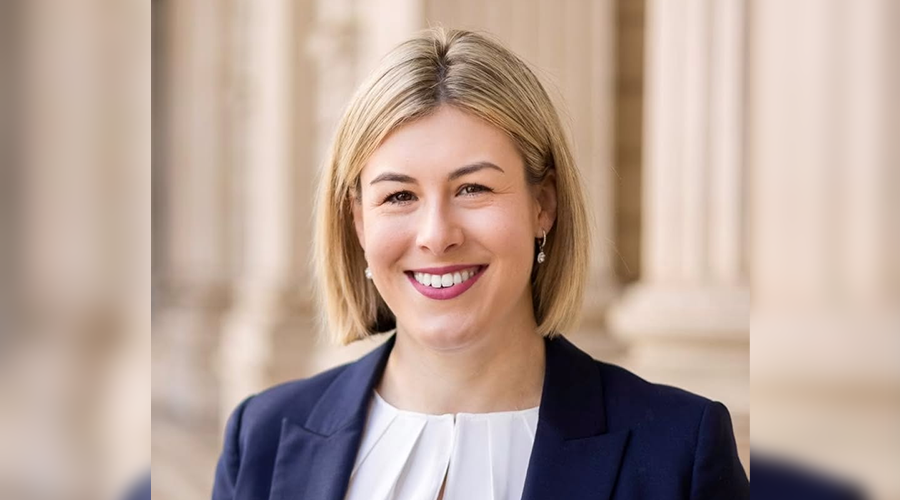
Rising from the wreckage of the Labor era is Jess Wilson, the 36-year-old leader of the Liberal Party. As she prepares to become the 51st Premier of Victoria, Wilson enters the history books not just as a leader, but as a trailblazer. She stands as the youngest leader in the state's history since the Australian Federation and marks the first woman to be elected Premier through a popular vote.
The Liberal-National Coalition, a centre-right alliance, is on track to secure a majority of Victoria's 88 lower-house seats. This victory represents a fundamental realignment of the state's political identity. While the Liberal government secured a 34 percent primary vote, the victory was framed by the sheer scale of Labor's decline and the coalition's ability to capture the momentum of a dissatisfied public.
While the coalition's path to power appeared clear, the night was not without its tremors. The counting process revealed pockets of volatility, with some observers noting that the results were "irregular around the margins." This instability was reflected in the performance of the minor parties, who carved out significant portions of the electorate.
The Greens emerged as a formidable force in the urban landscape, with some counts suggesting they had won as many as seven seats. This surge, contrasted with Labor's projection of winning just two seats, highlights a fracturing of the traditional centre-left vote. As the traditional pillars of the state's politics shifted, the vacuum left by Labor was being filled by diverse ideological interests.
Perhaps the most significant question mark hanging over the election was the role of One Nation. Over the past year, the party has surged in the polls, fueled by rising frustrations regarding immigration, housing costs, and general living standards. On election night, One Nation captured a 21 percent primary vote, a figure that signaled deep-seated discontent.
However, the translation of that popularity into legislative power remained elusive. Despite the high primary vote, the ABC projected that One Nation might win as few as no lower-house seats. This discrepancy suggests a complex psychological state among voters: while there is a heated debate regarding affordability and immigration, many Australians seem more comfortable venting their dissatisfaction through mainstream parties rather than entrusting actual governing power to anti-establishment movements.
The implications of the Victorian result extend far beyond the state's borders, reaching the doorstep of federal Labor. As Anthony Albanese leads the national government, the Victorian outcome serves as a cautionary tale regarding the vulnerability of incumbents. The issues that unseated Ben Carroll—debt, corruption, and service delivery—are the same types of local concerns that can destabilize national leadership.
As the dust settles, the certainty of the new administration is being voiced by those monitoring the tallies. "We’re confident at this point that that number is not going to climb anywhere near enough to see Labor win enough seats to form government," noted Casey Briggs. "We have a Coalition government in Victoria."
Victoria now enters a period of transition under the leadership of Jess Wilson. The mandate is clear, but the landscape is fragmented. The coalition must navigate a parliament where the Greens have gained ground and where a significant portion of the electorate—represented by the One Nation primary vote—feels unheard by the mainstream.
The 12-year Labor tenure has ended, replaced by a historic premiership. Whether this shift represents a return to stability or the beginning of a more volatile political era remains to be seen, but one thing is certain: the Victorian electorate has fundamentally redrawn the map.