
For a brief moment in May 2025, the tech world's eyes were fixed squarely on Taipei. Amid the bustling energy of the Computex exhibition, a dinner was hosted by Jensen Huang, the charismatic chief executive of tech giant Nvidia. It was a gathering typical of the industry's upper echelons, bringing together prominent figures against a backdrop of soaring artificial intelligence ambitions and cutting-edge hardware. But the celebratory atmosphere of that dinner party would eventually collide with a geopolitical storm of extraordinary proportions, drawing in intelligence agencies from across the Pacific and forcing governments to re-examine the very mechanisms of international travel and corporate access.
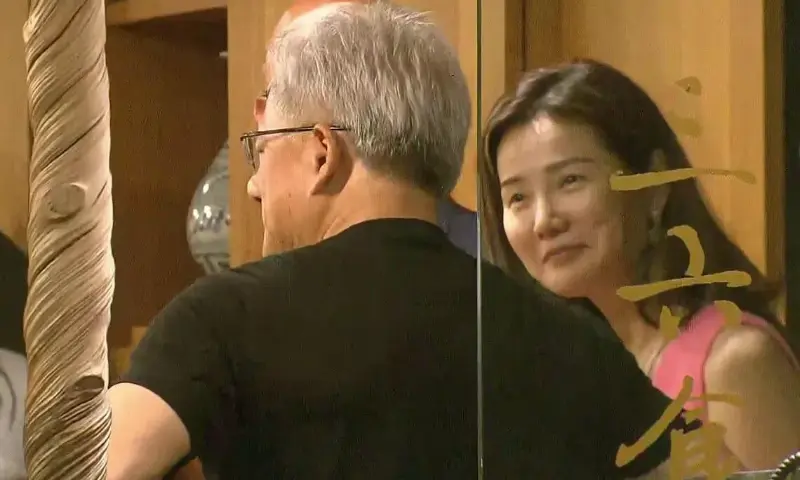
Months after that celebratory evening, the corporate world was rocked by revelations that reached the highest levels of Silicon Valley. Following disclosures regarding the affair, the Nvidia board confirmed it was opening an investigation into CEO Jensen Huang, responding to a controversy that quickly spiralled beyond a mere boardroom scandal. At the heart of the uproar was Alice Huang, a Chinese businesswoman and former executive whom US intelligence officials suspected of working for Chinese intelligence. US investigators came to believe that Alice Huang had leveraged her access within the corporate sphere to spy for Beijing, specifically transferring sensitive Nvidia chips to China. These allegations transformed a private relationship into an international security threat, prompting both Nvidia and the FBI to launch parallel investigations into the affair.
As the allegations began to mount, attention turned sharply toward how Alice Huang moved across borders. Taiwan's National Immigration Agency and its emergency immigration agency officially confirmed a critical piece of the puzzle: Alice Huang had entered Taiwan using a Hong Kong passport. The revelation exposed vulnerabilities in regional travel protocols, demonstrating how a Chinese national accused of espionage could navigate administrative boundaries through alternative documentation. Taiwanese officials quickly moved to assert that they were tracking the movements closely. Lin Horng-en, speaking for the authorities, emphasized the extent of their oversight, stating that "our government's relevant agencies are fully informed of the relevant records and information" and adding that "we were aware of all her relevant entry and exit records."
Liu Shyh-fang noted that Alice Huang "did indeed enter the country, but she is currently overseas.
The confirmation of the Hong Kong passport touched off immediate political and administrative fallout in Taipei. Taiwanese Interior Minister Liu Shyh-fang addressed the public to clarify the government's stance and actions, acknowledging both the entry and the urgency of the response. Liu Shyh-fang noted that Alice Huang "did indeed enter the country, but she is currently overseas." Seeking to reassure a public rattled by the security lapse, the interior minister insisted that "if we had known she was a spy, we certainly would not have let her enter Taiwan." The episode forced a frank reckoning within the island's security architecture, prompting a comprehensive internal review.
With the security apparatus now on high alert, the Taiwanese government moved swiftly to neutralize any immediate threat posed by the accused former executive. Liu Shyh-fang outlined the specific administrative countermeasures taken by the state, confirming that as far as authorities understood, "this Ms Huang has had her permit revoked, meaning it is impossible for her to enter Taiwan again." Reiterating this finality, Liu Shyh-fang stressed that her permit had been formally rescinded, "meaning it is impossible for her to enter Taiwan again." Alongside the revocation, the interior minister detailed plans to overhaul defensive protocols, stating, "We will review our procedures, specifically our pre-screening, interim spot checks and interviews, and post-visit measures."
While investigations unfolded across corporate boardrooms in the United States and government offices in Taiwan, Beijing forcefully rejected the narrative being constructed by Western and Taiwanese officials. China formally denied the espionage allegations leveled against Alice Huang, dismissing the claims of intelligence gathering and chip transfers as unfounded. These denials did little to stem the widening ripples of the scandal, which continued to entangle Singapore-based Megaspeed alongside Nvidia as investigators probed the intricate supply chains and personal connections that bridged the gap between global technology giants and foreign intelligence concerns.
The convergence of corporate governance, cross-border travel, and superpower rivalry leaves the international tech landscape in an unprecedented position. With Nvidia's board actively investigating its chief executive, the FBI reviewing the transfer of advanced semiconductors, and Taiwan scrambling to tighten its immigration pre-screening procedures, the affair serves as a stark reminder of the fragile intersection between commerce and national security. Though Alice Huang remains safely overseas and Beijing continues to reject every accusation, the investigations set in motion across multiple continents are reshaping how governments and corporations monitor the flow of both high-end silicon and high-level access.