
In the high-stakes theater of Indian politics, the distance between a diplomatic summit and a historical grievance is often much shorter than it appears. On November 21, 2026, that distance collapsed. What began as a critique of contemporary foreign policy by Rahul Gandhi quickly transformed into a sweeping indictment of the Congress party’s entire legacy, sparking a confrontation that reached back decades to the very foundations of the modern Indian state.

The friction ignited during the discussions surrounding an APEC summit, a venue where the world's most powerful leaders converge to shape the global order. The specific catalyst was a trilateral meeting involving Donald Trump, Xi Jinping, and Vladimir Putin. For Rahul Gandhi, the absence of an Indian Prime Minister from such a high-level gathering was not merely a diplomatic footnote, but a symptom of diminished national influence.
Gandhi’s critique was pointed and personal, directed at the current administration's standing in the international community. He suggested that the current leadership lacked the necessary leverage to command respect among the world's titans. "If Congress were in power, the Prime Minister of India would have been sitting at this table," Gandhi remarked, framing the current administration's position as one of weakness. He went further, characterizing the current leadership with a stinging label, suggesting that "a compromised Prime Minister can never sit at this table."
To the government, the current criticisms of leadership are hollow if the party cannot account for the perceived failures of its own past.
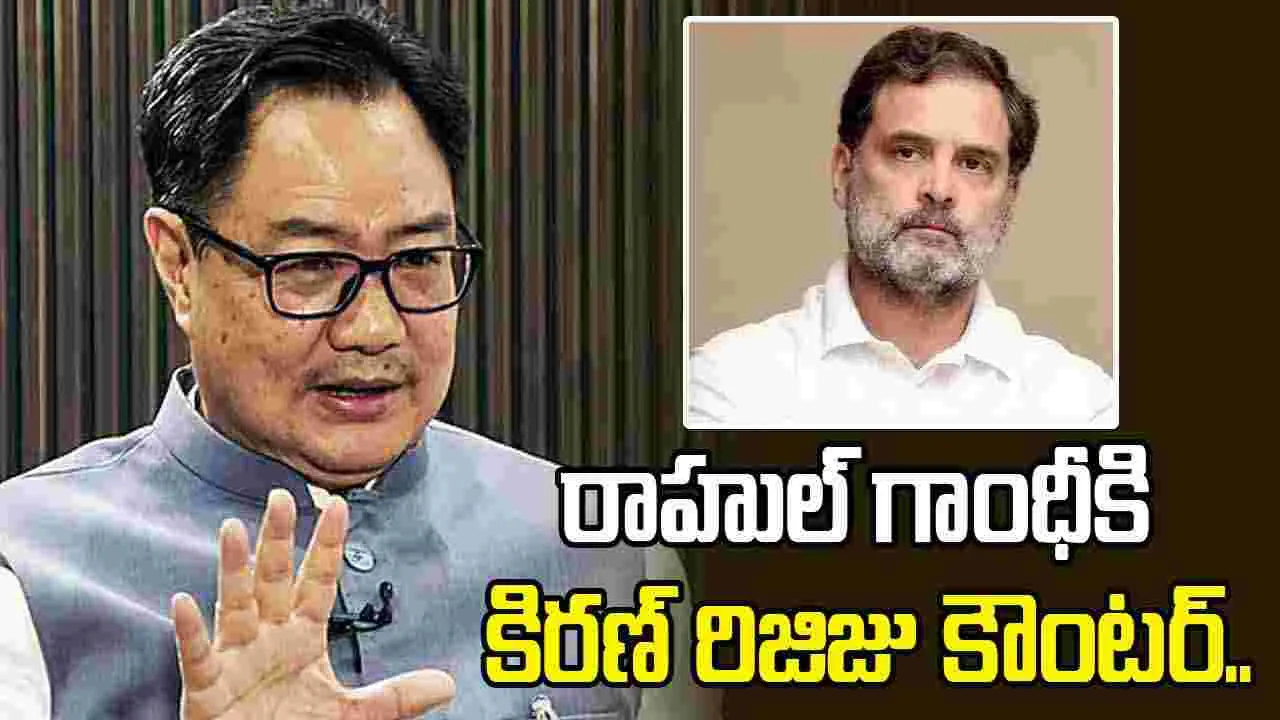
The response from the ruling government was swift and designed to shift the battlefield from the future of diplomacy to the failures of the past. Kiren Rijiju, the Parliamentary Affairs Minister, took to the social media platform X to launch a verbal counter-offensive. Rather than debating the specifics of the APEC summit, Rijiju chose to challenge the Congress party on four fundamental pillars of its historical record.
By posing these questions, Rijiju sought to reframe the narrative: if the Congress party was concerned with India's stature today, why had it, in his view, spent decades undermining that very stature? The minister's questions were not merely rhetorical; they were intended to force a reckoning with the eras of Congress rule, turning the spotlight away from the current Prime Minister and back onto the ghosts of the party's own history.
Among the questions posed by Rijiju was a direct reference to one of the most painful chapters in India's post-independence history: the war of 1962. For the government, this was not just a military conflict, but a moment of profound national vulnerability. Rijiju asked, "Will Congress apologize for the 1962 insult?"
By invoking 1962, the minister tapped into a deep-seated collective memory of a time when India's borders and its perceived strength were tested. It served as a reminder that the debate over India's strength is not a new one, and that the scars of past conflicts continue to inform the political arguments of the present. To the government, the current criticisms of leadership are hollow if the party cannot account for the perceived failures of its own past.
Beyond the battlefield, Rijiju turned his attention to the socioeconomic identity of the nation under previous administrations. He questioned why the Congress party had allowed India to be characterized by such disparaging terms, asking why the country was once referred to as a "land of snake catchers." This was a challenge to the dignity of the nation, suggesting that the Congress era was defined by a lack of global respect and a failure to project a modern, sophisticated image of India.
This critique of identity was paired with a critique of economic trajectory. Rijiju pointed to the era of poverty that he claims the Congress party maintained, asking, "Why did Congress keep India as a poor nation?" This line of questioning seeks to contrast the current economic ambitions of the country with a past that Rijiju characterizes as one of stagnation and missed opportunities.
Even the terminology used to describe India's progress became a point of contention. Rijiju highlighted a specific linguistic friction, asking why India's economic growth had been insulted by being labeled as the "Hindu growth rate." This reference strikes at the heart of how economic success is perceived and communicated, suggesting that the Congress party used dismissive or culturally charged language to undermine the country's developmental achievements.
By bringing this up, the minister aimed to paint the Congress party as one that has, at various times, been at odds with the very idea of Indian progress, using labels that he argues serve to diminish the nation's hard-won economic gains.
The confrontation has moved beyond the halls of Parliament and into the digital and global sphere. Rijiju’s rebuttal was not just a defense of Prime Minister Narendra Modi, but a demand for a certain standard of conduct from the opposition. He emphasized that the criticisms leveled by Gandhi should not be made against the nation, regardless of where the speaker is located.
"Whether Rahul Gandhi is in the country or abroad, he should not make statements against India," Rijiju stated. This closing sentiment underscores the current political climate: a struggle where the definition of national interest is fiercely contested, and where every comment on the global stage is met with a historical counter-argument designed to protect the image of the state.