
In the rolling hills of Manipur, where communities have coexisted for generations, a fundamental question of governance hangs in the balance: how do you count a population when thousands have been displaced from their homes? This is the dilemma facing India as it prepares for its decennial census, with the Manipur High Court stepping in to pause the count in the troubled northeastern state until April 30, 2027. The court's November 4 order, issued by a division bench led by Chief Justice M Sundar and Justice A Guneshwar Sharma, reflects a profound challenge in one of India's most complex regions.
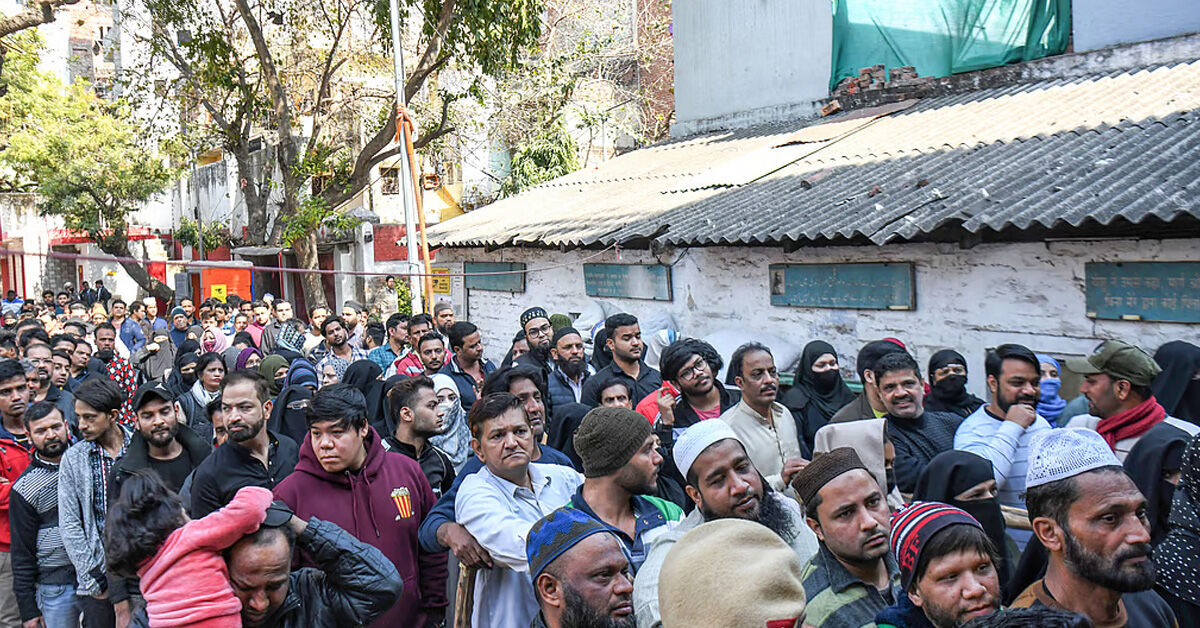
At its core, the census is a cornerstone of democratic governance—a complete count of every resident that determines political representation, allocation of resources, and planning for the future. The census is an extraordinary logistical undertaking that happens once a decade.
The pause came in response to a public interest litigation filed by two organizations deeply embedded in Manipur's social fabric: the Kangleipak Students' Association (KSA) and the International Peace and Social Advancement (IPSA). These petitioners raised a fundamental concern: conducting a census amid widespread displacement caused by ethnic violence would produce skewed results that fail to reflect the true population distribution. Their argument strikes at the heart of democratic representation—if the census doesn't accurately count people where they actually live, political power and resources could be misallocated for the next decade.
On August 31, 2025, the Centre had already informed the court that house-listing operations for Census 2027 in Manipur had been deferred.
The Manipur High Court didn't simply accept or reject the petitioners' concerns but charted a middle path. While acknowledging the constitutional importance of conducting a census, the court recognized the exceptional circumstances in Manipur. The judges directed that the Registrar General and Census Commissioner of India examine seven specific representations before proceeding with any census operations in the state. This approach allows the government to address legitimate concerns while ultimately fulfilling its constitutional duty to count the population.
The representations before the court outline specific measures to ensure the census reflects reality rather than displacement. These include postponing the census until the National Register of Citizens (NRC) is updated, recording the original residences of displaced persons rather than their current locations, and deploying independent monitors to ensure accuracy. Such measures would help prevent the census from becoming a snapshot of displacement rather than a true reflection of population distribution—a critical distinction for democratic representation.
The court's order builds on earlier actions by both the central and state governments. On August 31, 2025, the Centre had already informed the court that house-listing operations for Census 2027 in Manipur had been deferred. This deferral reflected recognition that the volatile situation in the state made standard census procedures impossible. The state legislature had also passed resolutions on August 5, 2022, and March 1, 2024, seeking implementation of the NRC, indicating a persistent concern about demographic questions in the region.

Manipur Census to remain suspended till April 2027, rules High Court || And neither Modi nor Shah care for Manipur. https://t.co/sMNZg5BthH
As the census deadline approaches, Manipur finds itself in a delicate position. The court's order provides breathing room until April 2027, but the underlying tensions remain unresolved. The challenge is to conduct a census that is both constitutionally mandated and practically feasible in a region where communities have been fractured and displaced. The outcome will not only determine political representation for the next decade but also send a message about how India governs its most troubled regions. In the meantime, thousands of displaced Manipuris wait, hoping that when the count finally happens, it will see them not as statistics but as citizens deserving of accurate representation.
