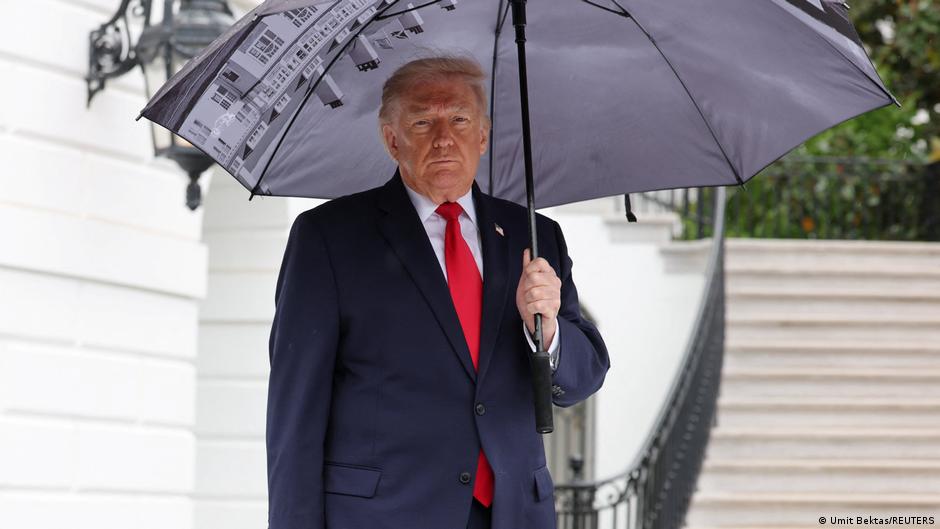
The image of American military power is rarely conveyed with such blunt, specific menace. In a recent interview, President Donald Trump did not speak in vague terms of national security or regional stability. Instead, he described a force arrayed against Iran that is both immense and terrifyingly precise. "I've got three aircraft carriers here, They're fully locked and loaded," Trump stated, a phrase that carries the weight of a countdown. This isn't just a show of force; it is a declaration of readiness. The military has identified 38 bridges across Iran as targets that could be destroyed in "literally one hour." The implication is stark: the capacity to dismantle a nation's infrastructure is not a theoretical possibility, but a logistical certainty. This display of force serves as the backdrop to a diplomatic conversation that is happening at the very same time. The United States is not merely posturing; it is preparing to execute a plan that would fundamentally alter the Iranian landscape, all while offering a path out of the conflict.

To understand the gravity of this moment, one must look back to the origins of the war. The current state of affairs did not begin with a sudden diplomatic breakdown, but with a military escalation. The conflict began after Israel's 'preemptive strike'. This decision marked the beginning of a conflict that has now dragged on for eight months. The war has been a test of wills and resources, with both sides suffering the consequences of open hostilities. For the United States, the conflict has had domestic repercussions, contributing to Republican losses in midterm elections. For Iran, the toll has been equally heavy, though the narrative of their suffering differs from that of their adversaries. While the Trump administration claims Tehran is "withering away financially," Tehran maintains its military capabilities, including a partial blockade of the Strait of Hormuz and the ongoing support of Houthi rebels targeting high-profile sites in Riyadh. The war has created a stalemate, a grinding conflict that neither side seems eager to end, but neither seems capable of winning outright.

Trump and Rubio send mixed signals on Iran Trump says it’s “highly unlikely” he’ll order the US back to war with Iran if talks keep making progress. Secretary of State Marco Rubio struck a different tone, calling the talks “not productive” and Iran’s demands “simply unacceptable” and, in some cases, “outrageous” and “ridiculous.”
Amidst the military posturing, there was a brief window of hope. A diplomatic memorandum was signed in Islamabad in June. This document was intended to be a framework for peace, a way to de-escalate tensions and move toward a resolution. However, the diplomatic process was fragile from the start. The memorandum expired in August, and with it, the chance for a peaceful resolution. The breakdown of these talks has left the two nations in a precarious position, with no clear path forward. The failure of the diplomatic effort has only served to reinforce the military reality on the ground. With no agreement in place, the threat of renewed hostilities looms large, and the military options that Trump described remain on the table.
This suggests that Iran is still digesting the political changes in Washington.
The current stalemate is not just a military or diplomatic impasse; it is a logistical one. Iranian Foreign Minister Abbas Araghchi has noted that mediators have not traveled since the Tuesday elections. This suggests that Iran is still digesting the political changes in Washington. The election results have created a new dynamic, one that is still being understood by Tehran. The delay in mediation efforts indicates that both sides are waiting for the other to make a move, to signal their intentions. It is a game of chicken, played with the lives of millions at stake. The United States is ready to strike, but is waiting for a sign that Iran is willing to negotiate. Iran is holding its position, waiting to see if the new political landscape in Washington will lead to a change in strategy.

BREAKING: US Secretary of State Marco Rubio says talks with Iran have been highly unproductive and that Iran's demands are "simply not just unacceptable, but in some cases outrageous and ridiculous and really not realistic." "I don't have any progress to report to you," he says. It is the first time Rubio has said the talks are unproductive since the war began. Trump said hours earlier it is "highly unlikely" he will order the US back to war "if talks continue to progress."
In the midst of this standoff, President Trump has offered a way out. Speaking to CNN, he stated that further military strikes are "highly unlikely" provided Iran signs a "very strong agreement." The president's message is clear: the United States is willing to de-escalate, but only if Iran is willing to meet the terms of a comprehensive deal. This is a high-stakes gamble. The United States is betting that Iran is desperate for a deal, that the financial strain of the war has become too much to bear. Trump claims that Iran is "withering away financially," a narrative that Tehran rejects. But the president's confidence is palpable. "I hit them so hard. You don't know how hard I hit them," he said, suggesting that the pressure is already having an effect. The question now is whether Iran will accept the terms of this agreement, or if the military threat will remain the primary driver of policy.
The situation remains fluid, a delicate balance of power and persuasion. The United States has the military might to inflict immense damage, but it also has the diplomatic tools to seek a peaceful resolution. The choice between these two paths will define the coming months. The 38 bridges targeted for destruction are a constant reminder of the cost of failure. But the promise of a "very strong agreement" offers a chance for a different outcome. As the world watches, the United States and Iran stand at a crossroads, with the fate of the region hanging in the balance.