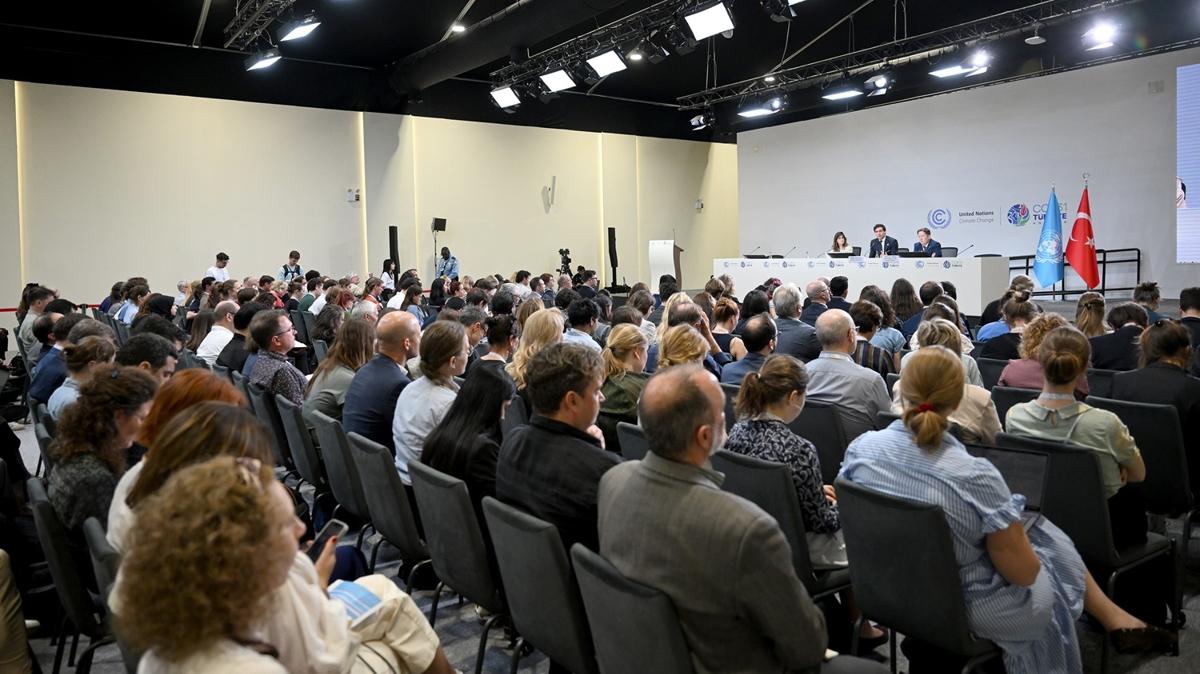
In the coastal city of Antalya, the 31st UN Climate Change Conference, known as COP31, has entered its second week of high-stakes diplomacy. With representatives from over 160 countries gathered under one roof, the atmosphere is one of intense negotiation, focused on the urgent task of accelerating climate action. While the summit covers a vast array of environmental challenges, the conversation has recently crystallized around a specific, ambitious proposal brought forward by the Turkish presidency: the '35x35' electrification target.
The logic behind the 35x35 initiative is rooted in a fundamental shift in how the world consumes power. Currently, electricity accounts for only 22 percent of global final energy consumption. This figure represents a reliance on older, often carbon-intensive energy sources that the international community is struggling to move away from. Turkey’s proposal is straightforward in its ambition: to raise that share of electricity to 35 percent by the year 2035. By increasing the electrification of the global economy, the initiative aims to facilitate a faster transition to clean energy, directly supporting the broader, critical goal of limiting global warming to 1.5 degrees Celsius above pre-industrial levels.
The momentum behind this target has been swift. By November 18 at 09:30 Turkey time, the initiative had secured formal support from 75 countries. This coalition represents a diverse cross-section of the international community, including major economies like Germany, the UK, Japan, Canada, and South Korea, as well as nations such as Norway, Spain, Denmark, and Kyrgyzstan. The European Union has also officially confirmed its backing, adding significant weight to the effort. Notably, Australia, serving as the COP31 Negotiating Chair, was among the very first signatories to the commitment, signaling early and decisive support for the path forward.
By November 18 at 09:30 Turkey time, the initiative had secured formal support from 75 countries.
It is not only national governments that are aligning behind this goal. The 35x35 target has also garnered the endorsement of 94 organizations from the business world and civil society. This broad support suggests that the push for electrification is being viewed as a necessary evolution by both the public and private sectors. These organizations recognize that meeting this target is not merely a government mandate, but a structural shift that requires the cooperation of industry and civil society to succeed.
This new initiative does not exist in a vacuum; it is designed to build upon the momentum generated by previous climate summits, specifically the commitments made at COP28. By focusing on increasing renewable energy capacity and improving energy efficiency, the 35x35 target acts as a practical mechanism to turn those earlier, high-level agreements into a measurable, time-bound reality. As the delegates in Antalya continue their work, the 35x35 target stands as a defining feature of the conference, offering a clear, quantifiable benchmark for what a successful clean energy transition might look like in the coming decade.