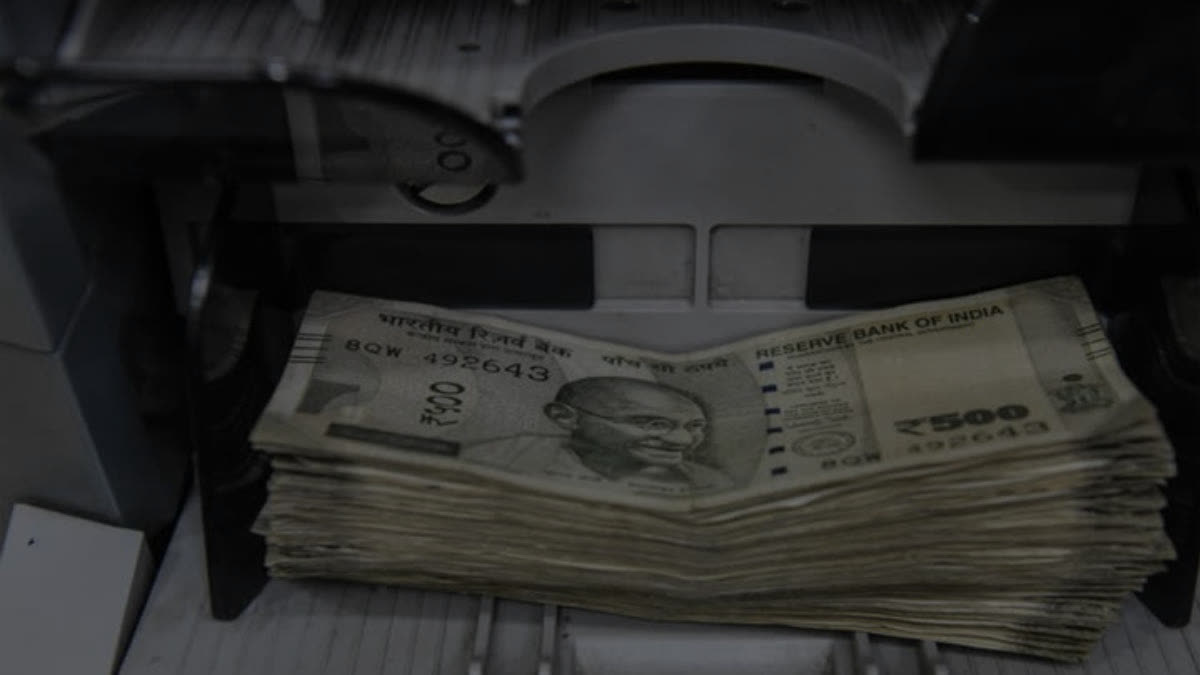
For many investors watching the financial markets, the opening bell of a trading day sets the tone for the next eight hours. On a recent Friday morning in Mumbai, that tone was set by a quiet but significant slide in the value of the Indian rupee. The currency, which serves as the backbone of India's global trade, plunged 24 paise against the US dollar, closing early trade at 92.62. It was a dip that was a reaction to shifting winds in global energy markets.

To understand why a currency move of 24 paise is a headline, one must first look at the price of oil. India is a massive importer of crude, meaning that when the cost of that essential fuel rises, the rupee becomes weaker. This time, the pressure was applied by Brent crude, the international benchmark for oil prices. Reports emerged of vessels being targeted in the Strait of Hormuz, a narrow waterway in the Persian Gulf through which a significant portion of the world's oil passes. This geopolitical tension caused the price of Brent crude to breach the psychological threshold of USD 95 per barrel. By the time the markets opened in Asia, it was trading at USD 96.46 per barrel. For emerging markets like India, higher oil prices are a direct drain on their reserves, prompting an immediate adjustment in currency valuations.
While the rupee took a hit from abroad, domestic mood in India was equally subdued. Equity markets in Mumbai, specifically the Sensex and the Nifty, saw a broad retreat. The Sensex, a weighted index of the 30 largest companies on the BSE, fell by 350.25 points to settle at 83,978.34. The Nifty, its counterpart on the NSE, dropped by 79.05 points. When investors see the stock market falling, they often sell their domestic currency, as a falling market suggests economic friction. This 'subdued sentiment' meant that the rupee was being pushed down from two fronts: the expensive cost of imported oil and the nervousness of domestic traders.
On the previous day, Thursday, Foreign Institutional Investors (FIIs) had purchased Indian equities worth Rs 5,843.
However, the story of that Friday morning is not just about the decline. The fall was capped, and the rupee did not slide into a steeper drop, thanks to the unwavering support of global institutional investors. In financial markets, the movement of large blocks of money is often called 'flows.' In this case, the flows were flowing in. On the previous day, Thursday, Foreign Institutional Investors (FIIs) had purchased Indian equities worth Rs 5,843.33 crore on a net basis. This steady buying created a floor under the currency, absorbing the shock of the oil spike and preventing a more severe depreciation.
While the morning drop made for urgent news, stepping back to view the broader fiscal year paints a much more optimistic picture. Despite the volatility of late 2026, the rupee has performed better than its regional peers. The currency previously reached a record low of 96.88 on October 8, a moment of maximum weakness that had rattled markets.
From that bottom, the rupee has executed a remarkable comeback. It has recovered nearly 5 percent of its value since that all-time low. This means that while it may have slipped 24 paise in a single morning, the overarching trend of the year has been one of strengthening. As a result, the Indian currency has emerged as the best-performing among all Asian currencies this year.
As the trading session progresses, the tug-of-war between the rising cost of oil and the inflow of foreign funds continues. For the average citizen, the exchange rate matters because it dictates how expensive imported goods will be. For businesses, it affects the cost of imported machinery and raw materials. But for the financial world, the 92.62 mark is a snapshot of a complex equation: a nation navigating a tense geopolitical landscape while maintaining the faith of its global investors. The rupee may be down for the day, but its position as the strongest in Asia suggests that the underlying story is one of endurance rather than decline.