
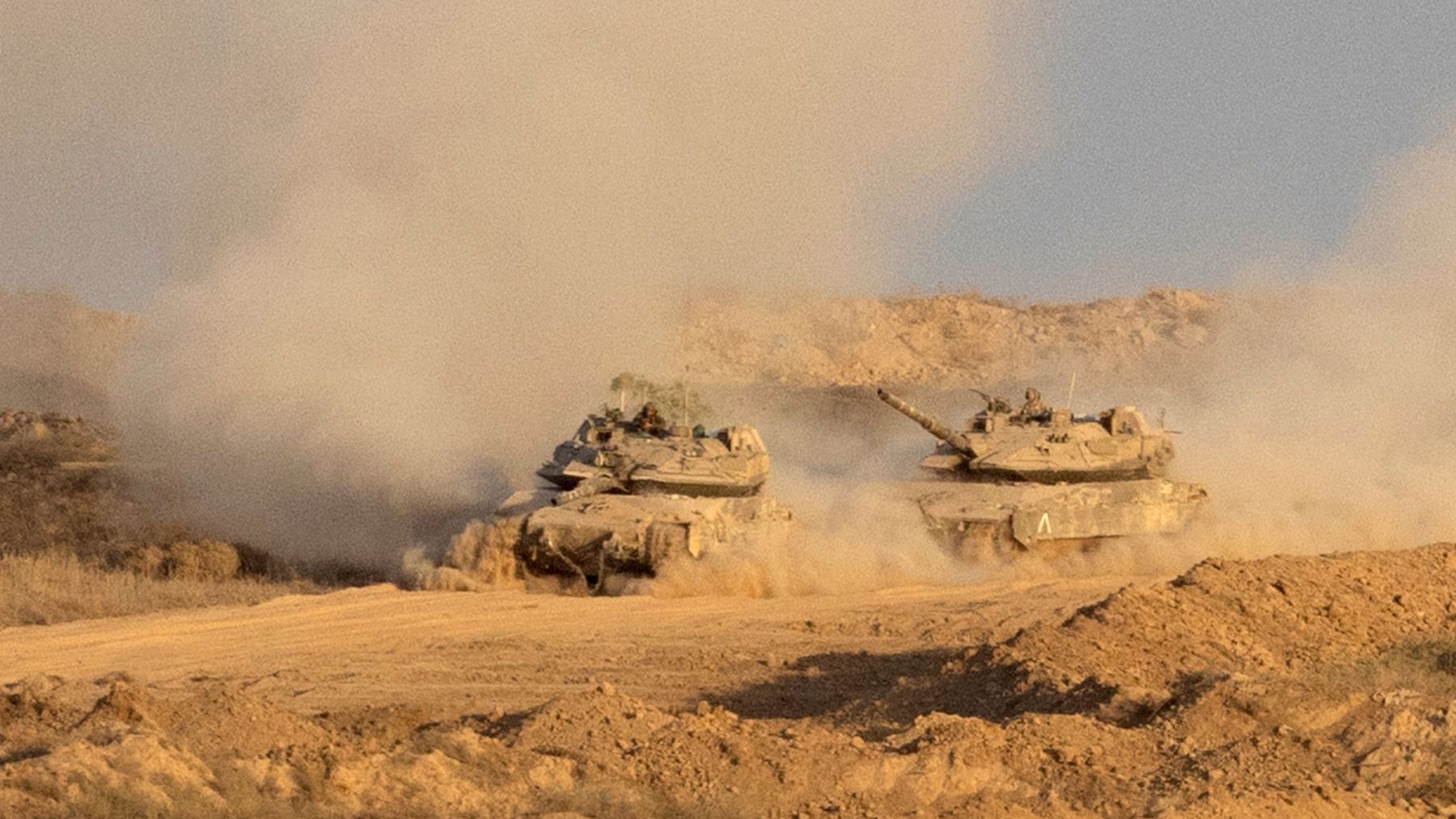
For over a year, a tenuous stillness has defined much of the Gaza Strip. Since October 2025, a ceasefire brokered by U.S. President Donald Trump has held the line, providing a reprieve from the severe fighting that had previously devastated the region. But on Wednesday, that stillness was shattered by the heavy rumble of treads. Israeli military tanks advanced into a central area of the Gaza Strip controlled by Hamas, marking the first ground operation in this sector since the agreement took effect.

To understand the gravity of this movement, one must understand the 'Yellow Line.' This boundary delineates the two-thirds of the Gaza Strip that has remained under Israeli control despite the official ceasefire. For thirteen months, this line has served as a de facto border, a zone of separation intended to maintain the peace. On Wednesday, however, witnesses observed tanks entering the main Salah a-Din road, pushing west of this boundary and into territory previously considered off-limits to active ground incursions.
By breaching this 'yellow zone,' the Israel Defense Forces (IDF) have moved into territory that has been under Hamas control since the ceasefire began. The movement represents a significant shift in the landscape of the conflict, moving from a state of managed tension back into active military engagement in the heart of the Strip.
The breach has immediately ignited a war of words between the combatants.
While the movement of heavy armor is visible on the surface, the true target of this operation lies beneath it. The Israeli army has reported that the mission is specifically aimed at Hamas infrastructure. According to the Israeli military, the operation targets a terror tunnel that poses a direct threat to Israeli soldiers. In the complex geography of Gaza, these subterranean networks are more than just passages; they are strategic assets that can bypass surface boundaries and threaten security forces unexpectedly.
The IDF confirmed that their troops are attacking Hamas infrastructure located outside their current deployment zones. The stated intent is singular and blunt: to "eliminate threats." This tactical decision to strike outside established zones suggests that the Israeli military perceives a rising danger that the existing ceasefire framework is no longer sufficient to contain.

Israeli tanks have pushed into central Gaza in the first ground operation since the October 2025 ceasefire. Forces crossed the “Yellow Line” separating Israeli- and Hamas-controlled areas, advancing along the main Salahudeen road into territory Israel had withdrawn from under the truce, residents say. The Israeli military says it is targeting “Hamas infrastructure.” Dozens of displaced Palestinians fled their tents and shelters. Palestinian medics say at least one person was killed in an Israeli airstrike near the raid. Hamas called it a ceasefire violation and a “dangerous escalation.” The operation comes as the US-backed Board of Peace overseeing the truce warns that both Israel and Hamas are failing to meet their commitments. Gaza health authorities say at least 1,600 Palestinians have been killed since the ceasefire began. Israel says five of its soldiers have been killed in that time.
As the tanks rolled forward, a sense of uncertainty permeated the military command. Despite the operation being underway, multiple sources within the IDF refused to provide a detailed explanation as to why this specific incursion is happening at this exact moment. This lack of clarity has left observers questioning the timing and the broader strategic calculus behind the move.
This silence extends to the international stage as well. The Jerusalem Post has reported that it remains unclear whether the United States was notified of the incursion in advance. In a conflict where international coordination is often a prerequisite for stability, the question of whether Washington was briefed adds a layer of diplomatic tension to the physical movement of troops on the ground.
The breach has immediately ignited a war of words between the combatants. Hamas has been quick to condemn the move, accusing Israel of escalating tensions and violating the terms of the ceasefire. From the perspective of Hamas, the movement of tanks into central Gaza is a direct transgression of the peace established in late 2025.
Conversely, the Israeli military maintains that the responsibility for the breakdown lies elsewhere, claiming that Hamas has rearmed. This disagreement highlights the fundamental instability of the current peace; while the ceasefire ended the most severe fighting, it did not completely halt attacks or the buildup of capabilities. The two sides remain locked in a cycle of accusation, where one side's security necessity is the other's violation of peace.

Israeli forces launch ground operations beyond Gaza ceasefire line #Gazal #Israel #Hamas #ceasefire https://t.co/I0P6dklNKW
This latest escalation occurs against a backdrop of staggering human loss that has defined the region for years. The numbers surrounding the conflict are immense. During the initial Israeli offensive, 74,000 people were killed in Gaza. Since the ceasefire began, the toll has continued to climb, with 1,600 Palestinians killed. On the Israeli side, the conflict has claimed the lives of 1,200 people during the Hamas attack on Israel and 5 Israeli soldiers since the ceasefire.
As the tanks continue their advance into the central Gaza Strip, the fragile equilibrium established in October 2025 appears increasingly precarious. What began as a mission to dismantle a single tunnel may well signal a broader shift in the conflict, as the boundaries that once defined the peace are once again being redrawn by force.