
In the modern era, the invisible architecture of digital connectivity is often taken for granted—until it vanishes. Recently, a series of widespread service disruptions swept across the United States, leaving users and security experts alike staring at blank screens. The outages were not localized or minor; they struck major technology firms and even reached into the heart of the nation's intelligence apparatus. For a public accustomed to the seamless flow of data, the sudden silence from critical systems felt less like a technical glitch and more like a symptom of a deeper, more sinister vulnerability.

As reports surfaced of flight stops and internal network failures at the National Security Agency (NSA), a question began to circulate through the halls of power and the corridors of the internet: Was this a coordinated strike by a foreign adversary? The suddenness of the disruptions suggested a pattern that many feared was the opening salvo of a state-sponsored cyber campaign designed to test the resilience of American infrastructure.
On November 18, 2026, the tension moved from the digital realm to the formal setting of a House Homeland Security Committee hearing. The atmosphere was heavy with the need for clarity. Before a group of lawmakers, the highest levels of the American security establishment arrived to address the recent chaos. Among them were Homeland Security Secretary Markwayne Mullin, FBI Deputy Director Christopher Raia, and Director of National Intelligence Jay Clayton.
This lack of a cohesive pattern was a central pillar of the government's defense.
The objective was to determine if the recent wave of outages represented a breach in the nation's digital defenses. For lawmakers, the stakes could not be higher; if these disruptions were indeed the work of external threat actors, it would signal a fundamental failure in domestic security. The hearing served as a moment of reckoning for an intelligence community tasked with guarding the very networks that had just faltered.

Director of National Intelligence Jay Clayton: "We have a tremendous group of women and men at the Intelligence Community who work to ensure that our digital infrastructure, our cyber infrastructure, is as safe as it can possibly be." https://t.co/Y3Es5zVRfg
Despite the growing anxiety, the testimony provided by officials was remarkably consistent in its dismissal of a cyberattack. Jay Clayton, the Director of National Intelligence, stood before the committee to offer a definitive assessment of the situation. He did not describe a battlefield, but rather a series of unfortunate technical coincidences.
"Based on what we know today, after extensive review, these are separate service outages related to maintenance and technical changes," Clayton testified. He was quick to distance the incidents from the specter of international conflict, asserting, "They are not a coordinated or state-sponsored attack." For the intelligence community, the evidence pointed away from the sophisticated, synchronized maneuvers typical of state-sponsored actors and toward the mundane, if frustrating, realities of managing complex digital systems.
This sentiment was echoed across the security landscape. Christopher Raia, the Deputy Director of the FBI, reinforced the idea that the disruptions lacked the hallmarks of malicious intent. "At this point, there is no indication whatsoever that there is any cyber malicious activity related to any of those incidents," Raia stated.
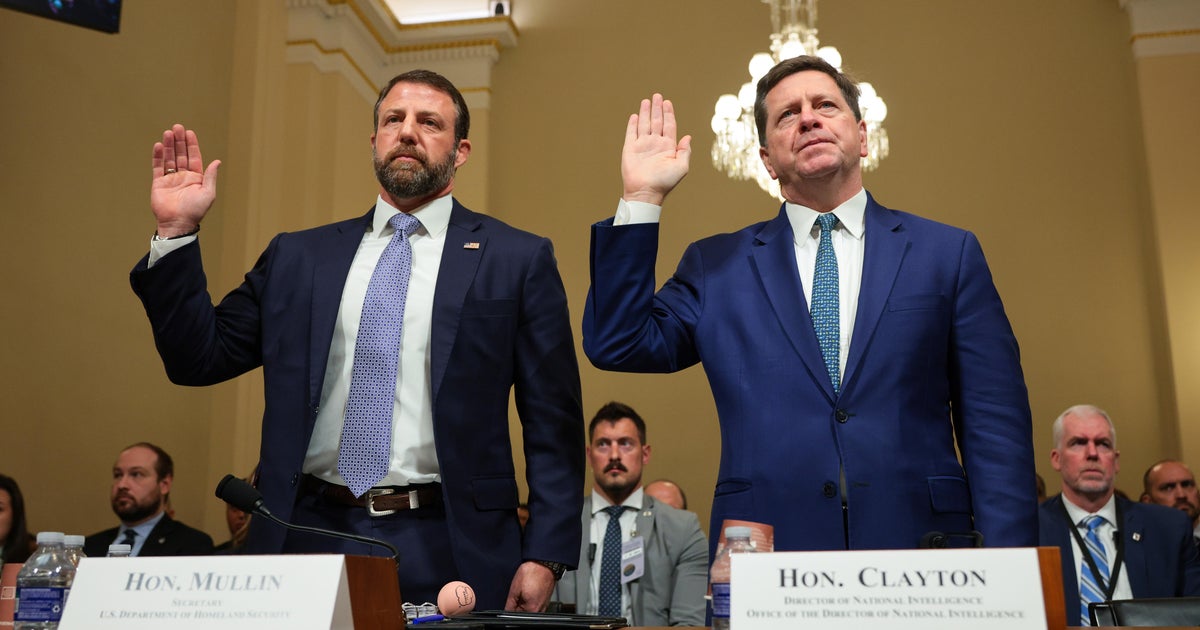
This lack of a cohesive pattern was a central pillar of the government's defense. Homeland Security Secretary Markwayne Mullin echoed this, noting that the investigations had failed to find a connective thread between the various failures. "We have seen nothing that would indicate that they are related," Mullin told the committee. In the eyes of the investigators, the outages were not a single, massive blow, but a collection of isolated, unrelated events.

DNI CLAYTON ON OUTAGES: Director of National Intelligence Jay Clayton on Wednesday told lawmakers that the recent technological disruptions "are not a coordinated or state-sponsored attack." Clayton sought to reassure Americans during testimony before the House Homeland Security Committee amid growing concerns about a series of technology failures that have disrupted air travel, banking, communications and government operations.
Perhaps the most unsettling aspect of the recent disruptions was the impact on the National Security Agency itself. As an organization dedicated to monitoring global threats, any failure within its own walls naturally invites intense scrutiny. The idea that the very agency responsible for detecting cyberattacks could be sidelined by its own technical issues created a sense of irony that lawmakers were quick to exploit.
In response to the concerns, the NSA released a statement to clarify the nature of its own internal struggles. The agency confirmed that some of its internal systems had indeed experienced an outage, but framed it within the context of standard operations. "Some internal systems experienced a temporary outage during routine maintenance operations," the agency announced. They were careful to add a layer of reassurance, noting that the "vital capabilities of the agency remain fully operational," suggesting that while the internal plumbing had faltered, the agency's primary mission remained intact.
Even with the official explanations, the mood in the House Committee remained skeptical. Lawmakers pressed the officials for more granular details, particularly regarding the specific nature of the NSA outage. The gap between the government's technical explanation—maintenance and routine changes—and the public's perception of a security crisis remains wide.
Jay Clayton continued to emphasize the lack of external interference, stating, "We have no indication that they have come from external threat actors." To the officials, the answer was a matter of technical housekeeping. To the skeptics, the question remains whether the distinction between a maintenance error and a sophisticated attack is becoming increasingly difficult to discern in an era of total digital dependency.

🚨🚨BREAKING NEWS 🚨🚨 Top U.S. security officials told Congress today they've found no sign that the recent string of outages hitting airlines, banks, Microsoft and the NSA's internal network was a cyberattack. DNI Jay Clayton called them separate outages tied to maintenance and tech changes, not a coordinated or state-sponsored attack. (via @CBSNews)