
For three days, the atmosphere around Bengaluru's Freedom Park has been defined by a singular, persistent tension. It is not the usual bustle of the city, but the concentrated energy of ASHA workers—the Accredited Social Health Activists who serve as the vital, often invisible, connective tissue of India's public health system. These women, who navigate the intricacies of community health, have traded their clinical duties for the rigors of protest, setting up a camp that signals a breaking point in their relationship with the state.
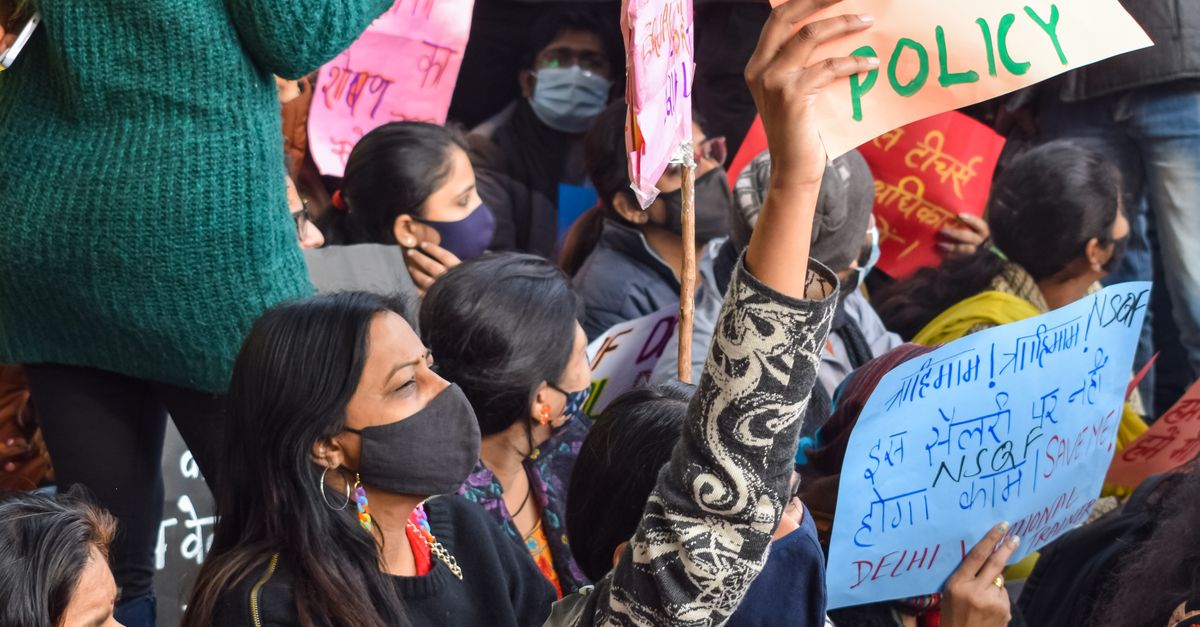
Their grievances are not merely about recognition; they are about the fundamental math of survival. At the center of the agitation is a demand for a monthly honorarium of 15,000 rupees. For many of these workers, the current compensation—a monthly sum of 7,000 rupees supplemented by various incentives—has proven insufficient to meet the rising costs of living and the heavy demands of their roles. To the workers, the gap between 7,000 and 15,000 is not just a number; it is the difference between precariousness and stability.
As the protest entered its third day, the political gravity of the situation pulled the highest levels of state leadership into the fray. On November 19, 2026, Chief Minister DK Shivakumar opened the doors of his home office, Krishna, to representatives of the ASHA workers. It was an attempt to move the struggle from the pavement of Freedom Park to the mahogany tables of governance, seeking a diplomatic resolution to a mounting crisis.
The nuance of state economics failed to provide the immediate relief required by those on the frontlines.
Inside the meeting, the conversation shifted from the workers' needs to the state's constraints. The Chief Minister sought to provide context for the government's current position, explaining the state's economic situation and the prevailing financial realities. It was a moment of collision between two different truths: the urgent, lived necessity of the workers and the complex, often restrictive, ledger of the state treasury.
Chief Minister Shivakumar did not dismiss the workers' grievances, but he did offer a caveat that the protesters found difficult to swallow. While acknowledging the demands, he requested time to find a way to fulfill them. He pointed to the current structure of their pay—the 7,000 rupees plus incentives—and the existing government support of 5,000 rupees, attempting to frame the current compensation within the context of what the state can currently afford.
In the eyes of the administration, the request for time was a pragmatic necessity of governance. In the eyes of the workers, it was a delay they could no longer afford. The Chief Minister's attempt to explain the financial landscape was met not with understanding, but with a deepening sense of dissatisfaction. The nuance of state economics failed to provide the immediate relief required by those on the frontlines.
The workers' vision for their future extends beyond the immediate monthly paycheck. Their demands include a significant structural change to their long-term security: a lump sum payment of 5 lakh rupees upon retirement. This demand highlights the precarious nature of their work, which often lacks the traditional safety nets afforded to other public sector employees.
By asking for this retirement sum, the ASHA workers are seeking to transform their role from a series of temporary, incentive-based tasks into a recognized profession with a predictable lifecycle. They are asking for the dignity of a future that is not left to chance, a request that complicates the state's financial calculus even further.
The meeting at Krishna did not produce the breakthrough the government might have hoped for. Rather than de-escalating the situation, the dialogue served to clarify the impasse. Dissatisfied with the Chief Minister's explanation and his request for more time, the representatives and their supporters made a decisive move.
They left the halls of power and returned to the encampment at Freedom Park. The decision was made clear: the agitation would continue. The protest is no longer just about a meeting that failed to yield results; it has become a sustained stand against the status quo. As long as the demands for the 15,000 rupee honorarium and the 5 lakh rupee retirement sum remain unmet, the camp in the heart of Bengaluru will remain a fixture of the city's landscape.
As it stands, the standoff remains unresolved. The workers have signaled that they are prepared for a long-term struggle, while the state remains tethered to its economic explanations. The gap between the 7,000 rupees currently provided and the 15,000 rupees demanded remains a chasm that neither side has yet found a way to bridge. For now, the voices of the ASHA workers continue to echo from Freedom Park, waiting for a response that goes beyond a request for more time.