
In the bustling tech hub of Bengaluru, a routine grocery delivery turned into a flashpoint of frustration. On November 18, 2026, a customer received an unexpected lesson in the complexities of urban delivery services when an Amazon agent allegedly refused to deliver a full order of essential items. What began as a simple request for groceries through Amazon Minutes—a service promising rapid delivery of household essentials—escalated into a public dispute that would soon find its way onto social media platforms.
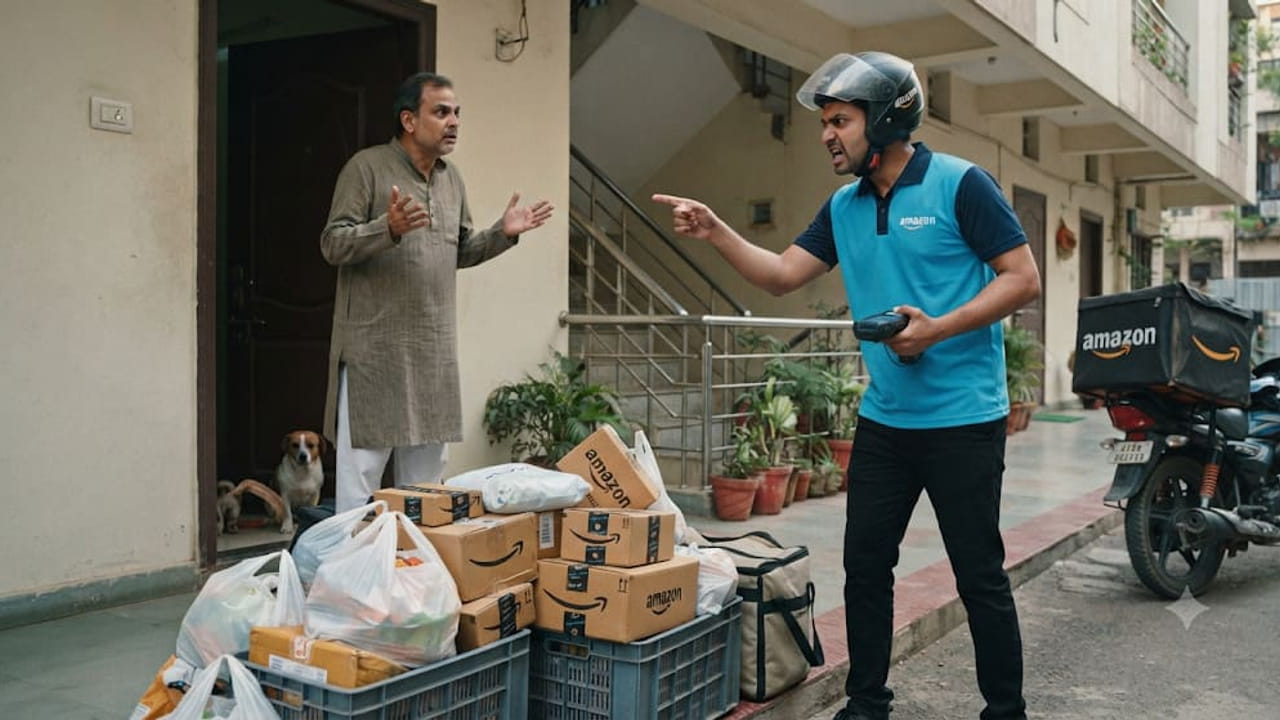
The customer had placed an order for approximately 16 essential items, including rice, flour, cooking oil, and soap. This wasn't an extravagant haul but rather a practical collection of necessities for a household. The order qualified for a promotional discount of ₹250, a common incentive in India's competitive grocery delivery market. What the customer didn't anticipate was the delivery agent's reaction to the volume of items he was being asked to transport.
According to the customer's account, the Amazon delivery agent immediately expressed dissatisfaction with the order size. "Why did you order so many items at once? Are you buying so many just to get the ₹250 discount?" the agent allegedly questioned, setting a confrontational tone for the interaction. The customer claims the agent then criticized the practicality of delivering such a large quantity on a two-wheeler vehicle. "It is difficult to bring so many items in a two-wheeler. You could have made small orders at different times instead of one big order," the agent reportedly stated.
This alleged act of negligence transformed a service dispute into a matter of principle for the customer.
The situation deteriorated further when, according to the customer, the agent threw the grocery items on the ground and departed without delivering several products from the list. This alleged act of negligence transformed a service dispute into a matter of principle for the customer. While acknowledging that delivery is a difficult job, the customer emphasized that Amazon bears responsibility for fulfilling orders placed through its platform. "The company is responsible for accepting and delivering orders placed through the app, and treating the customer as the one at fault is incorrect," the customer later stated.
Frustrated with the service breakdown, the customer took to Reddit to share the experience, sparking wider discussion about delivery service expectations in urban India. The post resonated with many who have experienced similar tensions in the rapidly expanding grocery delivery market. The incident highlighted a growing disconnect between customer convenience expectations and the practical realities of last-mile delivery operations.
At the heart of this dispute lies the human element often overlooked in the convenience-focused narrative of e-commerce. Delivery agents face immense pressure to meet delivery targets while managing logistics constraints like vehicle capacity and time limitations. The agent's alleged outburst, while unprofessional, may reflect systemic pressures in the delivery ecosystem where workers bear the brunt of customer dissatisfaction with company policies and operational challenges.
The incident has become a case study in the challenges of scaling rapid grocery delivery services in dense urban environments. It underscores the need for better alignment between customer expectations, operational realities, and worker support systems in India's competitive delivery market. As grocery delivery continues to evolve as a service, companies like Amazon must balance convenience promises with the practical limitations of their delivery networks while maintaining service quality standards that protect both customers and workers.