On November 5, 2024, a razor-thin victory in North Carolina transformed the balance of power in Washington. When Chuck Hubbard defeated incumbent Virginia Foxx by just 330 votes, the outcome did far more than flip a single congressional district. That narrow margin provided the decisive push that officially elevated House Democrats to 258 seats in the 435-seat chamber.
In modern congressional elections, where majorities are frequently decided by tight margins across thousands of ballots, a 330-vote difference highlights how pivotal individual local contests can be to national governance. Hubbard's victory proved to be the tipping point that finalized a major shift in the House of Representatives.
By reaching 258 seats, Democrats secured the largest House majority held by any political party this century. The tally surpassed the party's own pre-election expectations, marking a comprehensive election sweep that national politics had not witnessed since 1992.
Four races remained undecided as election officials continued processing ballots.
Holding 258 out of 435 seats gives a parliamentary caucus robust leverage in legislative negotiations. Rather than managing fragile multi-vote margins where a small number of dissenters can stall legislation, a 258-seat caucus possesses a substantial buffer to pass bills, manage committee agendas, and set federal policy priorities.
The scale of this shift becomes clearer when measured against recent political waves. So far, Democrats have gained 44 House seats in this election cycle. That figure surpasses the 40 seats the party picked up during US President Donald Trump's first midterm elections in 2018, which was previously considered the high-water mark for modern Democratic House expansions.
Gaining 44 seats requires winning across diverse geographic landscapes, expanding beyond traditional strongholds into highly competitive districts. Winning a 44-seat pickup reflects a widespread realignment across the country's legislative map.
Even as the 258-seat threshold was crossed, the election tally was not entirely complete. Four races remained undecided as election officials continued processing ballots.
With four contests still hanging in the balance, Democrats retain the potential to add even more seats to their majority before the final roster of the House is locked in. Every additional seat beyond 258 expands their operational buffer, giving leadership even broader tactical room when bringing legislation to the floor.
A majority of this magnitude fundamentally alters the dynamics of governing. On one hand, reaching 258 seats provides Democrats with significant opportunities to set the legislative agenda, hold committee hearings, and advance key policy initiatives.
On the other hand, a sweeping majority carries heavy political expectations. With such a strong presence in the House, the party faces immediate pressure to fulfill its campaign promises. Voters who delivered a majority of this size expect tangible legislative results, turning significant power into an immediate test of governance.
This electoral wave leaves Washington operating under a distinctly divided government. While Democrats maintain legislative control by commanding both the House and the Senate, US President Donald Trump remains in the White House.
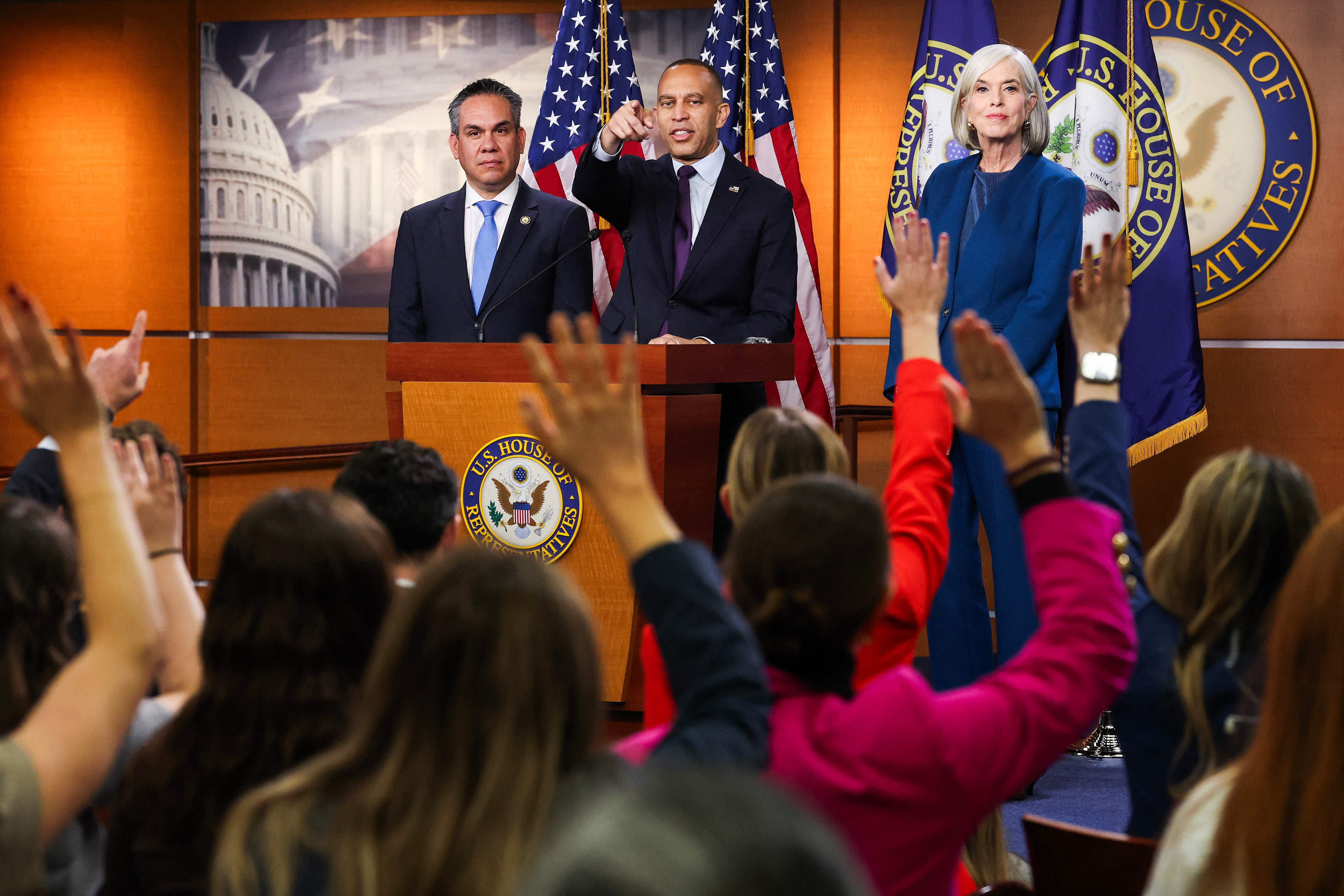
This structure sets up a classic constitutional dynamic, where legislative authority and executive execution are held by opposing parties. Following the milestone result, House Democratic Leader Hakeem Jeffries captured the party's momentum, stating, "House Democrats have just secured the largest majority any party in Congress has held this century. BOOM." As the newly established majority prepares to take charge, the 258-seat coalition will define the legislative battlefield in a divided capital.