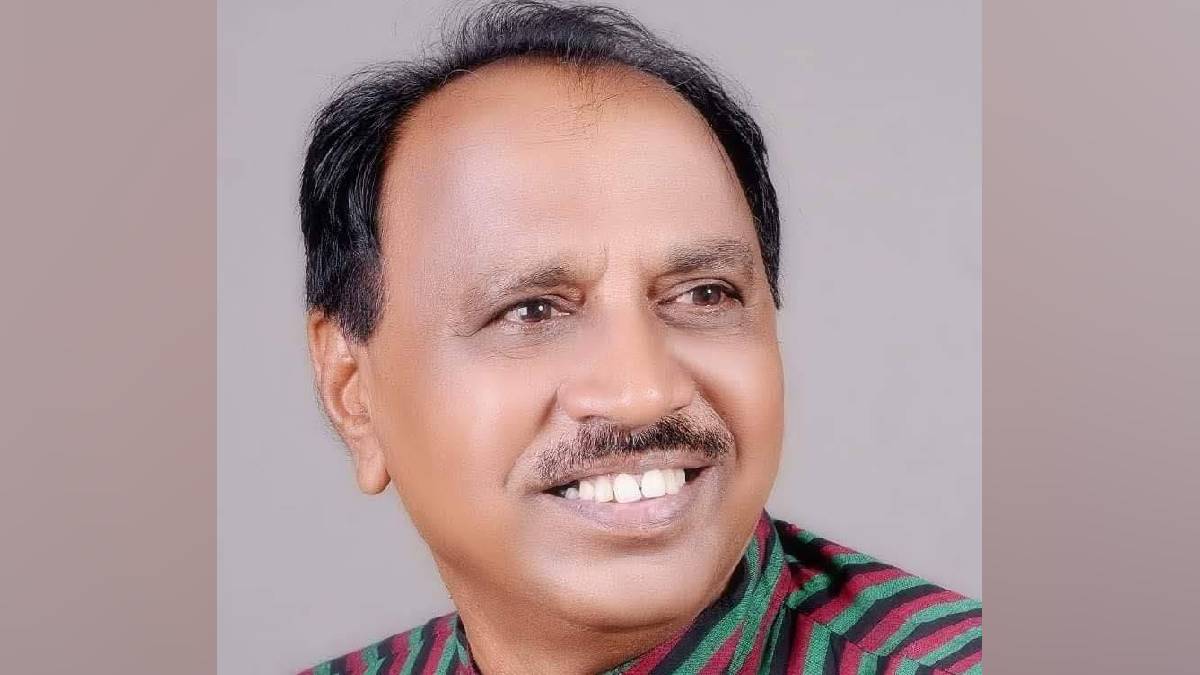
In the quiet hum of New Delhi, where the gears of the Indian Union government turn without cease, the loss of a voice from the states is often absorbed with bureaucratic efficiency. But when Bharatiya Janata Party (BJP) Member of Parliament Ramrao Vadkute died on Sunday, the silence that followed was heavy with a specific, regional grief. Vadkute, a 72-year-old legislator representing Hingoli district in Maharashtra, passed away in the capital after suffering a cardiac arrest. For the Dhangar community, a pastoral group in Maharashtra whose livelihoods have historically centered on the rearing of goats and sheep, the death was not just the loss of a politician, but the departure of a symbolic face who had spent decades navigating the corridors of power on their behalf. The suddenness of the heart attack in a major metropolitan center, far from the rural landscapes of his constituency, marks a poignant end to a career that bridged the gap between agrarian advocacy and national legislative policy.
The timing of Vadkute's death lends a layer of poignancy to his political story. He had only recently been elected to the Rajya Sabha, the Upper House of the Indian Parliament. In the Indian political context, securing a seat in the Upper House is a significant milestone, typically reserved for experienced legislators or those who have demonstrated substantial service in their respective states. It suggests a career that had just reached a new plateau of influence and national visibility. The fact that his tenure in New Delhi was so brief means he did not have the opportunity to leave a long, independent mark on the specific legislative debates of the Union. Instead, his legacy remains tightly woven into his earlier career in Maharashtra, where his work had laid the groundwork for his ascent to the national stage. For his constituents in Hingoli, this new chapter of their representative was barely written before it was abruptly closed.
Despite the shock of his death, the outpouring of grief from political figures demonstrated Vadkute’s capacity to command respect beyond his party lines. In India’s often polarized political environment, tributes from colleagues of opposing or different affiliations are not always commonplace. Yet, the reactions from key figures highlighted his standing as a dedicated public servant. Union Parliamentary Affairs Minister Kiren Rijiju expressed that he was "deeply saddened by the passing of our colleague in Parliament," extending heartfelt condolences to the Vadkute family. Similarly, Union Minister of State for Civil Aviation Murlidhar Mohol emphasized that Vadkute's passing had "deprived public life of an experienced and dedicated leader." By describing him as an "experienced" figure, even shortly after his new election to the Upper House, these ministers underscored the depth of his career. This respect was not limited to the ruling alliance; Supriya Sule, an MP from the Nationalist Congress Party, also paid tribute. Her recognition signaled that Vadkute’s reputation was built on substantive work rather than purely partisan maneuvering, allowing him to be mourned as a genuine peer in the legislative chamber.
Before his recent selection for the Rajya Sabha, Vadkute had already established himself as a significant figure in Maharashtra’s political hierarchy.
To understand why Vadkute’s departure is felt so acutely in Maharashtra, one must look at the specific role he played for the Dhangar community. For years, he served as the president of the Maharashtra Goat and Sheep Federation. This organization serves as a critical voice for the pastoral communities of the state, dealing with issues of animal husbandry, market access, and the welfare of livestock. In a landscape where the economic survival of these communities is often precarious, having a federation president who is also a legislator creates a direct line of communication between the ground and the government. Vadkute’s work in this role meant he was likely the primary political advocate for the thousands of families dependent on the goat and sheep trade in Hingoli. His passing represents the loss of a dedicated champion for a demographic that frequently feels overlooked in broader political discourses focused on industrialization or urban development. The community's identity is inextricably linked to his efforts, making his death a personal blow rather than just a political one.
Before his recent selection for the Rajya Sabha, Vadkute had already established himself as a significant figure in Maharashtra’s political hierarchy. As Supriya Sule noted in her tribute, he had previously served as a member of the Legislative Council. In the Indian state structure, the Legislative Council acts as an upper house for states that have one, providing a platform for revisiting legislation and offering a different perspective than the direct representative assembly. Serving in both a state Upper House and now the national Upper House suggests a legislator who understood the nuances of the law-making process at multiple levels of governance. This experience likely equipped him with the skills to navigate the complex administrative and legal frameworks of the Indian state, allowing him to serve his constituents effectively. It also provided him with a long tenure of public service, building a reservoir of goodwill and political capital that allowed him to reach the national stage in his final phase. His career path mirrors that of many long-serving Indian politicians who climb the ladder of institutions before reaching the apex of their influence.
In the wake of his death, the focus shifts to the personal toll of the loss. The public figures who spoke out were united in their prayers for the strength of the Vadkute family. Kiren Rijiju invoked divine strength for his loved ones, while Murlidhar Mohol spoke of sharing in the family's grief. In a system of public life, where politicians are often viewed through a lens of their utility or ideology, the raw emotion of a family’s loss can sometimes fade into the background of political statements. Yet, the consistent language of condolence from colleagues across the spectrum indicates a genuine human bond. The "untimely" nature of his death, a word used in the tributes, underscores that despite his 72 years, the community felt his departure was too early, given his recent momentum and the expectations that came with his new Rajya Sabha role. The Vadkute household now bears the weight of this sudden absence, navigating a personal tragedy amidst the public mourning of a political figure.
As the days following his death unfold, the political landscape in Hingoli will likely see a period of transition, with questions arising about who will succeed him in his local and state-level roles. However, the immediate aftermath is dominated by the reflection on his life's work. Vadkute left behind a political legacy defined by dedication to social and political life. The tributes from Kiren Rijiju and Murlidhar Mohol specifically cited his contributions that "will always be remembered," a testament to the fact that his impact transcended mere political office-holding. For the Dhangar community, the loss of their federation president and a national MP is a significant void. While he did not have decades to shape national policy from the Rajya Sabha, his arrival there marked the culmination of a lifetime of service. The grief expressed by colleagues and constituents alike paints a picture of a man who respected the sanctity of public service. In a fragmented political climate, the fact that his death can bring together diverse figures in shared mourning is, perhaps, the final and most profound testament to the kind of politician he was. He entered the national arena with quiet purpose and left it with the same, his legacy cemented not by the length of his final term, but by the breadth of his prior influence.