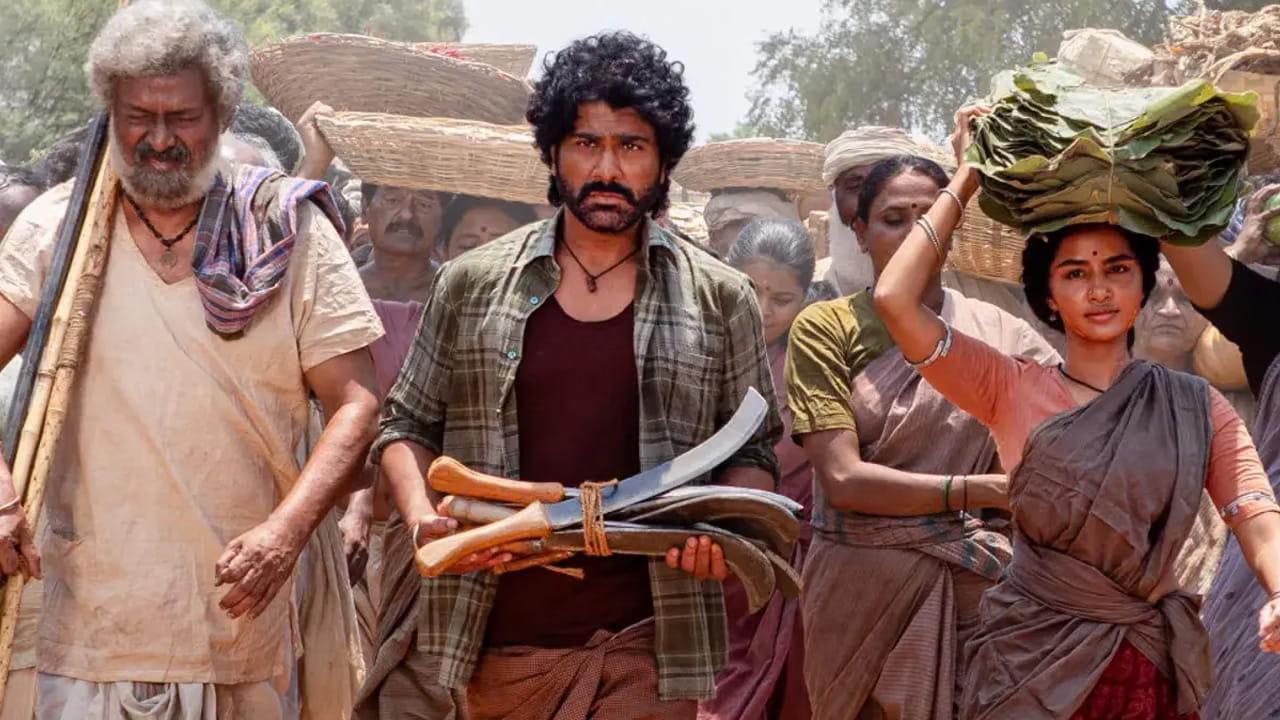
In the world of modern Telugu cinema, there is a growing appetite for the 'raw and rustic'—films that trade polished studio lights for the grit of the earth and the unvarnished textures of rural life. For Bhogi, the latest production from director Sampath Nandi, this ambition was not merely a stylistic choice but a massive physical undertaking. To capture the essence of its setting, the production team constructed a sprawling fifteen-acre set, a monumental feat of craftsmanship designed to transport audiences back to the 1960s.

This scale suggests a film of epic proportions, a sweeping period piece intended to immerse the viewer in a bygone era. Yet, as the dust settles on this massive construction, a fundamental question remains: can a physical environment, no matter how vast, compensate for a narrative that fails to feel lived-in? For Bhogi, the answer appears to be a resounding no.
Set against the backdrop of the Adilabad district during the 1960s, the story centers on a character named Ganga, portrayed by Sharwanand. The narrative stakes are high and steeped in the dark traditions of the era, following Ganga as he attempts to protect young girls from a looming sacrificial ritual. It is a premise that carries the weight of myth and the tension of a thriller, promising a collision between ancient, violent customs and a singular hero's resolve.
The film attempts to inhabit the 1960s, but the world feels manufactured rather than discovered.
Sharwanand, a familiar face in the industry, is joined in this struggle by Anupama Parameswaran and Dimple Hayathi. On paper, the conflict is visceral. The idea of a protector standing against a ritualistic threat provides a clear moral compass and a driving momentum. However, the transition from a compelling concept to a convincing cinematic experience is where the film begins to falter.
There is a specific alchemy required to make a period piece work. It is not enough to simply build the houses or dress the actors in the clothes of the decade; the world must breathe. It must possess a sense of 'naturality'—that elusive quality where the characters seem to exist within their environment rather than merely standing in front of it.
Despite the massive investment in the fifteen-acre set, Bhogi struggles to achieve this organic connection. While the visual intention is clearly to lean into the rustic trends currently dominating Tollywood, the execution feels disconnected. The film attempts to inhabit the 1960s, but the world feels manufactured rather than discovered. The grit is present, but the soul of the setting remains elusive, leaving the audience to watch a performance of a period rather than an immersion into one.
When a film leans so heavily on its production design, the narrative must work twice as hard to justify the space. If the set is meant to be a character in itself, it must interact with the players in a way that feels inevitable. In Bhogi, there is a palpable sense of a gap between the physical reality of the Adilabad setting and the emotional reality of the story being told.
Producer K.K. Radhamohan has overseen a project of significant scale, but the scale itself becomes a distraction when the storytelling lacks the necessary texture to ground it. The 'raw' aesthetic, which is so highly sought after in contemporary cinema, requires a certain honesty in performance and pacing. Without that, the vastness of the production can feel like an empty stage rather than a vibrant, dangerous world.
Ultimately, Bhogi finds itself caught between its grand ambitions and its inability to deliver a convincing sense of place. It is a film that possesses the ingredients of a powerful period drama—a high-stakes ritual, a protective hero, and a meticulously built world—but fails to blend them into a cohesive whole.
As it stands, the film leaves viewers with a sense of missed opportunity. For a production that went to such lengths to build its world, the failure to make that world feel real is its most significant setback. With a rating of 2.25 out of 5, Bhogi serves as a reminder that in cinema, the heart of the story is often more important than the acreage of the set.