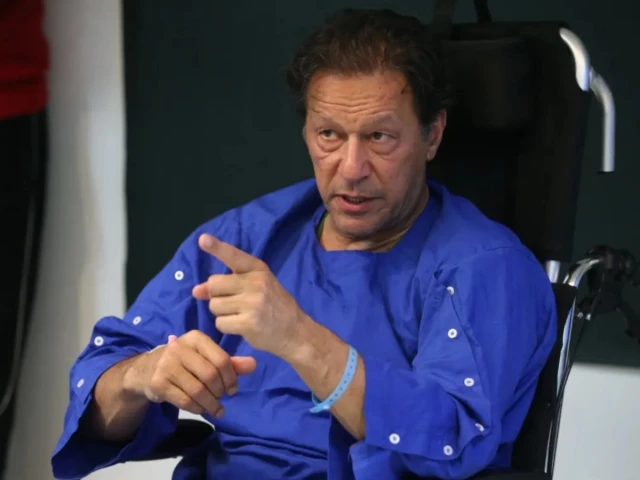
In the early hours of the morning, the routine of incarceration in Pakistan was punctuated by a brief, clinical departure. Imran Khan, the founder of Pakistan Tehreek-e-Insaf and the country’s former prime minister, was transported from the confines of Adiala Jail to the Pakistan Institute of Medical Sciences (PIMS) in Islamabad. This transfer was not a matter of political maneuvering, but one of medical necessity. Khan required specialized attention for a persistent health issue that has necessitated a series of interventions.

The medical focus of the visit was the administration of an intravitreal anti-VEGF injection. This specific treatment is used to address right central retinal vein occlusion (CRVO), a condition that affects the blood vessels in the eye and requires regular, precise care to manage. This visit marked the sixth time Khan has received this particular injection. The process is delicate, involving the direct delivery of medication into the eye to prevent vision loss, a procedure that underscores the severity of the condition he is managing while in state custody.
Upon his arrival at the hospital, Khan underwent a comprehensive medical examination to ensure he was fit for the procedure. The ophthalmology team at PIMS oversaw the process, adhering to strict clinical protocols. According to an official statement from the hospital, "Following informed consent and the completion of standard clinical checks and precautionary measures, the ophthalmology team administered an intravitreal anti-VEGF injection." Throughout the 40 to 50 minutes he spent at the facility, the medical staff reported that he remained clinically stable, showing no adverse reactions to the treatment.
Once the procedure was concluded and the necessary post-treatment observations were completed, the transition back to the detention center was swift.
The logistical footprint of the visit was kept to a minimum. Once the procedure was concluded and the necessary post-treatment observations were completed, the transition back to the detention center was swift. By 2:30 a.m., Khan had been discharged from PIMS and was returned to Adiala Jail. The timing of the operation—conducted in the dead of night—reflects the heightened security environment surrounding the former leader, whose movements are subject to intense scrutiny and logistical coordination by state authorities.
While the procedure itself was routine from a medical standpoint, it exists within a larger, more contentious landscape. The health of the former prime minister remains a point of significant concern for his supporters and family. His sister, Uzma Khan, has recently taken formal steps to address these concerns, requesting an early hearing before the Supreme Court. Her petition centers on the desire to have him transferred to a different hospital for more specialized care, suggesting a lack of confidence in the current arrangements. This legal effort serves as a reminder that for Imran Khan, every medical intervention is not just a health event, but a focal point in the ongoing debate over his treatment and the conditions of his confinement.