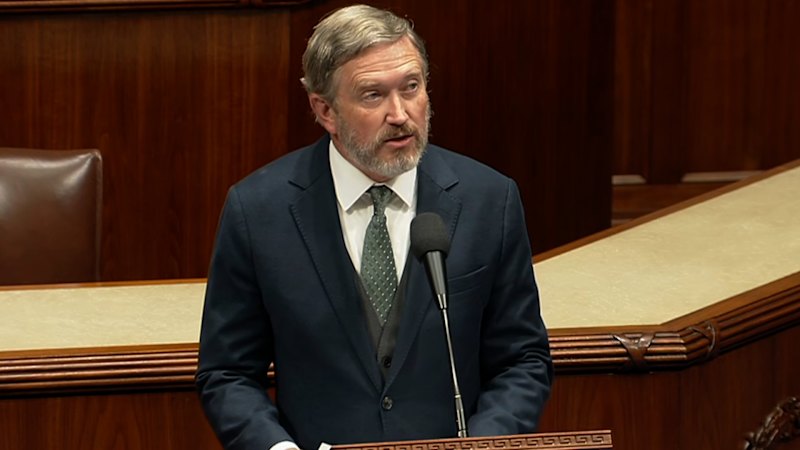
On November 9, the halls of the House of Representatives became the stage for a profound constitutional confrontation. The move was not merely a political maneuver but a formal accusation that the highest levels of military leadership had abandoned the legal guardrails established by the American people.

Massie’s argument rests on a fundamental principle of American governance: the separation of powers. He contends that Hegseth has acted in a manner that fundamentally violates the trust placed in his office. At the heart of the resolution is the claim that the Secretary has bypassed the most essential check on executive might—the requirement for Congressional authorization before engaging in armed conflict.
The most harrowing evidence cited in the resolution involves the human cost of unilateral military action. Massie pointed specifically to the bombing of a primary school in Minab, located in southern Iran. The strike, a centerpiece of the impeachment allegations, resulted in the deaths of 120 children.
Massie argues that by conducting operations against Iran independently, Hegseth has effectively nullified the constitutional role of the House and Senate.
In the context of modern warfare, the distinction between military targets and civilian infrastructure is a legal and moral line that the Secretary is accused of crossing. By highlighting the tragedy in Minab, Massie is framing the impeachment not just as a dispute over legislative procedure, but as a response to a disregard for laws designed to minimize civilian casualties. The loss of life in that school serves as the grim centerpiece of the argument that Hegseth's leadership has strayed from the rule of law.
Beyond the specific tragedy in Iran, Massie’s resolution targets the very legality of the Secretary's strategic direction. The congressman accuses Hegseth of waging war against Iran without the necessary permission from Congress. Under the American system, the power to declare war and authorize major military engagements is a prerogative held by the legislative branch, intended to prevent a single individual from committing the nation to conflict at will.
Massie argues that by conducting operations against Iran independently, Hegseth has effectively nullified the constitutional role of the House and Senate. This perceived circumvention of authority suggests a shift in how the Department of Defense operates, moving away from a model of shared oversight toward one of unchecked executive command.
The impeachment filing does not limit its scope to the Middle East; rather, it paints a picture of a broader pattern of extrajudicial conduct. Massie’s accusations extend to military strikes conducted in the Caribbean and the Pacific. Specifically, the resolution references strikes on boats used by drug traffickers, characterizing these actions as executions carried out outside the bounds of established legal frameworks.
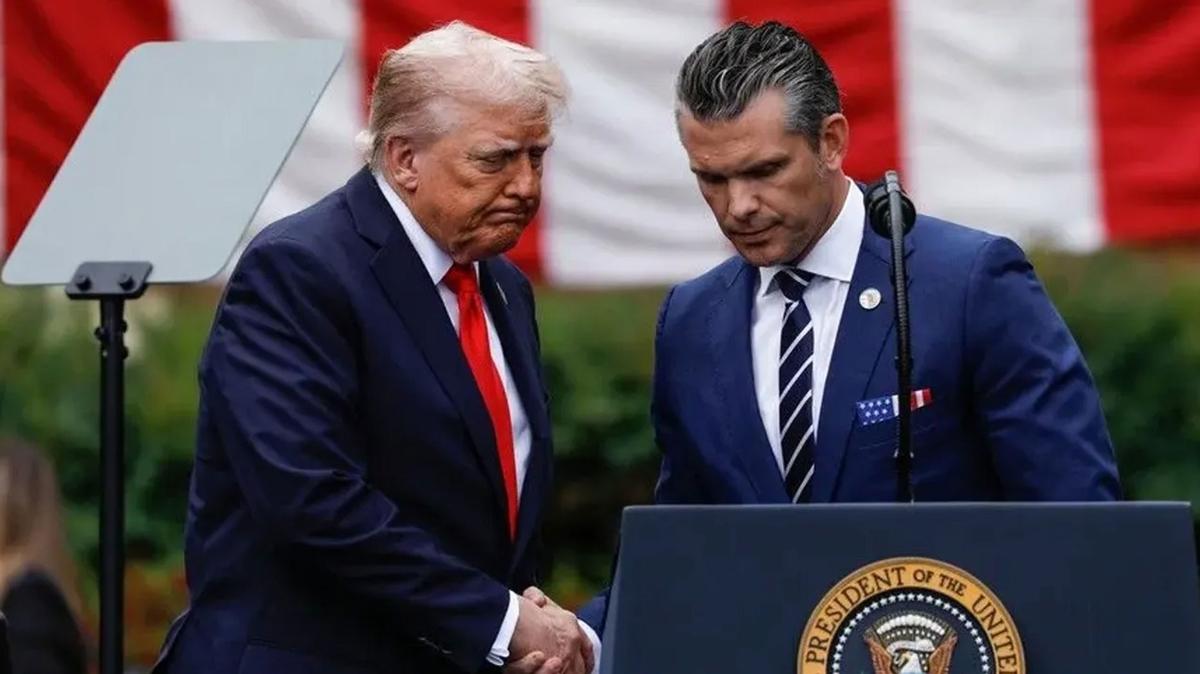
This narrative of unilateralism suggests that the Secretary's methods have expanded into various theaters of operation, often bypassing the traditional judicial or legislative scrutiny that accompanies lethal force. The implication is that the Department of Defense has begun to operate as an entity that decides who is a target and how they are neutralized, without the checks and balances that define democratic military engagement.
The chronology of these tensions stretches back to the beginning of 2024. In January of that year, US forces captured Venezuelan President Nicolas Maduro. While such an event would typically be a moment of significant geopolitical shift, in the context of Massie's current impeachment proceedings, it is presented as part of a larger, more troubling trend of high-stakes operations conducted under the current leadership.
By linking the capture of a head of state to the more recent allegations of unauthorized warfare and civilian casualties, the resolution seeks to demonstrate that the current administration of the Department of Defense is characterized by a consistent departure from traditional protocols. It frames the January event not as an isolated success, but as a precursor to the more controversial actions that have led to this moment.
As the proceedings move forward, the political reality remains complex. Despite the gravity of the charges—ranging from the violation of law to the deaths of 120 children—observers note that the impeachment faces a difficult path. The likelihood of Hegseth's actual removal from office remains low, even as the resolution forces a public reckoning over the limits of military power.
Thomas Massie’s move places the House in a position where it must address whether the Secretary has indeed acted "in a manner contrary to the trust placed in him as Secretary of Defense." Whether this results in a change of leadership or serves as a formal rebuke, the proceedings have ignited a critical debate over where the authority of the commander ends and the authority of the people, through their representatives, begins.