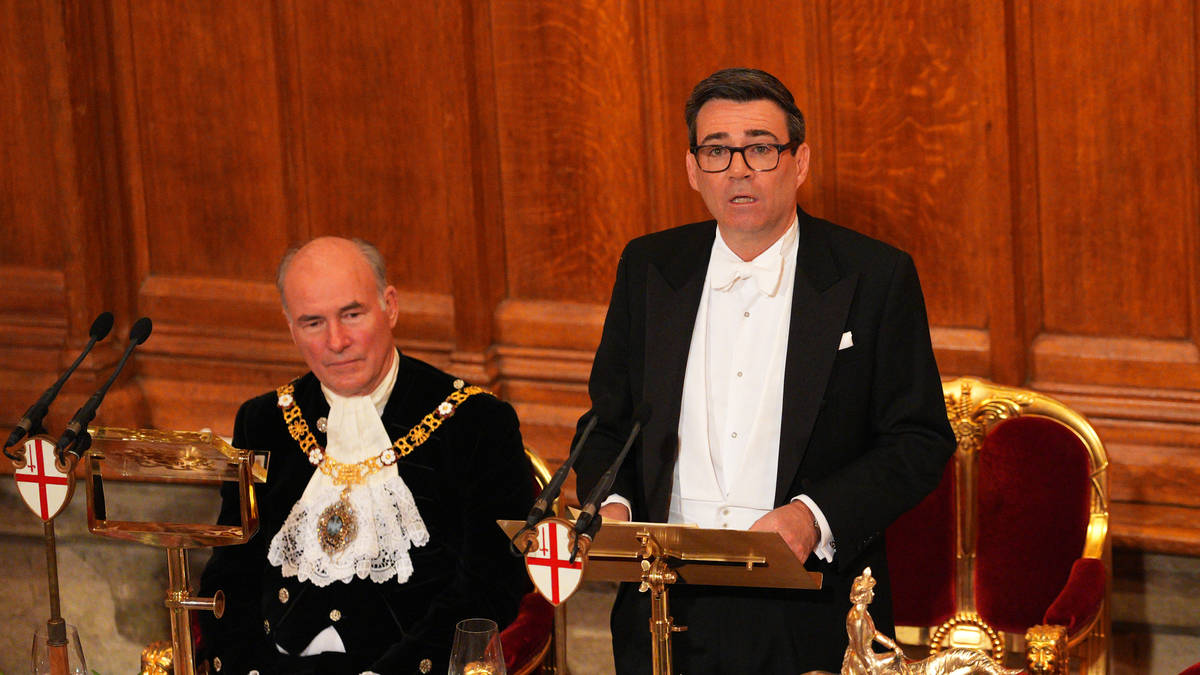
On November 16, 2026, the air in the Mayfair Hotel was thick with tradition, but Prime Minister Andy Burnham was there to shatter the current political status quo. Speaking at the Lord Mayor's Banquet, a fixture of London's ceremonial calendar, Burnham did not mince words regarding the state of British politics. He declared that the "hard Brexit" agreement, the framework that has defined Britain's relationship with the continent for a decade, is "not good enough for Britain." This was not a quiet suggestion; it was a formal repudiation of the current arrangements, delivered by the leader of the country to the city's most senior civic figures. The speech signaled a shift from the defensive posture of the post-referendum era to an active, aggressive push for change.

To support his call for a reset, Burnham offered a stark assessment of the decade since the 2016 referendum. He argued that Britain has "lost more than we have gained" in the ten years following the vote to leave the European Union. This sentiment frames the current situation not as a matter of political ideology, but of tangible economic and social deficit. By quantifying the loss, Burnham positions the status quo as a failed experiment that has run its course. The argument is that the trade-offs made in 2016 have not delivered the promised benefits, leaving the country in a position where the costs outweigh the gains in the collective calculation.

It is time to say the unsayable. For the reasons I outline in the video below, I don't believe it is possible to peacefully vote our way out of the catastrophic, civilisational ending situation England, Britain, Ireland and most of the Western world is currently in. https://t.co/lJJ2FWNlAd
At the heart of Burnham's proposal is a specific, somewhat idiosyncratic tool: the "Makerfield Test." Named after his constituency in Greater Manchester, this metric is designed to ensure that any new deal provides tangible benefits to neglected communities. It moves the discussion away from abstract national sovereignty arguments and toward a practical, community-centered standard. The Test asks whether a policy or agreement helps the places that have been left behind by the economic shifts of the last decade. It is a political bridge, connecting the Prime Minister's identity as a representative of the North to a national strategy for EU relations.
Third, and perhaps most importantly, it must deliver real improvements to everyday life.
Burnham outlined three specific criteria that any successful new agreement must meet. First, it must be consistent with the government's red lines, suggesting that while the deal will change, certain boundaries remain intact. Second, it must improve upon the existing Brexit arrangements, meaning it cannot simply be a return to the old EU status quo, but a hybrid that captures the best of both worlds. Third, and perhaps most importantly, it must deliver real improvements to everyday life. This tripartite structure serves as a filter for negotiations, ensuring that the final product is not just politically palatable, but practically superior to the current framework.
While the Makerfield Test provides the moral and social framework, the economic argument rests on a specific number: a potential addition of 0.4 percent to GDP. Burnham highlighted this figure as the upside of a new deal with Brussels. In macroeconomic terms, a quarter-point of growth is often a significant policy target for years, yet Burnham presents it as achievable through a diplomatic reset. This number serves as the concrete incentive for the public and the markets, grounding the abstract concept of a "reset" in hard economic data. It suggests that the current deal is leaving money on the table, and that a more integrated relationship could unlock value that has been locked away for the last decade.
The immediate next step is clear: Burnham confirmed he will attend a UK-EU summit in Brussels on Friday. This move takes the speech from the banquet hall to the diplomatic table, signaling that the reset is not just a talking point but an active policy track. However, Burnham was careful to ground his authority in the electorate. He stated, "The people voted for change and it has not happened," framing his actions as a correction to unmet expectations. He concluded with a promise of democratic control: "At every stage, the British people will be the boss." By asserting that the British people remain the final authority on any agreement, Burnham seeks to defuse the sovereignty arguments of Brexit supporters, offering them a new deal that still places ultimate power in the hands of the nation, but one that recognizes the economic and social realities of the post-2016 era.