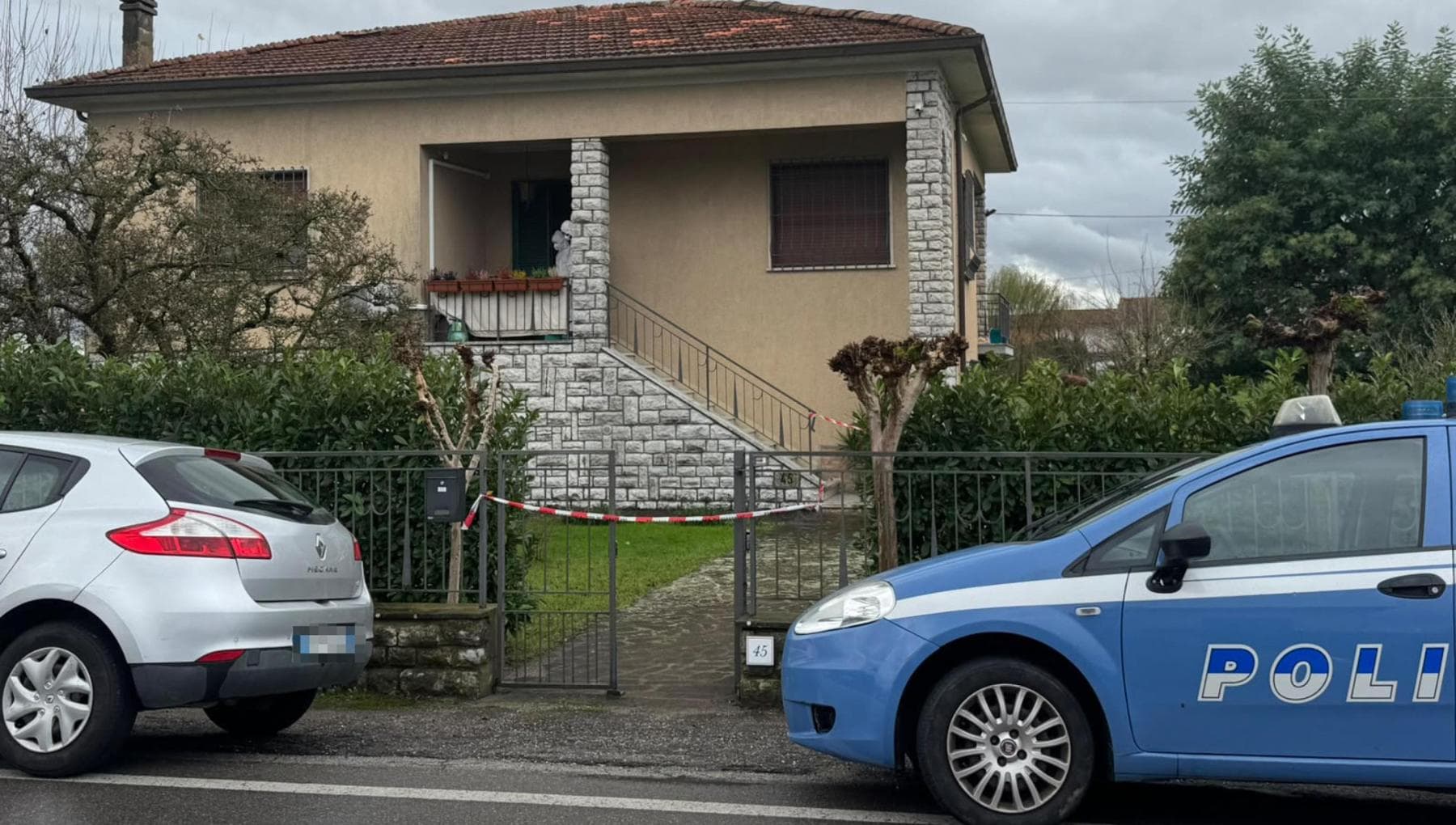
There is a specific kind of silence that falls over a neighborhood after a violent death, a void where a life used to be. In Ponte Buggianese, a small area in the province of Pistoia, that silence settled over the home of a 24-year-old Romanian woman and her 25-year-old Italian partner, Andrea Nardini. The incident unfolded in late November 2026, a time of year that often carries its own weight, but for these two individuals, the date marked the final page of a story that ended in tragedy. Nardini, who was just 25, allegedly murdered his partner at their residence. The brutality of the act within the domestic sphere—where safety is supposed to be the default assumption—stands in stark contrast to the public infrastructure that would later claim him. It was a crime committed in the private walls of a home, a violation that authorities report occurred shortly after the International Day for the Elimination of Violence Against Women, a global observance meant to highlight the pervasiveness of gender-based abuse.
Following the murder, Nardini did not stop. He drove away from the scene, navigating toward the A1 highway, one of Italy’s most significant motorways. The decision to reach this stretch of road was not random; it was a destination with a specific history, a place that had already been marked by a similar violence just eighteen months prior. As he arrived at the Lora viaduct in Barberino del Mugello, near Florence, Nardini set his vehicle on fire. The act of destroying the car suggests a deliberate finality, a burning away of evidence and of the vehicle that had carried him from one crime to another. The A1 stretch between the Direttissima junction and Aglio towards Bologna was subsequently closed by authorities to facilitate the investigation, a disruption to the flow of thousands of commuters that underscores how public infrastructure must pause when private violence collides with the public realm.
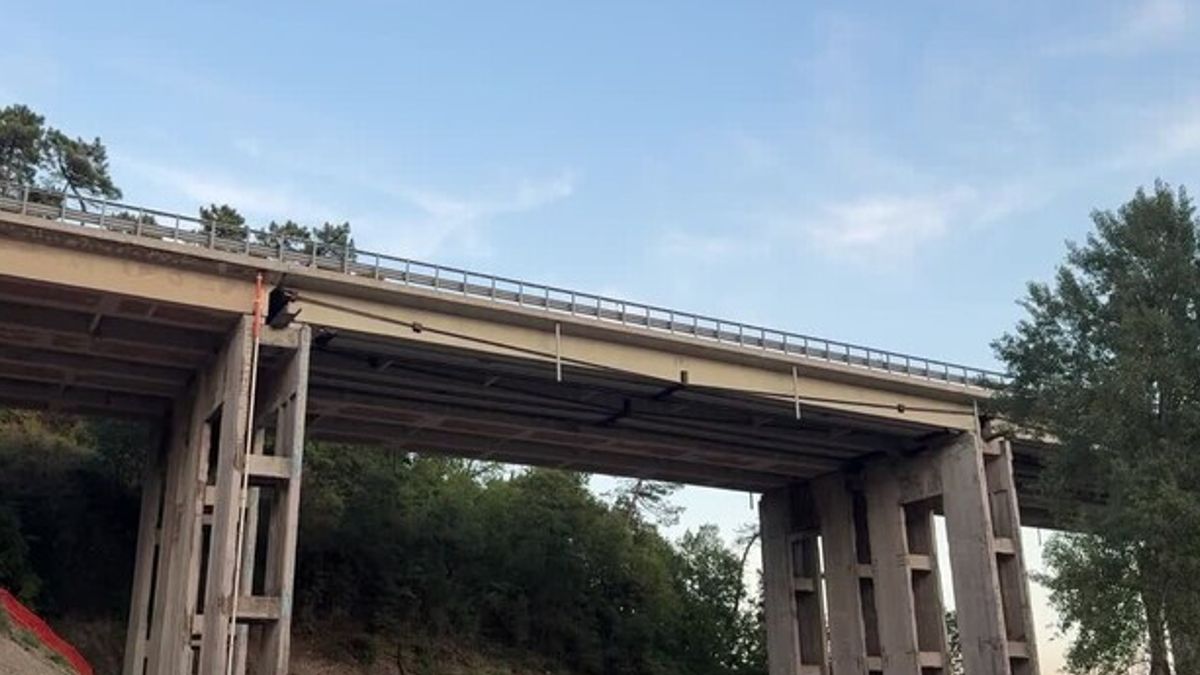
From the heights of the Lora viaduct, Nardini jumped. His body was recovered from the base of the structure. The viaduct itself is a concrete span over the landscape, a mundane piece of civil engineering until it is repurposed for acts of extreme finality. Authorities indicate that Nardini may have contacted emergency services prior to his jump, potentially confessing to the crime. This detail adds a layer of confession to the sequence of events, suggesting that the act was not performed in the heat of the moment but was a premeditated conclusion to the killing of his partner. The choice of this specific location ties the two events together, creating a painful echo that links the victim’s death to a previous one.
It implies that he did not flee to hide, but rather sought a moment of contact, a final connection, even as he moved toward his own end.
The Lora viaduct is not just a bridge; it is a site of recent memory for the local community and the nation. On September 3, 2024, Lorena Isceri was killed at this very spot. She was an ex-partner’s victim, a femicide that drew significant public attention. The recurrence of a fatal event at the same location is a statistic that carries emotional weight far beyond the numbers. It suggests that certain places become indelibly marked by the violence that occurs there. For those involved in the current investigation, the history of the viaduct is a shadow they must navigate, knowing that the ground beneath them is stained by the memory of Isceri’s death less than two years ago. The proximity in time, roughly eighteen months, makes the parallel impossible to ignore.
The report that Nardini called emergency services to confess before jumping introduces a human element of despair and finality. It implies that he did not flee to hide, but rather sought a moment of contact, a final connection, even as he moved toward his own end. This act of confession, if verified, changes the narrative from one of pure escape to one of acknowledged responsibility, however fleeting. It aligns with the broader understanding of intimate partner violence, where the perpetrator often feels a sense of entitlement over the life and death of their partner. The phone call, a thin thread of communication before the plunge, highlights the isolation of the act even in a connected society.
The closure of the A1 highway between the Direttissima junction and Aglio is a logistical measure, but it also serves as a metaphorical pause. The road, a symbol of movement and connection, was shut down to allow investigators to piece together the final hours of Nardini’s life. The location in Barberino del Mugello places the event within the sprawling administrative region of Florence, a historic center that sees modern tragedies intersecting with ancient landscapes. The investigation into the fire and the fall is complex, requiring forensics to determine the sequence of events precisely. The public remains, however, focused on the victims: the 24-year-old woman whose life was ended in a bedroom, and the man who ended his own on a bridge that had already taken another life.
As the dust settles on the Ponte Buggianese case, the Lora viaduct stands as a double memorial. It is the site of Lorena Isceri’s death in September 2024 and now the location of Andrea Nardini’s end in November 2026. The two events are linked by the concrete, the height, and the tragedy of domestic violence. There are no new words from Nardini to be heard, only the silence of the closed highway and the memory of those who lived near that bridge. The story is one of a short life cut short by the hand of the one who should have protected it, followed by a final leap that echoes a previous grief. In the end, the bridge remains, indifferent to the history it has collected, waiting for the next day to break over the valley below.