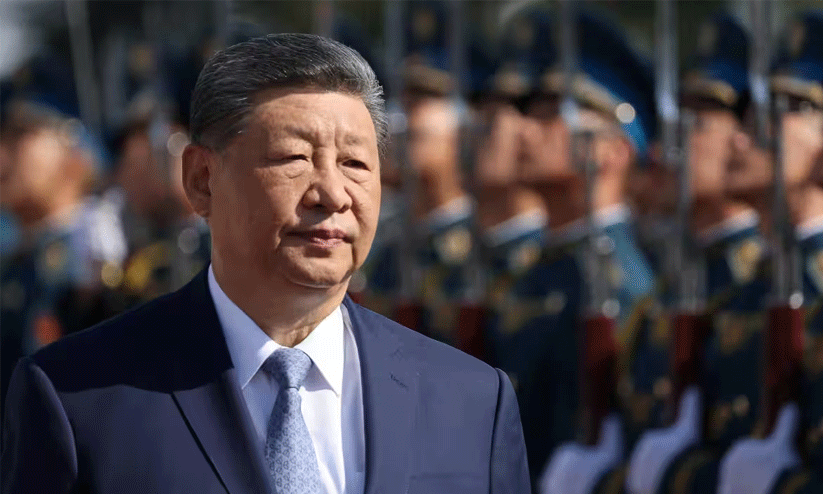
At an event in Beijing, the political stage became the setting for a significant reaffirmation of China’s long-standing geopolitical doctrine. The occasion was the 160th birth anniversary of Sun Yat-sen, the revolutionary leader. For President Xi Jinping, the event served as a commemoration marking the milestone of the revolutionary leader's birth. By invoking the memory of Sun Yat-sen, Xi addressed the gathering to discuss the complete reunification of Taiwan with the motherland.

Standing before an audience gathered to honor the revolutionary past, Xi Jinping articulated a vision of the future that left little room for ambiguity. He framed the reunification of Taiwan with the mainland as a historical mission for the Communist Party, an unstoppable force that is duty-bound to fulfill. "The course of history cannot be stopped," Xi declared. "The complete reunification of the motherland must be achieved, and it will surely be achieved." This rhetoric serves to elevate the status of the Taiwan issue to a central pillar, suggesting that the leadership is inextricably linked to the eventual absorption of the island.
Despite the firm tone regarding the necessity of reunification, Xi Jinping emphasized that Beijing’s preferred path remains one of peaceful integration. He explicitly advocated for the "One Country, Two Systems" framework, a model proposed to maintain Taiwan’s status while acknowledging Beijing’s sovereignty. Under the "One China" principle, Xi signaled a willingness to engage in dialogue, provided that the foundational premise remains the baseline for all negotiations. This approach is presented as a path forward, designed to secure the ultimate goal of territorial consolidation.
Furthermore, he issued an appeal to Taiwanese residents, urging them to counter these separatist movements.
While the offer of peaceful negotiation remains on the table, Xi’s speech also served as a warning against any movement toward formal independence. He directed criticism toward separatist forces, characterizing them as obstacles. By framing these groups, he sought to address the opposition to forces pushing for Taiwan's independence. Furthermore, he issued an appeal to Taiwanese residents, urging them to counter these separatist movements. This strategy aims to address the political dynamics surrounding the island.
The timing of these remarks is linked to upcoming events. As the international community turns its gaze toward the APEC summit in Shenzhen, the geopolitical stakes are rising. Xi’s address acts as a signal before his expected meeting with U.S. President Donald Trump. By staking out such a definitive position on Taiwan, Xi is setting parameters for his engagement, ensuring that sovereignty remains at the forefront. The summit is also expected to touch upon broader concerns, including the management of nuclear arsenals and the regulation of artificial intelligence.
As the commemoration of Sun Yat-sen concludes, the reality of the situation remains. The Chinese leadership has made it clear that while they prefer a peaceful resolution, the ultimate outcome—reunification—is a stated goal. The coming months will likely see diplomacy, as the world watches to see how these stated ambitions translate into policy during the meetings in Shenzhen. For now, the message from Beijing is one of resolve regarding the complete reunification of Taiwan with the motherland.