In the high-stakes diplomacy that precedes the end of a conflict, the question of who sits at the table is often as significant as the terms being discussed. For the European Union, the answer to that question was formalized during an informal summit of EU leaders on November 13, 2026. Rather than appointing a solitary envoy to navigate the complexities of a peace process for Ukraine, the bloc has opted for a more robust, multi-layered approach. The decision marks a strategic pivot toward collective representation, ensuring that the voice of Europe is not merely a single tone, but a coordinated chorus.
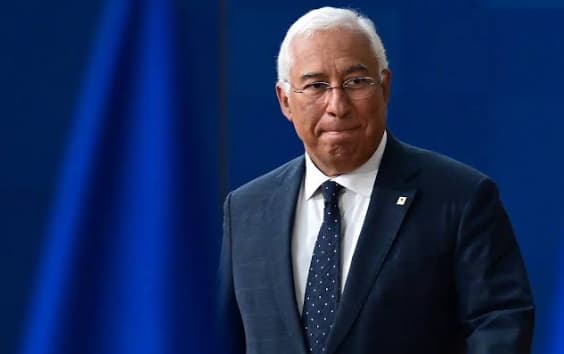
During a press conference in Dublin, European Council President António Costa detailed the logic behind this structural choice. The move to send a delegation rather than a single representative was not a decision made in a vacuum, but one informed by the operational realities of other major players. Costa pointed to the emerging diplomatic landscape, noting that the parties involved are already moving in collaborative units.
"Listen, here is just one example," Costa remarked, drawing a parallel to the methods of other global actors. He noted that President Trump’s special envoys consist of two individuals, and that the Ukrainian delegation is expected to comprise three or four members. In the theater of international relations, Costa argued, such team-based approaches are the standard. By mirroring this structure, the EU aims to match the capacity and expertise of the parties it will encounter.
This unity is not merely a matter of diplomatic etiquette; it is a functional requirement for the work ahead.
This delegation will not be a monolith of bureaucracy, but a carefully constructed coalition. The European Union will be represented by its central institutions alongside a core group of five influential nations: Germany, France, the United Kingdom, Italy, and Poland. This combination of institutional weight and the specific geopolitical influence of the 'E5' countries is intended to provide a comprehensive European perspective.
By weaving together the resources of the EU institutions with the direct involvement of these five key powers, the bloc seeks to create a presence that is both deep and wide. This structure is designed to ensure that the negotiations are not just about immediate cessation of hostilities, but about the long-term stability of the continent.
There is a profound strategic necessity behind this decision to act as a team. Costa emphasized that for Europe to be effective, it must avoid the fragmentation that often plagues international coalitions. The goal is to present a front that is impossible to ignore or divide.
"And, of course, we all need to unite," Costa stated, underscoring the necessity of internal cohesion. He explained that having a team is vital to speaking with a single, unified voice—a principle that was the cornerstone of the leaders' agreement during the November 13 summit. This unity is not merely a matter of diplomatic etiquette; it is a functional requirement for the work ahead. The bloc is currently working to solidify this coordination, ensuring that when the discussions begin, the European position is clear and unwavering.

At the heart of this diplomatic maneuvering lies a fundamental geopolitical principle that has become the guiding star for European leadership: the idea that European security is inextricably linked to the fate of Ukraine. This is not just a sentiment of solidarity, but a recognition of a hard reality. A peace that does not account for Ukraine's stability is a peace that cannot guarantee the security of the broader European continent.
This perspective drives the urgency of the delegation's mission. The objective is not simply to reach an agreement, but to secure guarantees that will hold long after the ink has dried. The EU's stance is that any negotiation must result in a framework that protects Ukraine's future, thereby protecting the security of all European nations.
As the diplomatic machinery begins to turn, the focus shifts from the formation of the delegation to the substance of the talks themselves. The EU has made its intentions clear: it fully supports the peace process and maintains a hope that these efforts will yield concrete results.
While the specific details of the negotiations remain ahead, the groundwork has been laid. Europe has chosen to enter the room not as a collection of competing interests, but as a unified coalition. The mission is clear: to speak with one clear and unified voice in all discussions that determine Ukraine's future and the security of the continent.