
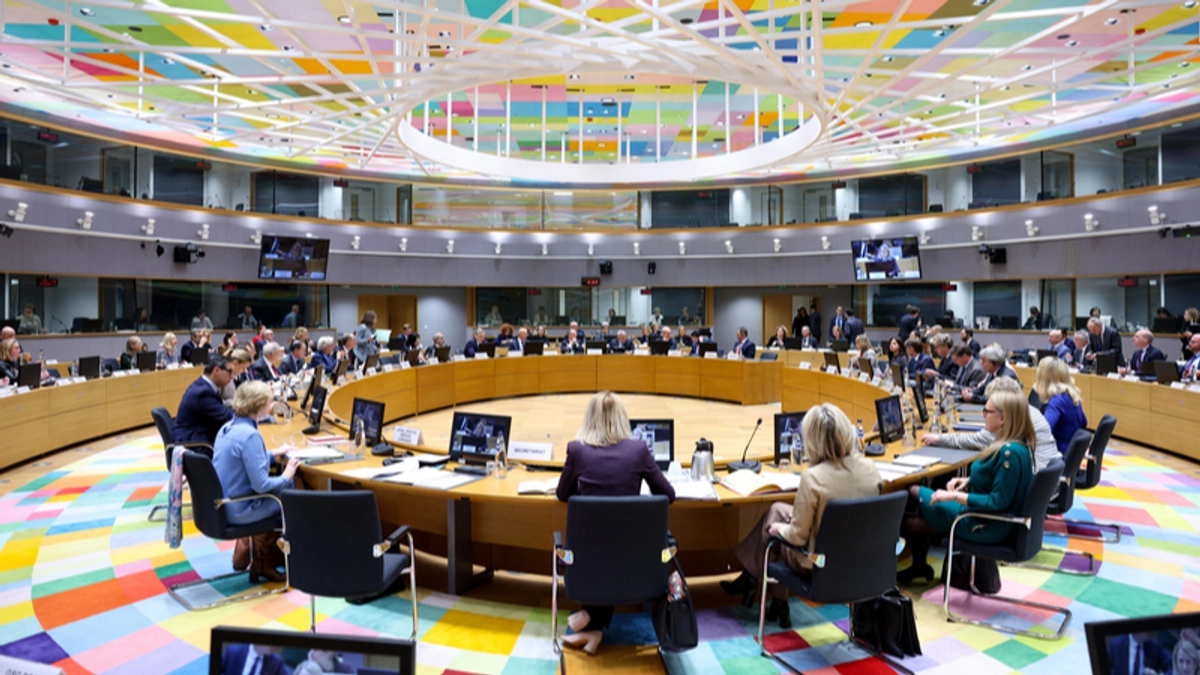
For a nation navigating the dual pressures of an ongoing war and the rigorous demands of European integration, the arrival of massive financial support is rarely just about the money. It is about the validation of a process. The EU Council authorized a financial aid package of approximately 8 billion euros for Ukraine through the Ukraine Facility program, a decision that serves as a profound signal of confidence in Kyiv’s institutional trajectory.

This is not a simple handout. The disbursement is the culmination of a rigorous checklist, a series of hurdles designed to ensure that as Ukraine modernizes, it does so on a foundation of stability. The European Union confirmed that this payment follows Ukraine's fulfillment of over 20 target steps that relate to various reforms in key areas. These milestones were not superficial; they spanned the essential pillars of a functioning modern state, including the judiciary, anti-corruption measures, and the management of financial markets.
While the European Commission initially proposed to allocate 8.04 billion euros to Ukraine under the Ukraine Facility program, the final amount was adjusted to approximately 7.8 billion euros after accounting for advance repayments. However, a separate finalized budget support payment of 7.9 billion euros—equivalent to roughly 8.7 billion dollars—stands as the largest single disbursement ever provided under the 'Ukraine Facility' program.
The funding serves a dual purpose: mitigating the immediate economic shocks of war and accelerating the structural evolution required for accession.
To understand the scale of this support, one must look at how it is structured. A significant portion of this package, 5 billion euros, is drawn from the 2026 Ukraine Support Loan. This loan aims to provide the long-term fiscal breathing room necessary for a country in transition. By breaking the aid into these massive, targeted tranches, the EU creates a mechanism where capital flows only when progress is proven.

⚡️ The EU has approved its largest single payout to Ukraine under the Ukraine Facility, totaling nearly eight billion euros. Around five billion euros of this funding will come from the 90 billion euro loan package.
The necessity of this capital cannot be overstated. Ukraine is currently grappling with a massive budget shortfall, a gap created by the relentless costs of defense and a significant reduction in tax revenue caused by the ongoing conflict. The funds are intended to address these immediate macro-financial stability needs while simultaneously fueling reconstruction and modernization efforts.
This support is not merely about keeping the lights on; it is about building the infrastructure of a future EU member state. Every euro directed toward judicial reform or anti-corruption efforts is an investment in the very systems that will eventually allow Ukraine to integrate fully into the European economic fabric. The funding serves a dual purpose: mitigating the immediate economic shocks of war and accelerating the structural evolution required for accession.
The approval of this nearly 8 billion euro package provides a sense of predictable stability. EU and Ukrainian officials have confirmed that financial stability is projected through 2026, provided that the current momentum regarding reforms is maintained. This predictability is vital for a country attempting to plan long-term reconstruction while facing the daily uncertainties of combat.
However, the work is far from finished. The financial architecture for Ukraine is being built in stages, with future funding planned through 2027. The momentum established by this record tranche is expected to carry into the next phase of negotiations. As the current package settles into the Ukrainian economy, the eyes of policymakers are already turning toward the next major milestone.

An International Monetary Fund mission began work in Ukraine on November 9 for the combined second and third reviews of the Extended Fund Facility (EFF) program. IMF resident representative Priscilla Toffano said the mission, led by Gavin Gray, will discuss Ukraine's macroeconomic and fiscal policy objectives alongside key structural reforms. President Zelenskyy previously said the IMF would help identify funding needed for Ukraine's financial stability in 2027. #Ukraine
As the landscape of European security and economics continues to shift, the scale of commitment is expected to grow. Discussions are already being framed for the future, with EU leaders set to discuss an additional 45 billion euro loan. These discussions are scheduled for late November, signaling that the European Union's commitment to Ukraine's economic survival and institutional transformation is entering a new, even more ambitious chapter.