
The silence of a Sunday night in the Vishwas Nagar area of Delhi was shattered not by the usual hum of city traffic, but by the sudden, violent intrusion of fire. In a scene that unfolded rapidly and with devastating consequence, a house located in this specific neighborhood became the site of a deadly incident that left a family and the local community in mourning. The event, which resulted in four deaths and two injuries, stands as a stark reminder of the vulnerability of residential spaces when combined with the infrastructure of modern, electric mobility.

The sequence of events, as pieced together from emergency reports, begins in the early hours of the morning. At approximately 4:15 a.m., the first reports of the fire reached the emergency services. The origin of the blaze was localized to the ground floor of the structure, a detail that would become central to understanding the dynamics of the tragedy. By this time, the fire was already active, and the urgency of the situation was immediately clear to those who witnessed or responded to the call.
The building itself offers a critical dimension to the story of the fire’s impact. It was a relatively compact house, spread over nearly 60 square yards. In an urban context like Delhi, such a footprint is often the standard for multi-generational families living in close quarters. The proximity of living spaces on a single plot of this size can make fire spread with alarming speed, particularly in the early stages of a blaze when occupants are still asleep and evacuation routes may be limited or obstructed.
The two remaining individuals survived the immediate danger, though the extent of their injuries and their ongoing recovery remains a matter of medical concern.
Emergency responders moved quickly to contain the threat. Firefighters managed to bring the blaze under control by around 5:00 a.m., a window of less than an hour from the initial report to containment. This rapid intervention is a testament to the efficiency of the local fire services in a dense metropolitan area. However, the time that had elapsed between the start of the fire and its control was enough for significant damage to occur. In the aftermath of the containment, six individuals were rescued from the site and transported to a hospital for treatment.
Despite the rescue of six people, the outcome was not uniformly positive. Of those taken to medical facilities, four later succumbed to their injuries. The loss of these four lives is the central tragedy of the incident, representing a complete extinguishing of four individual stories and leaving behind families who must now navigate the profound grief of losing loved ones. The two remaining individuals survived the immediate danger, though the extent of their injuries and their ongoing recovery remains a matter of medical concern.
At the heart of the investigative efforts to understand this fire is a specific detail about the ground floor of the house: it was operating as an e-rickshaw charging station. The presence of this infrastructure introduces a layer of complexity to the cause of the fire. Electric charging stations, particularly those that might be part of an informal or semi-formal network for three-wheeler vehicles, involve high-power electrical connections. While the exact mechanism of the ignition is still unknown, the location of the fire on the ground floor where this station was active makes the electrical system a prime suspect. This connection to e-rickshaws is significant; these vehicles are a pervasive part of Delhi’s public and private transport, and their charging infrastructure is becoming increasingly integrated into residential and commercial zones.
The current understanding of the incident is that the circumstances leading to the fire are not yet known. This statement of unknown causality is a standard procedural response, but it carries weight in a case where the loss of life is so significant. Investigators are likely examining whether the e-rickshaw charging station was the direct source of the ignition or if the fire started elsewhere and simply spread to that area. The lack of a confirmed cause means that for now, the fire remains a tragedy of unknown origin, with the e-rickshaw charging station serving as the focal point for public concern and safety scrutiny.
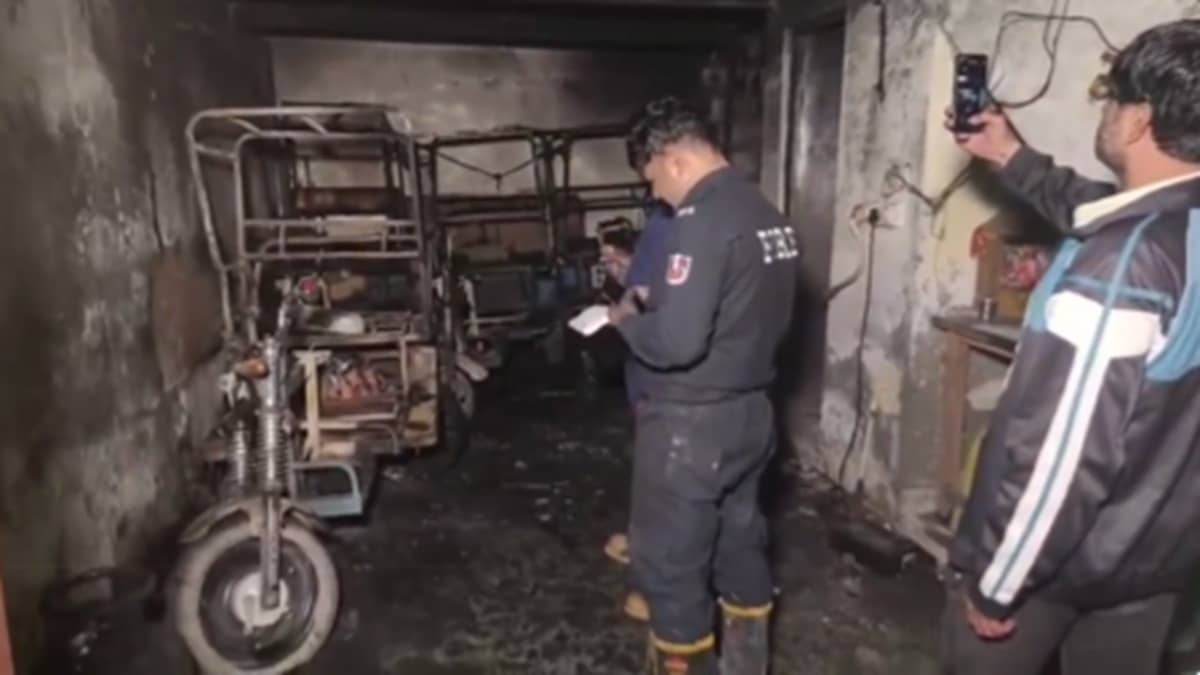
The incident in Vishwas Nagar is not just a local news item; it is a data point in a broader conversation about urban safety in rapidly modernizing cities. As electric mobility expands, the integration of charging points into everyday residential areas raises critical questions about safety standards, electrical load management, and emergency response preparedness. The fire in Delhi highlights the potential risks associated with this transition, particularly in structures that may not be originally designed to handle the electrical demands of high-capacity charging stations.
In the wake of the tragedy, the immediate focus shifts to the families of the four deceased. The community of Vishwas Nagar is now marked by this loss, and the house that was once a place of domestic life has become a symbol of a preventable or perhaps unpreventable disaster. The speed of the firefighting response, while effective in stopping the spread, could not undo the damage done in the critical first few minutes. The story of this fire is ultimately about the fragility of urban life and the urgent need for rigorous safety protocols as new technologies are adopted in densely populated environments.
The physical context of the fire is as important as the event itself. A house spanning nearly 60 square yards is a modest space, yet it is sufficient to house multiple families or large extended households. In such a confined area, the movement of smoke and heat is rapid. The fact that the fire was on the ground floor suggests that the upper levels, if they existed, may have been threatened by heat rising from below, or that the occupants on the ground were in the immediate path of the flames. The rescue of six people indicates that not everyone inside was able to escape on their own, or that some were trapped due to the speed of the fire’s onset.
The mention of an e-rickshaw charging station is a specific detail that has drawn significant attention. E-rickshaws are electric three-wheelers that have replaced many traditional auto-rickshaws in Indian cities due to their lower operating costs and environmental benefits. However, their reliance on electricity means that charging stations are a new and growing infrastructure need. Whether this station was a formal installation with safety certifications or an informal setup is a key investigative question. The proximity of such a power-intensive setup to a residential living space creates a risk profile that urban planners and safety regulators must address.
As authorities work to determine the exact cause of the fire, the community is left with a profound sense of loss and uncertainty. The four deaths are a heavy price for an incident that may have been caused by a simple electrical fault, a misuse of the charging station, or another factor entirely. The lack of a confirmed cause prolongs the period of uncertainty for the families and the public, but it also underscores the need for a thorough and transparent investigation. The incident serves as a grim reminder that the transition to electric mobility must be accompanied by equally robust safety standards to prevent such loss of life in the future.