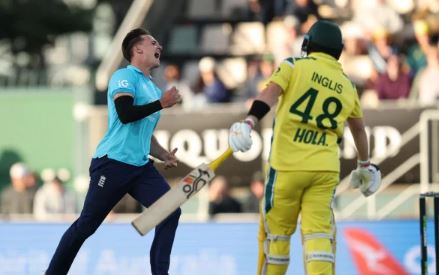
For eight years, the rhythm of English cricket against Australia in the One Day International format has been defined by a persistent, frustrating absence of silverware. But on November 18, 2026, that cycle finally broke. In a decisive three-match series, England secured a 2-1 victory, reclaiming a sense of dominance that had long been missing from their encounters with their southern hemisphere rivals.

The final act of this drama unfolded at Hobart's Bellerive Oval, a venue that had previously remained unconquered by the English side in this format. The setting provided a high-stakes backdrop for a match that would determine not just the series, but the momentum of the entire tour. England entered the fray needing to maintain their composure to ensure the series victory, knowing that Australia would be fighting to prevent a sweep of the momentum.
England’s path to victory was paved by a massive total of 328 runs, a score that placed immense pressure on the Australian chase. The cornerstone of this offensive surge was Ben Duckett, who delivered a monumental performance. Duckett’s innings of 133 runs provided the backbone of the English total, serving as a masterclass in both aggression and stability. His ability to anchor the innings while keeping the scoreboard moving allowed England to dictate the tempo of the match from the outset.
It was this accumulation of runs—the steady addition of middle-order support—that ultimately transformed a good score into a match-winning one.
Supporting Duckett was Will Jacks, whose contribution of 59 runs ensured that the momentum did not stall. While Duckett provided the volume, Jacks provided the necessary reinforcement, helping to build a platform that made the target of 328 feel insurmountable. The partnership and the subsequent scoring ensured that England’s total was not merely a collection of individual efforts, but a cohesive, intimidating mountain of runs.
While the headlines naturally gravitate toward the century-makers, the depth of the English batting lineup was evident in the supporting scores. Tom Banton added a vital 44 runs to the tally, a contribution that bridged the gaps between the larger individual scores and ensured the total climbed toward the 300-mark. It was this accumulation of runs—the steady addition of middle-order support—that ultimately transformed a good score into a match-winning one.
When Australia took to the crease to chase down the 328-run target, they found themselves facing a disciplined and relentless English bowling attack. The task of dismantling the Australian lineup fell largely to Sonny Baker, who emerged as the architect of their downfall. Baker’s precision was clinical, as he claimed four wickets, effectively stifling any hope of a sustained Australian recovery.
As the Australian wickets fell, the pressure mounted, and the chase began to unravel. The Australian total stalled at 231 runs, falling well short of the mark required to stay alive in the series. The English bowlers had successfully turned the high-scoring potential of the match into a defensive stranglehold, ensuring that the massive total set by Duckett and Jacks remained out of reach.

Australia did not go quietly into the night, however. Amidst the English dominance, Jack Edwards provided a significant counter-punch for the hosts. Edwards managed to claim four wickets of his own, proving that the Australian side possessed the individual talent to disrupt the English rhythm. His performance stood as a testament to the competitive nature of the series, even as the broader result began to tilt decisively in England's favor.
The finality of the 2-1 series win marks a significant shift in the landscape of this rivalry. By winning their first ODI at Bellerive Oval and clinching their first series victory over Australia in eight years, England has moved past a period of prolonged struggle. The victory in Hobart serves as more than just a statistical achievement; it represents the closing of a long chapter of frustration and the beginning of a new era of competitiveness against one of their most storied opponents.