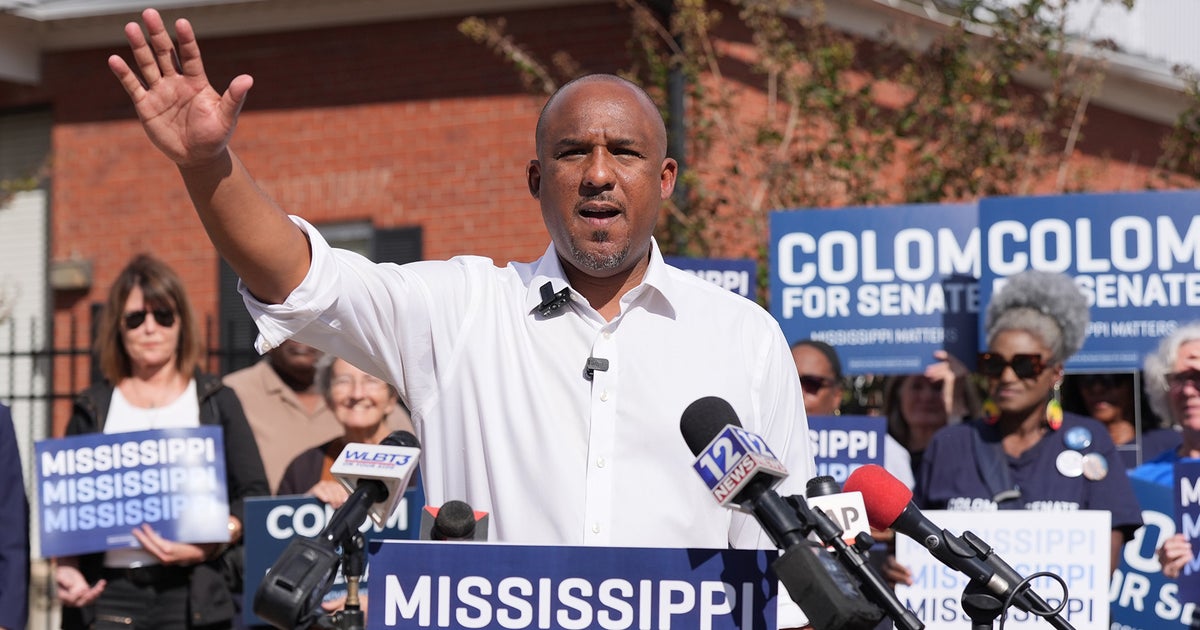
In the sweltering air of a Mississippi summer that stretched into autumn, the state watched its Senate race unfold with a patience that only years of stalemate could produce. For more than a week after the midterm elections, the outcome of the contest between the incumbent Republican, Cindy Hyde-Smith, and Democrat Scott Colom remained suspended in a cloud of absentee and provisional ballots. It was a slow unraveling that reflected the deep fissures in the state’s political landscape, a state where Donald Trump had won by approximately 20 points in the 2024 presidential election. Yet, as the final tallies were projected by the Associated Press and major television networks on November 11, the suspense broke. Democrat Scott Colom had won. The victory was not just a local political shake-up; it was a stunner that broke a 44-year Democratic drought in the state’s Senate seats, the last time a Democrat had been elected to that body being John Stennis in 1982.

Colom’s path to Washington began not in a congressional office, but in the judicial corridors of Mississippi’s 16th Judicial District. Born in Columbus, Mississippi, and a seventh-generation Mississippian, Colom started his legal career in 2011. By 2016, he had made history again, becoming the first African American to lead the district’s prosecutor’s office. His record there was marked by a 94 percent conviction success rate, a statistic that anchored his local reputation as a decisive legal figure. That reputation followed him to a pivotal moment in 2022, when President Biden nominated him for a federal judgeship. The nomination was blocked by Cindy Hyde-Smith herself, a move that personalized their rivalry long before the 2026 campaign trail. For Colom, the race was never just about policy; it was about the right to represent a state that had seen him fight for justice for over a decade.

Scott Colom will defeat Sen. Cindy Hyde-Smith in a major upset to become the first Democrat that voters in deep-red Mississippi have elected to the chamber in more than four decades, CNN projects. https://t.co/LIrSavsJ01 https://t.co/DLvYVX3MNB
The implications of Colom’s win ripple far beyond the current congressional grid. He becomes the first Black man popularly elected to the U.S. Senate in Mississippi’s history, and the first African American to represent the state in the Senate since 1871. For nearly 150 years, a Black senator had not sat in Washington representing Mississippi. His election marks the first such victory since Reconstruction, a period of immense political complexity and brief representation that had been largely erased from the state’s modern political memory. Colom is 43 years old, a man whose career has been built on the specific legal terrain of the Delta region, yet his win signals a broader demographic and political shift in the South. He is not merely a local judge who won; he is a figure who embodies a generational change in who gets to speak for Mississippi on the national stage.
In the 2026 midterm elections, Democrats reclaimed the majority in both chambers of Congress, a feat that was seen as a major political earthquake.
Mississippi’s upset was not an island. It was part of a broader national surge of anger toward the administration of Donald Trump, which enabled Democrats to make their largest midterm gain since 1986. In the 2026 midterm elections, Democrats reclaimed the majority in both chambers of Congress, a feat that was seen as a major political earthquake. Voters in the South were particularly motivated by the president’s attempts to redraw Black majority districts, a move they viewed as a dilution of their voting power. Colom’s campaign capitalized on this tension, running on a platform that focused on the cost of living, healthcare access, and the survival of rural hospitals. His slogan, “Mississippi Matters,” was a direct appeal to a state that often feels overlooked by national politics. The message was clear: the state’s rural and working-class demographics were not a monolith to be exploited, but a constituency to be served.

BREAKING: WASHINGTON (AP) - Democrat Scott Colom wins election to U.S. Senate from Mississippi.
The campaign itself was defined by the personal history between Colom and Hyde-Smith. Hyde-Smith, the incumbent senator, had been the obstacle to Colom’s federal judicial nomination. That bureaucratic blockage turned into a political narrative where Colom positioned himself as the voice of justice against the establishment. Meanwhile, Hyde-Smith’s campaign leaned on her institutional power and Republican party machinery. But the tide had turned. High-profile Democratic figures, including Barack Obama, Kamala Harris, Raphael Warnock, and Bill Clinton, threw their weight behind Colom, signaling that his win was a critical pillar for the party’s new strategy in the Deep South. The support was not just symbolic; it brought national resources and attention to a race that had previously been dismissed as a foregone conclusion for the Republicans.
In the days following the November 11 projection, the final administrative processes concluded, and Cindy Hyde-Smith released a video on social media to formally concede the race. In a measured statement, she said, “While this is not the outcome we worked for or hoped for, I respect the decision of Mississippi voters.” She added, “I want to congratulate Scott Colom and wish him well as he takes on the tremendous responsibility of representing our great state.” The tone was dignified, but the message was definitive: the forty-four-year era of Republican dominance in the state’s Senate seats was over. Hyde-Smith’s concession closed the chapter on a tenure that had been central to the state’s political identity.

DEM FLIP: Democrat Scott Colom has defeated incumbent Republican Cindy Hyde-Smith, flipping Mississippi’s U.S. Senate seat blue. When he is sworn in, Senator-elect Colom will be the first Democrat in 38 years to represent Mississippi in the Senate. Congratulations! https://t.co/b6ybQlSdm8
With Colom’s victory, the arithmetic of the Senate shifted significantly, giving Democrats at least 55 seats compared to 44 for Republicans. This new balance of power marks a substantial shift in the political landscape, giving Democrats their largest midterm gain since 1986 and solidifying their control of both chambers of Congress.