
On November 5, 2026, the American political landscape shifted. Democratic victories in the midterm elections provided a new mandate for the party, setting the stage for a period of intense legislative activity. For the incoming Democratic majority, these wins were not merely about party control, but about a perceived responsibility to the electorate. The transition from the ballot box to the halls of power is often a period of friction, but the tension currently brewing between the White House and Congress suggests a conflict that may transcend mere policy disagreements and enter the realm of legal warfare.
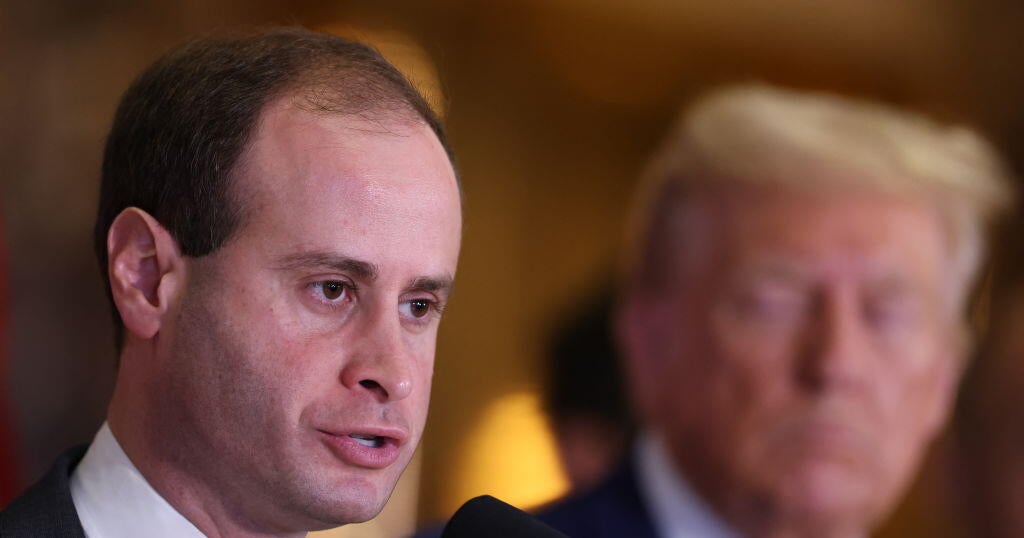
Less than a week after the elections, the atmosphere turned sharply adversarial. On November 11, 2026, the White House issued a formal warning to Democratic leaders, signaling that the administration viewed upcoming congressional scrutiny through a lens of potential illegality. In a letter addressed to Representative Robert Garcia, White House counsel Will Scharf articulated a defense of executive branch officials that went beyond standard political pushback. Scharf argued that the nature of the investigations being planned could move past legitimate oversight and into a territory that threatens the very functioning of the government.
Scharf’s position is rooted in the protection of the civil service. He suggested that if investigations are used as weapons rather than tools of transparency, they might violate the law. "Threats to executive branch officials designed to deter them from public service, or process designed merely to abuse or instill fear in the recipient may cross the line into blatant criminality," Scharf wrote, framing the administration's stance as a defense against intimidation.
Garcia’s rebuttal also addressed the fundamental nature of the legislative branch.

White House confronts Democrats over planned probes, claiming possible 'criminality' https://t.co/lpscVcveyn
While the White House characterized these moves as potentially criminal, the Democrats have been clear about the breadth of their intended work. The party is preparing to launch oversight into several high-profile and sensitive areas. These include investigations into the personal wealth of Donald Trump, the details surrounding the Epstein investigation, the operations of Immigration and Customs Enforcement (ICE), and various other business dealings associated with the administration. To the Democrats, these are not mere political maneuvers, but necessary checks on executive power.
Representative Robert Garcia, a central figure in this escalating exchange, did not mince words in his response to the White House on that same day, November 11, 2026. For Garcia, the upcoming investigations are a direct response to the will of the voters. He argued that the recent election results provided a clear directive to the new Congress. "The American people voted overwhelmingly for us to pass laws to root out corruption and abuse," Garcia stated, positioning the legislative agenda as a fulfillment of a democratic promise.
Garcia’s rebuttal also addressed the fundamental nature of the legislative branch. He rejected the notion that the administration could dictate the boundaries of congressional inquiry, asserting that "Congress has wide latitude to conduct investigations and oversight, an authority inherent in the power to legislate." This distinction—between legitimate oversight and the 'criminality' alleged by the White House—is the central fault line in the current standoff.

White House confronts Democrats over planned probes, claiming possible 'criminality' https://t.co/VIcnXqg4IH
As the two branches prepare for a direct confrontation, the rhetoric has become increasingly personal and pointed. Garcia suggested that the administration's defensive posture was itself a signal of what might be uncovered. In a blunt assessment of the situation, Garcia remarked that "it appears Donald Trump has something to hide," framing the administration's legal warnings as an attempt to preemptively shield itself from scrutiny.

This suspicion forms the backdrop of the upcoming legislative session. The Democrats are not merely looking for procedural errors; they are looking for evidence of wrongdoing that they believe warrants public disclosure and legal consequence.
Adding weight to the White House's position is the perspective of Attorney General Todd Blanche. While the administration's warnings have been framed as a defense of the executive branch, the Attorney General’s comments suggest that the legal scrutiny could, in fact, turn back toward the legislators themselves. Blanche noted that the line between aggressive oversight and criminal conduct is thin, suggesting that "there could be a crime to investigate if rhetoric from Democrats turned threatening."
This creates a paradoxical situation: as Congress prepares to investigate the administration for potential corruption, the administration is warning that the methods used by Congress could themselves trigger criminal investigations. It is a cycle of potential legal escalation where both sides claim the moral and legal high ground.

White House confronts Democrats over planned probes, claiming possible 'criminality' https://t.co/WWxUJleE62
As the dust settles from the midterm elections and the initial legal warnings are exchanged, the focus shifts toward the formal beginning of the new legislative term. On January 3, 2027, the new Congress will be seated, marking the official start of this high-stakes era of oversight. The battle lines have been drawn, the legal arguments have been filed, and the question of where legitimate oversight ends and 'blatant criminality' begins remains the most pressing constitutional question facing the nation.