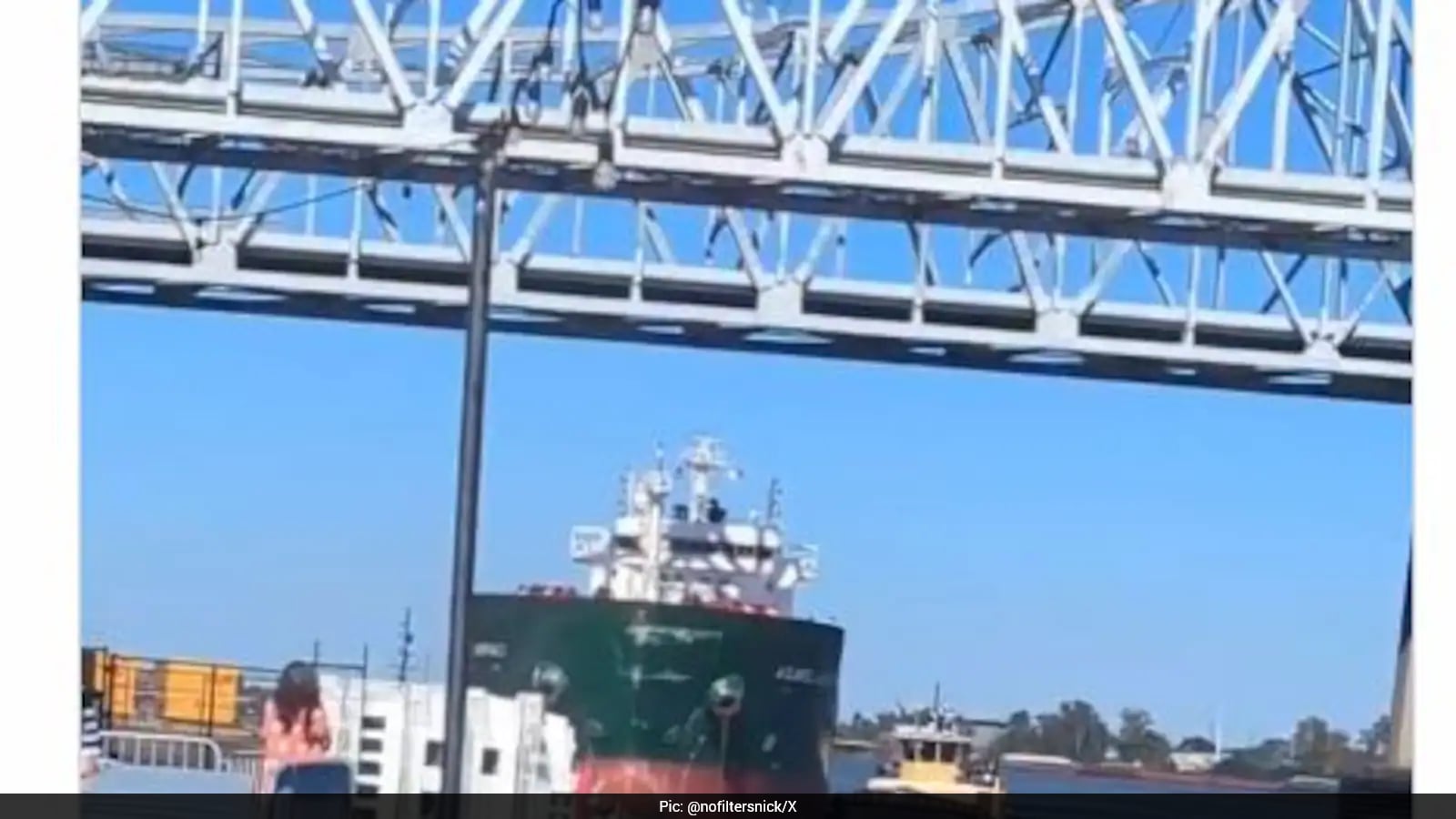
The calm of a Tuesday afternoon on the Mississippi River shattered into chaos when a petroleum tanker collided with a docked cruise ship in the Port of New Orleans. The incident, occurring at 12:30 local time on June 25, 2024, sent shockwaves through one of America's busiest waterways, immediately drawing the attention of emergency responders and port officials.

The vessel at the center of the unfolding drama was the Atlantic Asphalt, a tanker that reportedly struck the American Heritage, a cruise ship carrying 130 people. The collision was not a mere glancing blow—it forced the cruise vessel to list dramatically to one side, creating a precarious situation for those aboard. The visual of the once-stable cruise ship tilting at an unnatural angle underscored the sudden violence of the impact and the potential dangers lurking in the aftermath.

A river cruiser carrying nearly 150 passengers is taking on water after colliding with a tanker near the Port of New Orleans on Friday. Rescue efforts are underway. Louisiana Gov. Jeff Landry says he is aware of the situation and is heading to New Orleans. The Port of New Orleans confirmed the tanker collided with American Cruise Lines’ American Heritage around 12:30 p.m. local time. Watch OAN on OAN Live for updates.
As news of the collision spread, the Coast Guard swiftly moved to secure a portion of the river, effectively halting maritime traffic in the affected area. This precautionary measure reflected the immediate priority: ensuring the safety of everyone involved. The Port of New Orleans issued a statement emphasizing that their "immediate priority is the safety of all passengers, crew members, and responders." The acknowledgment that this was "an ongoing and evolving incident" suggested that the full extent of the damage and potential risks remained unclear in the critical hours following the collision.
Emergency crews worked methodically to assess the condition of the vessel and determine the safest way to evacuate or assist those trapped aboard.
With 130 souls aboard the American Heritage, the collision transformed what should have been a routine port call into a crisis situation. The injured, whose exact number wasn't specified in the initial reports, represented the human cost of the accident. Emergency crews worked methodically to assess the condition of the vessel and determine the safest way to evacuate or assist those trapped aboard. The tilt of the ship complicated these efforts, as responders had to contend with an unstable platform while racing against time.

🚨🚨TODAY AT 4PM ET: LOUISIANA GOV. JEFF LANDRY JOINS WILL CAIN WITH LATEST ON RIVER CRUISE EMERGENCY What do we know about the river cruise struck by a large vessel near the Port of New Orleans? Louisiana Governor Jeff Landry joins Will Cain LIVE to discuss the ongoing rescue efforts and the latest developments.
Louisiana Governor Jeff Landry confirmed he had been briefed on the incident and was en route to New Orleans. His presence underscored the seriousness of the situation and the state's commitment to managing the aftermath. Landry's involvement signaled that this was being treated as a significant event requiring high-level coordination between local, state, and federal authorities.
In the immediate aftermath of the collision, the focus remained on rescue and assessment. The Port of New Orleans, a critical economic artery for the region, faced the operational and reputational challenges of such a high-profile accident. As the injured received medical attention and the extent of the environmental damage from the petroleum tanker remained to be assessed, one fact was clear: the incident would have lasting implications for port safety protocols and maritime regulations along the Mississippi River.

We are aware of the incident on the Mississippi and we are in close contact with local officials and law enforcement. I am headed to New Orleans now.