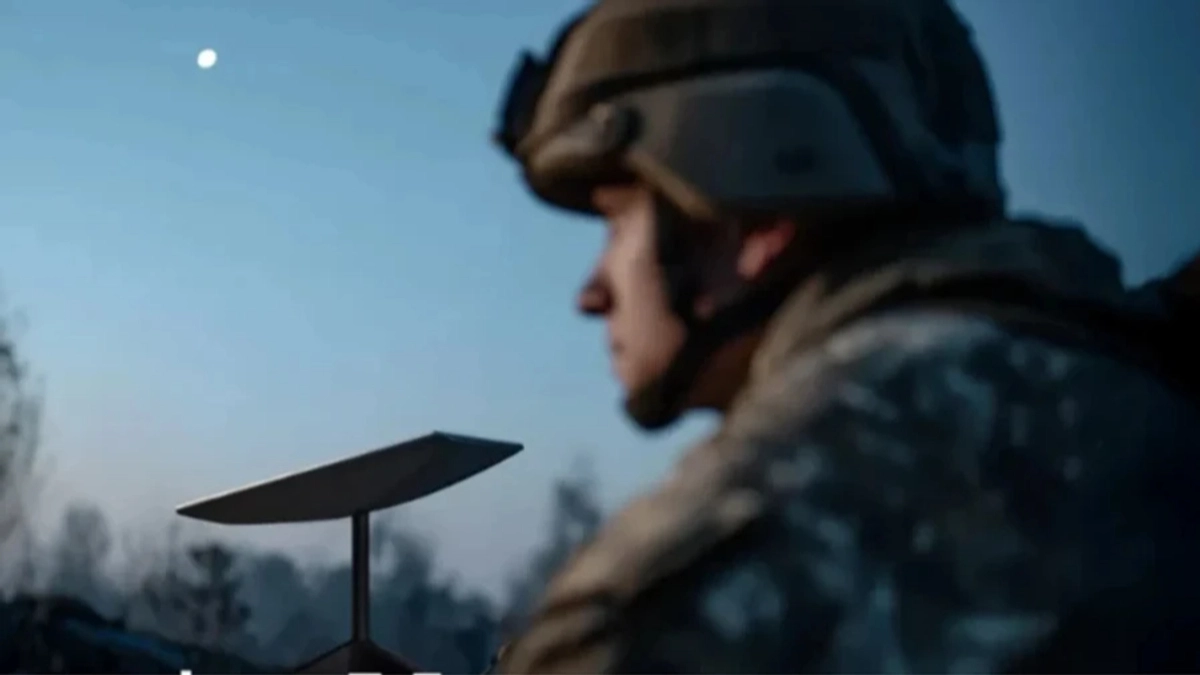
In the ongoing conflict between Ukraine and Russia, satellite communication has emerged as a critical component of modern warfare. For Ukrainian forces, the ability to maintain reliable, high-speed connections has become as essential as ammunition and fuel. So when Ukrainian President Volodymyr Zelensky announced in November that military units were experiencing significant disruptions in their Starshield-protected Starlink network, it raised immediate concerns about the implications for the country's defense capabilities.

The problems weren't entirely new. What started as intermittent glitches soon developed into a more serious problem when connectivity dropped significantly at higher speeds, creating operational challenges for forces across the front lines and in occupied territories.

Received briefings from Minister of Defense of Ukraine Yevhenii Khmara and Commander-in-Chief of the Armed Forces of Ukraine Mykhailo Drapatyi. Unfortunately, our units have been recording significant disruptions to Starshield’s operations over the territory of Ukraine for several days now – along the entire front line and in the temporarily occupied territories of Ukraine. Specifically, systematic speed restrictions are being imposed on Starshield, limiting it to 161 kilometers per hour (100 miles per hour). The Ukrainian military have already investigated the circumstances, and these are not random errors but systematic speed restrictions. For us, this primarily means a significant complication in intercepting Russian jet-powered drones. Unfortunately, there have already been strikes that got through because our interception systems cannot reach sufficient speeds and are unable to intercept in time. Unfortunately, this is helping the Russians kill more Ukrainians and carry out more accurate strikes against Ukraine. We are trying to establish all the circumstances with the American side.
By November 12, 2026, the situation had evolved into what Zelensky described as a "systemic speed limit" imposed on the Starshield network. Speaking after reports from Defense Minister Mykhailo Fedorov and Commander-in-Chief Mykhailo Drapaty, the president revealed that units were experiencing systematic restrictions limiting connectivity to 161 km/h (100 mph).
As Zelensky announced that Ukraine was seeking to clarify the circumstances with the American side, the broader implications remained unclear.
"Our units have been recording significant failures in Starshield over the territory of Ukraine for several days: along the entire front line and in temporarily occupied territory," Zelensky explained. "Specifically – systematic speed restrictions of Starshield at the level of 161 km/h are in effect."
These limitations weren't merely technical inconveniences; they had life-or-death consequences. Zelensky emphasized that the restrictions were not random errors but intentional constraints that significantly impeded Ukraine's ability to intercept Russian jet drones.
"For us, this is primarily about significant difficulty in intercepting Russian jet drones," he stated. "There are already hits due to the fact that countermeasures do not develop sufficient speed and do not have time to intercept."
The president went further, connecting the technical limitations directly to human suffering: "This helps Russians kill more Ukrainians and deliver more precise strikes across the country."


So @elon has cut off Starlink/Starshield again. It seems like no coincidence that Witkoff and Slenderman are in Moscow, bearing gifts to their Russian master. January is going to be lit.
As the situation unfolded, attention turned to Elon Musk, whose company SpaceX provides both the civilian Starlink and military Starshield networks. In a series of statements, Musk claimed that Starshield is controlled by the US government and accused Ukrainian military of violating usage terms by using the system for strikes.
Musk's position created a complex dynamic: while his technology had become essential to Ukraine's defense, his statements suggested limitations on how it could be used, potentially reflecting US policy concerns about escalating the conflict.
Adding another layer of complexity, former US President Donald Trump denied any involvement in the speed restrictions, expressing doubt about whether such an incident even occurred. His statement came amid the broader debate about US support for Ukraine and the extent to which American technology should be used in the conflict.

Neither Trump nor Musk have given a full explanation as to why Starshield was slowed. And despite numerous requests, Ukraine hasn't received any answers from DoD, State, WH or SpaceX. “We don’t know the cause [because] they keep silent about this,” a senior Ukrainian official told the @FT on Thursday. https://t.co/7VTCf1H630
The situation drew criticism from US officials, including Senator Jeanne Shaheen, who described the Pentagon's refusal to investigate the Starlink glitches as "troubling." The refusal to investigate suggested a potential reluctance to examine the full extent of how American technology was being used and potentially limited in the conflict.
As Zelensky announced that Ukraine was seeking to clarify the circumstances with the American side, the broader implications remained unclear. The restrictions came at a critical time when Ukrainian forces were increasingly reliant on advanced technology to counter Russian aerial threats.
The episode highlighted the delicate balance in modern warfare between technological dependence and the political considerations that govern its use. For Ukrainian forces, the 161 km/h speed limit wasn't just a technical specification—it was a potentially life-threatening constraint in their ongoing struggle to defend their country.