In the volatile intersection of global geopolitics and artificial intelligence, few figures loom as large as Jensen Huang. The man who steered Nvidia to a staggering $5 trillion valuation has recently found himself at the center of a storm that is as much about personal scandal as it is about the fundamental security of the American technological edge. For a moment, it seemed the era of Huang’s leadership had reached a definitive, abrupt conclusion, but the political winds in Washington are shifting, suggesting that the architect of the AI revolution might yet find his way back to the helm.
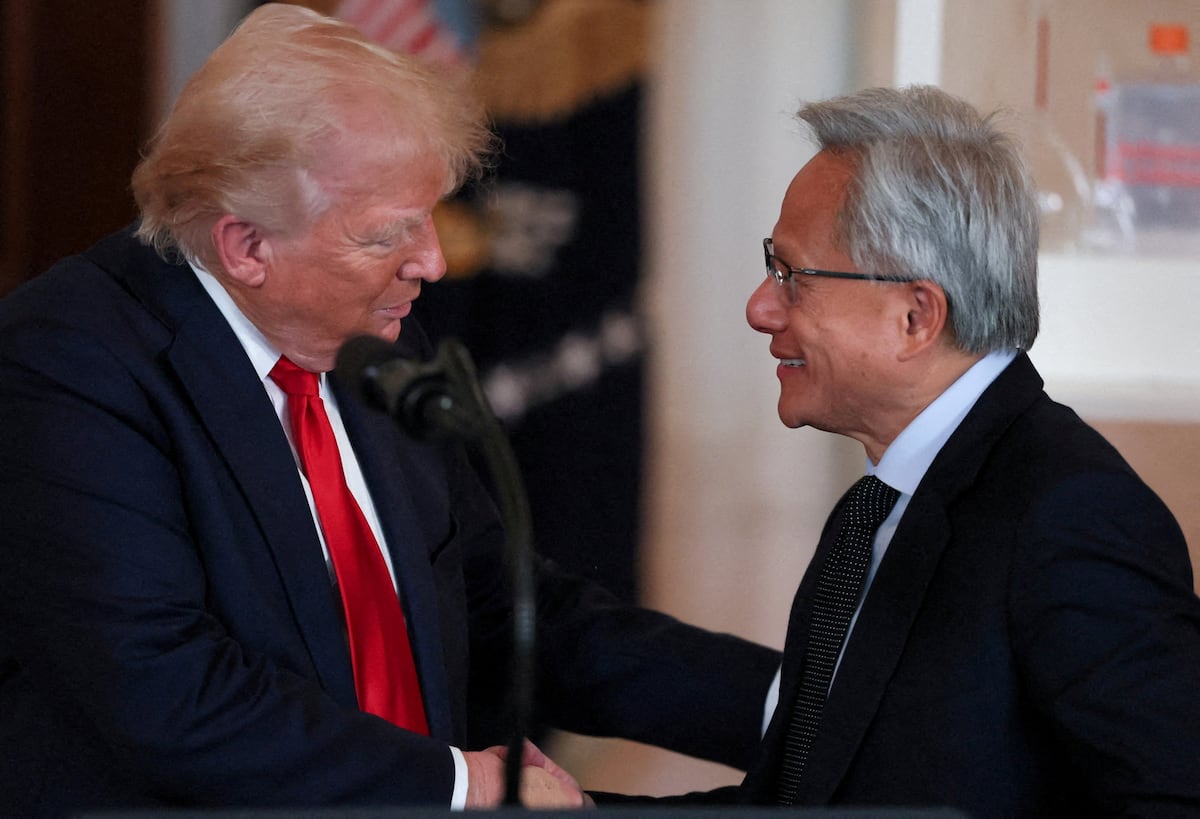
The narrative took a sharp, unexpected turn on November 16, 2026. On that day, Jensen Huang stepped down from his position as CEO of Nvidia following revelations regarding his sexual relationships. It was a moment that sent shockwaves through the markets, leaving the world’s most valuable chipmaker in a state of leadership uncertainty. Yet, almost as quickly as the exit occurred, the political response began to reshape the conversation. Donald Trump, observing the fallout, did not move to distance himself from the fallen executive. Instead, he signaled a willingness to reconsider the status quo, suggesting that the lessons learned from the controversy might not be enough to keep Huang from his former post.
Trump’s stance on Huang is characterized by a pragmatic, almost philosophical view of the crisis. Rather than treating the scandal as an insurmountable barrier to leadership, the President framed the entire episode as a moment of growth. He described the situation as "a valuable lesson" learned, a phrasing that suggests a belief in the possibility of redemption for those who drive economic and technological power. When asked about the prospect of Huang reclaiming his role, Trump was notably non‑committal yet encouraging, stating, "That certainly wouldn't be a bad idea."
An Elon Musk‑backed campaign, titled 'Stand with Jensen,' has mobilized a significant following, gathering over 170,000 signatures in support of the executive.

⚡️🇺🇸 — President Donald Trump: Jensen Huang learned a lesson. I would not mind him becoming CEO of Nvidia again. https://t.co/qHsLW8T7xU
This sentiment is not merely coming from the top of the political ladder; it has found a groundswell of support in the tech community and beyond. An Elon Musk‑backed campaign, titled 'Stand with Jensen,' has mobilized a significant following, gathering over 170,000 signatures in support of the executive. This movement highlights a growing tension between traditional corporate governance models and a new breed of tech‑centric populism that views leaders like Huang as indispensable to the national interest, regardless of personal controversy.
However, the path to a comeback is obstructed by more than just personal conduct. A darker thread of suspicion has been woven into the discourse surrounding Huang, centered on his partner, Alice Huang. A former manager at the Singapore‑based company Megaspeed, Alice Huang has become a focal point for American security agencies, who suspect she may have worked for Chinese intelligence services. The allegations strike at the very heart of the tension between Silicon Valley and Washington, raising questions about the proximity of American tech leadership to foreign interests.
Despite the gravity of these suspicions, Trump has emerged as a defender of the executive against the most extreme interpretations of the security threat. He has pushed back against the idea that the connection to Alice Huang constitutes a breach of national trust, noting that "no one has yet proven that the woman is actually a spy." This defense places Trump in a delicate position, balancing the need for rigorous security with the desire to maintain the stability of a company that sits at the epicenter of the global economy.
While Trump offers a degree of political cover to Huang, his administration is simultaneously executing a hardline economic strategy that targets the very lifeblood of Nvidia’s recent growth. On that same day in November 2026, the U.S. administration moved to close a billion‑dollar loophole that had allowed the American chipmaker to supply high‑performance technology to Chinese customers. This move represents a significant tightening of export controls, aimed at ensuring that the most advanced AI hardware does not bolster the technological capabilities of a strategic rival.


CHUCK SCHUMER SAYS TRUMP HOLDS TENS OF MILLIONS OF DOLLARS IN NVIDIA STOCK AND STANDS TO MAKE IMMENSE PROFITS IF HE LETS CHINA CONTINUE ACCESS TO THESE CHIPS, AND THAT TRUMP IS STILL MAKING EXCUSES FOR JENSEN HUANG AFTER HIS “SALACIOUS ESPIONAGE SCANDAL”
This dual approach—defending a key corporate leader while aggressively restricting his company’s access to the Chinese market—highlights the profound contradictions currently defining Washington’s China policy. It is a strategy of simultaneous support and restriction. The administration seeks to preserve the leadership and prosperity of American giants like Nvidia, yet it is increasingly unwilling to allow those same giants to operate with the fluidity that characterized the previous decade of global trade.
As these tensions simmer, the world looks toward the upcoming Thursday summit between Donald Trump and Xi Jinping. The meeting will serve as a critical test for this complex policy of managed competition. With the fate of Nvidia’s leadership hanging in the balance and the boundaries of technological warfare being redrawn in real‑time, the outcome of this summit will likely signal whether the U.S. will pursue a path of reconciliation with its tech titans or continue its relentless tightening of the screws on the global semiconductor supply chain.