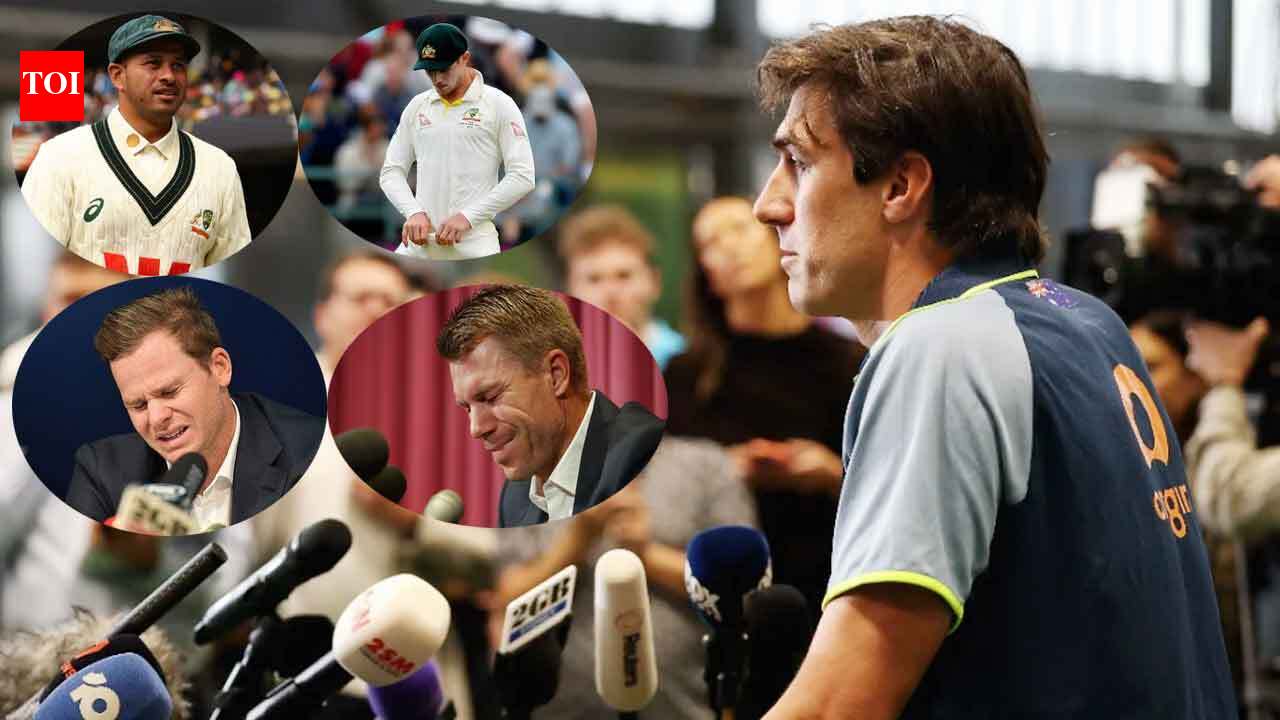
In the high-stakes theater of international cricket, certain moments do not merely pass; they calcify into legend, or in the case of the 2018 Cape Town Test against South Africa, into deep-seated controversy. For years, the narrative of 'Sandpapergate' has been a fixed point in the history of Australian sport—a story of individual transgression and subsequent fallout. But recently, that narrative was disrupted by the release of Sabr, the autobiography of Usman Khawaja.

Khawaja's book did more than recount personal struggles; it cast a shadow over the collective integrity of the Australian team. In its pages, Khawaja presented allegations that the entire squad was aware of the plan to use sandpaper to alter the condition of the ball during that fateful Test match. It was a claim that suggested the scandal was not the act of a rogue element, but a systemic failure of silence. For those who lived through the fallout, the implications were profound, threatening to rewrite the history of one of the most tumultuous periods in the sport's recent memory.
Responding to the tremors sent through the cricketing world, Pat Cummins held a press conference to address the claims. As the captain, Cummins found himself tasked with defending not just his own reputation, but the collective honor of the team. His response was not one of measured diplomacy, but of sharp, visceral rejection.
At the heart of the friction lies a specific, troubling detail within Khawaja's account.
Cummins did not mince words when addressing the core of Khawaja's claims. He characterized the suggestion that the team was complicit as "complete and utter nonsense." The weight of the denial was heavy, aimed at neutralizing a claim that, if believed, would have fundamentally altered the understanding of the 2018 incident. For Cummins, the allegations were not just incorrect; they were a direct assault on the reality of what occurred in Cape Town.
Beyond the technical denial of the facts, there was a deeper, more personal dimension to Cummins' reaction. The captain revealed that the contents of Sabr had caught him entirely off guard, suggesting a disconnect between his perception of his teammate and the words printed on the page.
"I was genuinely shocked by what had been written," Cummins stated, conveying a sense of disbelief that went beyond mere disagreement. It was the reaction of a leader seeing a version of history—and a version of a colleague—that he did not recognize. This wasn't just a dispute over a tactical decision on the field; it was a confrontation with a written testimony that challenged the very foundation of the team's internal culture during that era.
At the heart of the friction lies a specific, troubling detail within Khawaja's account. While Khawaja denied knowing that sandpaper was being used to actively alter the ball, he reportedly admitted to a moment of intervention that sits uncomfortably in the middle of the controversy. Khawaja noted that he had warned Cameron Bancroft to be careful while using the sandpaper.

This admission creates a complex layer of culpability. If a player warns another to be 'careful' while performing a prohibited act, the line between being an observer and being an accomplice becomes perilously thin. It is this specific nuance—the distinction between knowing the act is happening and knowing the intent behind it—that has fueled the current firestorm. It is the difference between a witness and a participant, a distinction that Cummins is now fighting to maintain for the rest of the squad.

WATCH | Pat Cummins presser LIVE! https://t.co/bB5EPo1uZl https://t.co/BFiI6AeI1I
For Cummins, the fallout is as much about character as it is about the rules of the game. The captain expressed that the tone and content of the allegations were fundamentally at odds with his personal experience of his teammate. He noted that the way the claims were presented was "not consistent with the image he had of Khawaja."
This sentiment highlights the human cost of such revelations. In the professional arena, where trust is the primary currency, the publication of such claims acts as a solvent, dissolving the bonds of camaraderie that teams rely on. Cummins' critique was directed not just at the veracity of the claims, but at the manner in which Khawaja presented them, suggesting that the allegations were handled with a casualness that failed to respect the gravity of the impact they would have on those involved.
As of the recent release of the autobiography, the dust has not settled; it has merely been kicked up by a new wind. The release of Sabr has reopened a wound that many believed had scarred over years ago. While Cummins has stood firm, offering a categorical denial of team-wide knowledge, the tension between the written word of an autobiography and the spoken word of a captain remains. The scandal of 2018 is no longer a closed chapter of history, but a living, breathing debate about truth, complicity, and the heavy burden of leadership in the face of sudden, public accusation.