
In the quiet, formal halls of the International Court of Justice in The Hague, a decision was reached that will echo far beyond the courtroom. The UN’s highest court delivered a judgment that fundamentally alters the legal landscape of human rights. By a narrow 9-6 vote, the court ruled that Myanmar committed genocide against the Rohingya Muslims in northern Rakhine State during the 2017 military crackdown. It is a finding that transforms a long-standing humanitarian crisis into a settled matter of international law.
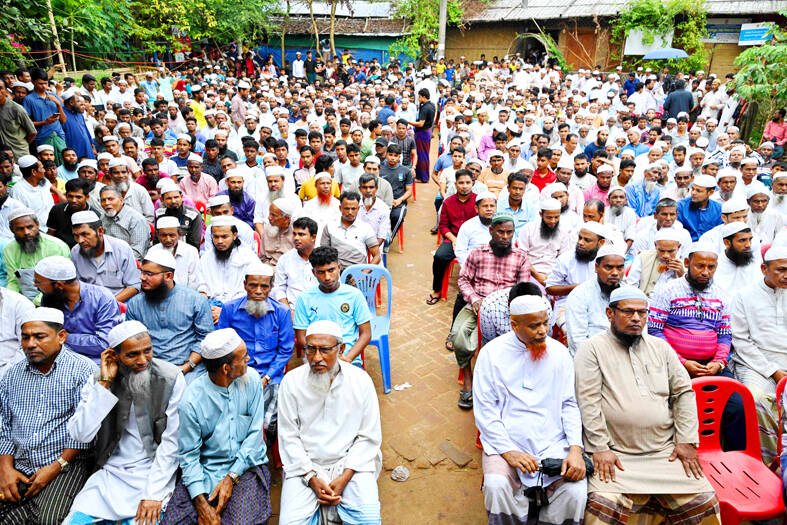
ICJ President Yuji Iwasawa announced the decision, stating that the court "finds that the Republic of the Union of Myanmar has committed genocide against the Rohingya group in northern Rakhine State." The ruling is not merely a condemnation of violence, but a legal recognition of intent—the most difficult threshold to cross in international law. The court determined that Myanmar's security forces acted with the specific intent to physically destroy the Rohingya as an ethnic group.
The judgment provides a harrowing reconstruction of the 2017 military crackdown. What began as a security operation evolved into a systematic campaign of devastation. According to the court's findings, Myanmar's security forces killed thousands of Rohingya civilians and perpetrated widespread acts of sexual violence. The violence was not limited to adults; the court noted acts of extreme violence against children.
The path to this judgment began years earlier, in 2019, when the African nation of The Gambia brought the case against Myanmar to the court.
As the military moved through northern Rakhine State, the destruction was total. Villages were targeted with mass arson, leaving nothing but ash in the wake of the security forces. This was not a chaotic byproduct of conflict, but a coordinated effort that drove over 730,000 Rohingya to flee their homes, seeking refuge in neighboring Bangladesh. The court observed that these fleeing populations were even attacked as they attempted to escape the violence.

BREAKING: UN top court convicts Myanmar of 'genocidal intent' in killing 10,000 Rohingya Read more: https://t.co/QWirHXikBj https://t.co/jzSyCMt32Q
This ruling marks a historic moment in the application of international law. For the first time, a state has been held accountable under the 1948 Genocide Convention. The Convention was established in the wake of the mid-20th century's greatest atrocities to ensure that the intentional destruction of an ethnic, racial, or religious group would never again go unpunished by the global community. By applying these specific standards to Myanmar, the ICJ has validated the power of the Convention as a living instrument of justice.
While the United States had previously deemed the 2017 campaign a genocide, the ICJ's ruling provides a judicial weight that political declarations cannot match. It moves the conversation from the realm of diplomatic opinion into the realm of binding international jurisprudence.
The path to this judgment began years earlier, in 2019, when the African nation of The Gambia brought the case against Myanmar to the court. It was a move that signaled a growing global willingness to use international institutions to address mass atrocities. The Gambia did not act alone; its pursuit of justice was bolstered by the support of 11 other countries, creating a coalition of nations united by the principle that genocide must be met with legal scrutiny.

This collective action underscores the idea that the protection of human rights is a shared global responsibility. The case, which has spanned years of legal maneuvering and investigation, has finally culminated in a definitive statement on the actions taken by the Myanmar military in 2017.

UN top court convicts Myanmar of ‘genocidal intent’ against Rohingya https://t.co/OmfBph66zy via @AJEnglish
Despite the gravity of the ruling, the court faces a familiar hurdle: the challenge of enforcement. The ICJ does not possess its own police force or the power to unilaterally compel a sovereign state to comply with its dictates. The ability to implement this judgment rests in the complex machinery of international relations and the willingness of the global community to act.
However, the lack of immediate enforcement power does not diminish the ruling's impact. The finding sets a significant legal precedent that will influence how international law is interpreted in future conflicts. It provides a formal, judicial basis for the world to view the events in Rakhine State not as a localized conflict, but as a crime against humanity.
For the survivors of the 2017 crackdown, the ruling offers something that has been absent for years: official recognition. For the hundreds of thousands who fled to Bangladesh and those who remain in the shadow of the violence, the court's decision validates their lived experience of systematic destruction.
Beyond the symbolic power of the verdict, the ruling may serve as a practical foundation for the future. The legal finding of genocide may pave the way for determining reparations for survivors. While the road to restitution is long and fraught with political obstacles, the door has been opened by this judgment. The legal architecture for seeking justice and compensation has been built, leaving the world to decide how to use it.

The UN's highest court has found Myanmar guilty of “genocidal intent” in massacres that killed 10,000 people during its brutal crackdown on the country's Muslim minority in 2017. https://t.co/1UQt0XrW93