
The Atlantic Ocean route stretching from the West African coast to the Canary Islands has long been recognized as one of the deadliest migration routes in the world. It is a passage defined by vast distances and unpredictable waters, where the stakes of every voyage are life or death. On a recent Saturday, that danger manifested in a staggering statistical spike: Spanish coastguards rescued 1,488 migrants traveling across the sea.
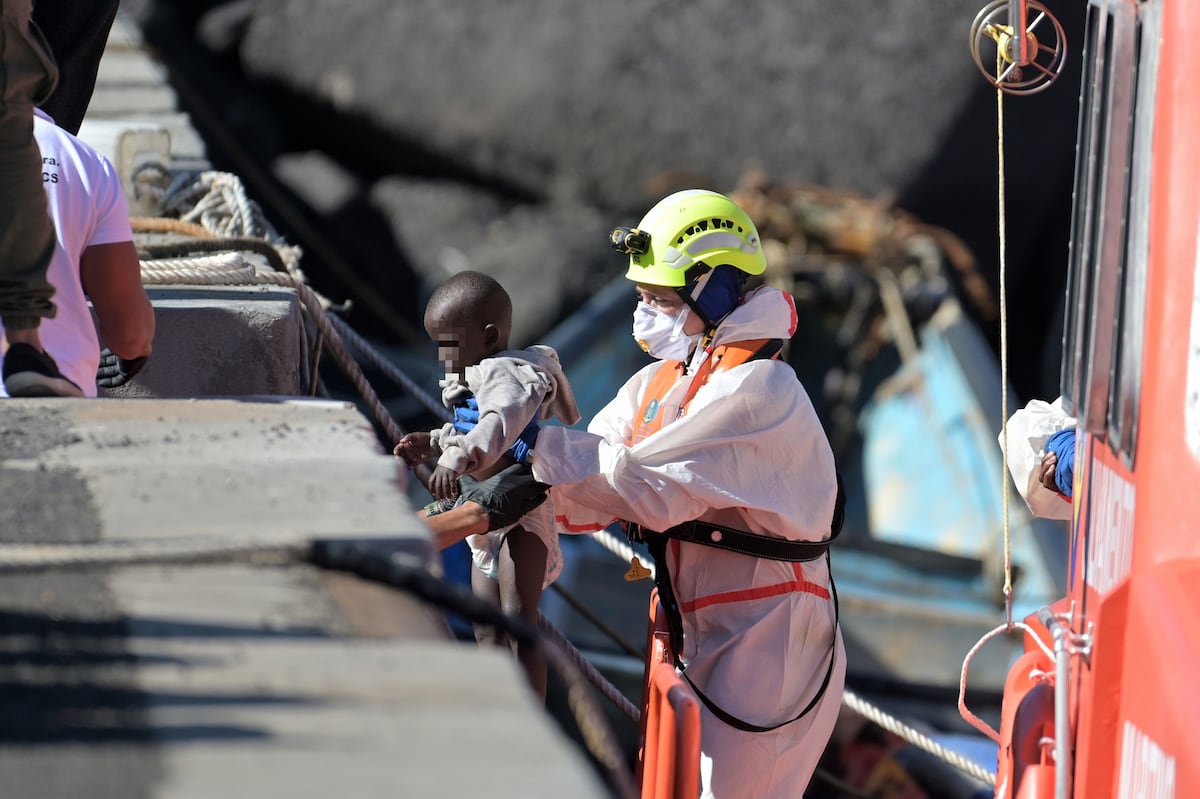
These individuals were distributed across 14 boats, a number that represents the highest daily arrival recorded in six years. Among the vessels intercepted was a single boat carrying approximately 240 people, a testament to the density and desperation of the crossings. The group arriving on this day was primarily composed of individuals from Senegal, Gambia, and Guinea-Conakry, all seeking new lives across the water.
While the Canary Islands are often viewed through the lens of tourism, the reality on the ground for the archipelago's smaller islands is shifting toward a humanitarian and logistical crisis. The sheer volume of arrivals is no longer a trickle but a flood that is testing the limits of local infrastructure. This recent surge, which saw nearly 1,500 people arrive in a single day, has placed an immense burden on the islands' ability to provide aid, shelter, and processing.
Faced with the overwhelming influx of people, the small island was forced to declare a state of emergency.
This is not an isolated incident of a single weekend, but part of a broader, accelerating trend. On the island of El Hierro, the impact has been particularly acute. This month alone, over 5,000 migrants have arrived on the island, a figure that has fundamentally altered the local landscape and strained every available resource.
The pressure on El Hierro reached a critical threshold last week. Faced with the overwhelming influx of people, the small island was forced to declare a state of emergency. This is a formal recognition that the local capacity to manage the arrival of migrants has been exceeded, necessitating extraordinary measures to handle the humanitarian needs of the arrivals and the logistical demands on the island's residents.
The declaration follows a period of intense activity that has left regional leaders sounding the alarm. On Friday, regional authorities issued a stark warning regarding the trajectory of these arrivals, characterizing the current numbers as "absolutely unsustainable." The sentiment reflects a growing fear that without significant intervention, the islands' ability to manage the crisis will collapse entirely.
As the scale of the arrivals becomes clearer, the Spanish government is moving to address the situation at the highest levels. Minister of Territorial Policy Ángel Víctor Torres is scheduled to visit El Hierro on Sunday to engage with local officials. The visit comes at a moment of profound tension, as the central government attempts to coordinate a response with local leaders who are on the front lines of the emergency.
Torres's arrival on the island is intended to facilitate discussions on how to manage the immediate needs of the migrants and the long-term stability of the region. The meeting between the Minister and local authorities will be a pivotal moment in determining how the state responds to a crisis that is moving faster than the current systems can accommodate.
For now, the Canary Islands remain in a state of high alert. The record-breaking numbers—the highest daily rescue count since 2020—serve as a grim reminder of the scale of the movement. As the coastguards continue their patrols and the islands struggle to absorb the influx, the focus remains on the immediate survival of those arriving and the capacity of the Spanish authorities to maintain order and provide aid in a situation that regional leaders say has already passed the point of sustainability.