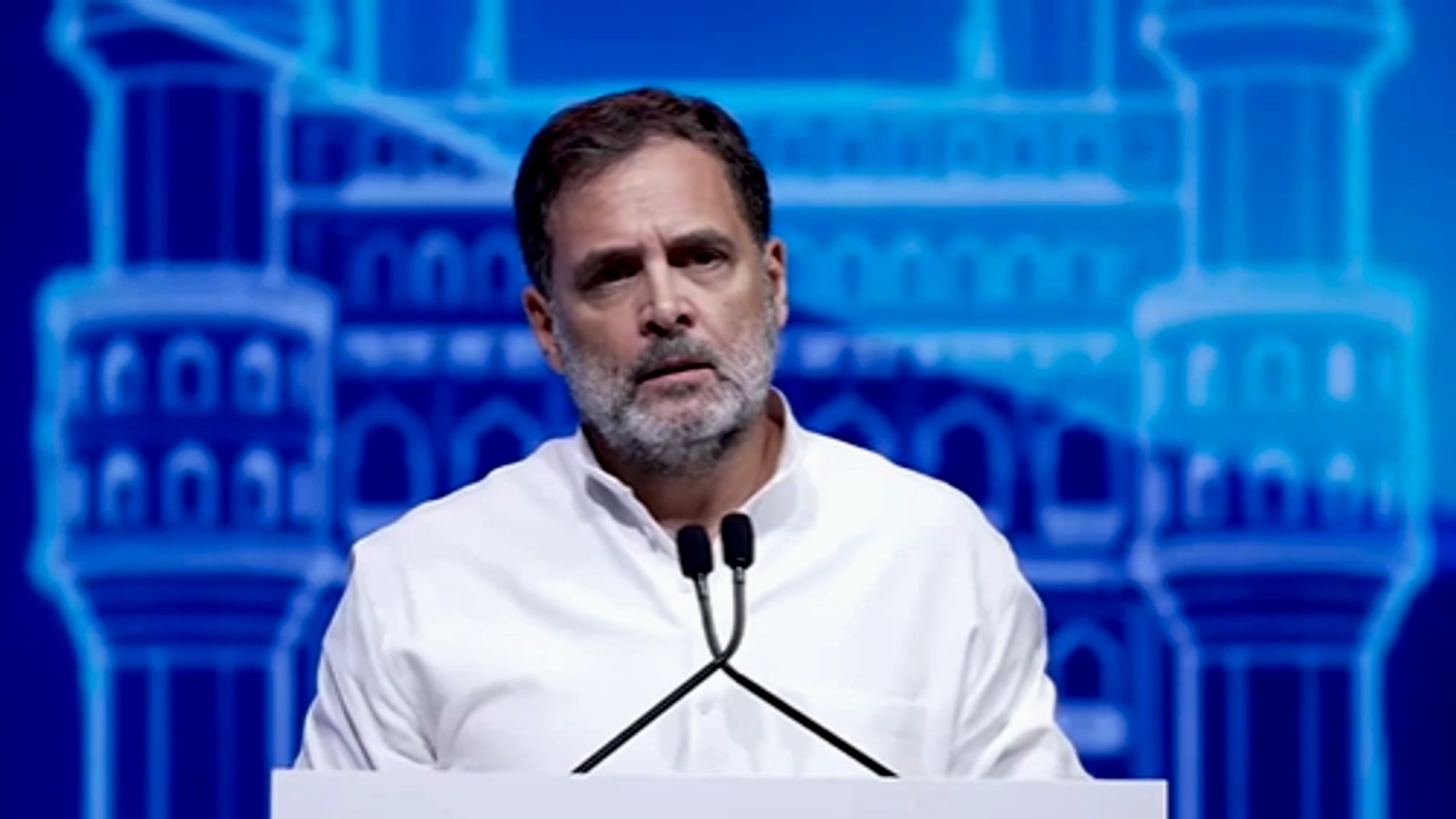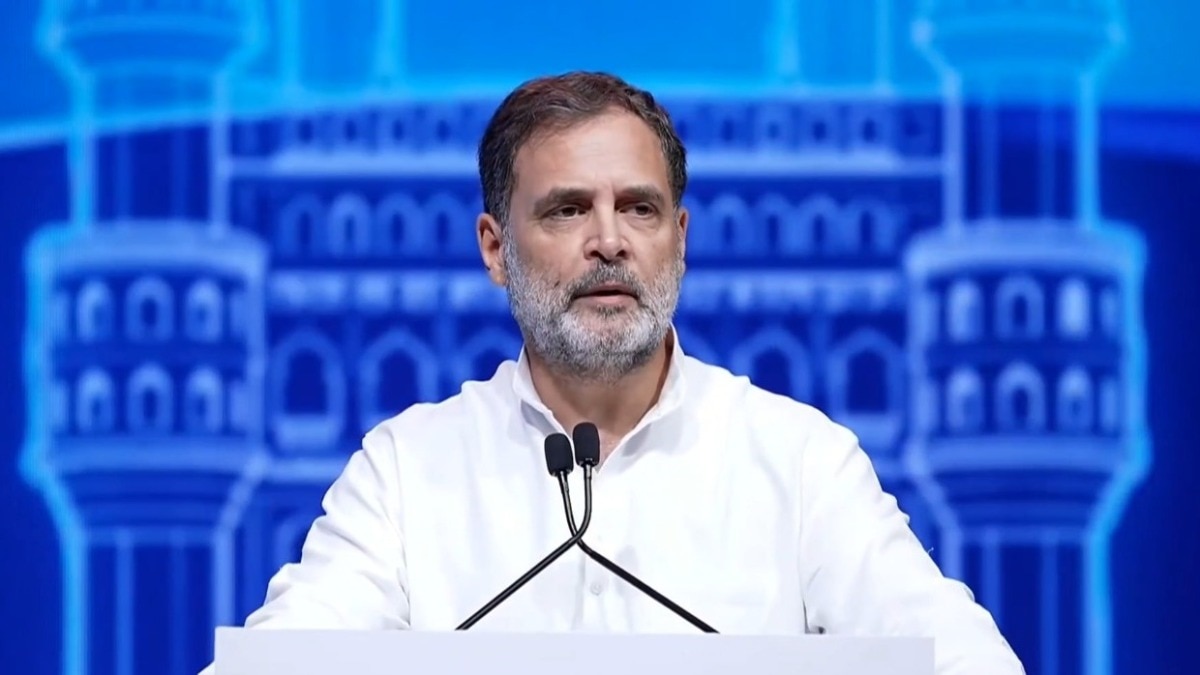
The Bharat Summit 2026 in Hyderabad became the unlikely stage for one of India's most dramatic political confrontations in recent memory. As the nation's political elite gathered to discuss the future of the world's largest democracy, Congress MP Rahul Gandhi stepped to the microphone to deliver a verdict that would send shockwaves through the political establishment: India, he declared, is no longer a democracy.

"In 2014, we witnessed a completely new kind of election, something we had never seen before," Gandhi told the assembled crowd, marking the beginning of his indictment of India's democratic trajectory. The veteran politician pointed to the 2014 Lok Sabha elections as the turning point when India's democratic framework began to dismantle itself. This pivotal moment, he argued, introduced unprecedented levels of campaign spending and political shifts that fundamentally altered the electoral landscape.
The consequences of this transformation, according to Gandhi, have been devastating for India's democratic opposition. "I would be lying if I said the Opposition was not in shock," he admitted. "We were in shock, not for a year, not for two years, but for an entire decade." This prolonged state of disarray, he suggested, left the political opposition struggling to comprehend and respond to the new rules of electoral engagement that emerged after 2014.
This characterization went beyond policy disagreements, suggesting a fundamental incompatibility with democratic values itself.
Rahul Gandhi didn't stop at describing the Opposition's predicament; he went on to make specific allegations about electoral irregularities that he claimed had undermined India's democratic processes.
As his speech reached its crescendo, Gandhi abandoned diplomatic language altogether, delivering his most explosive charge yet. He labeled the ruling party as 'fascists,' a term that carries profound historical weight and represents perhaps the most severe political condemnation one Indian politician can level against another. This characterization went beyond policy disagreements, suggesting a fundamental incompatibility with democratic values itself.
The allegations didn't stop at electoral manipulation. Gandhi also criticized the government for what he described as authoritarian tendencies, pointing to the cancellation of visas for scheduled speakers at the Bharat Summit as evidence of a pattern of suppressing dissenting voices. This action, combined with his broader accusations, painted a picture of an administration increasingly intolerant of criticism and alternative viewpoints.

European Socialists Secretary General, Giacomo Filibeck at Bharat Summi " vote chor gaddi chor " And see the faces of persons laughing on insult to DEMOCRACY OF INDIA . Opposition then " Sarkare ayengi , jayegi, bharat ka loktantra rehna cahiye " Opposition now 🤡🤡 https://t.co/ox2GsO0JSZ
As the dust settles from Gandhi's explosive address, India finds itself at a crossroads. The veteran politician's claims represent perhaps the most direct challenge yet to India's self-image as a vibrant democracy. Whether his allegations will be substantiated or dismissed as political rhetoric remains to be seen, but the very fact that such accusations can be made—and gain traction—speaks to the deep divisions within India's political landscape. The Bharat Summit 2026 will be remembered not just for its scheduled discussions on India's future, but for the moment when one of the country's most prominent political figures declared that future might not include democracy as it has been known.