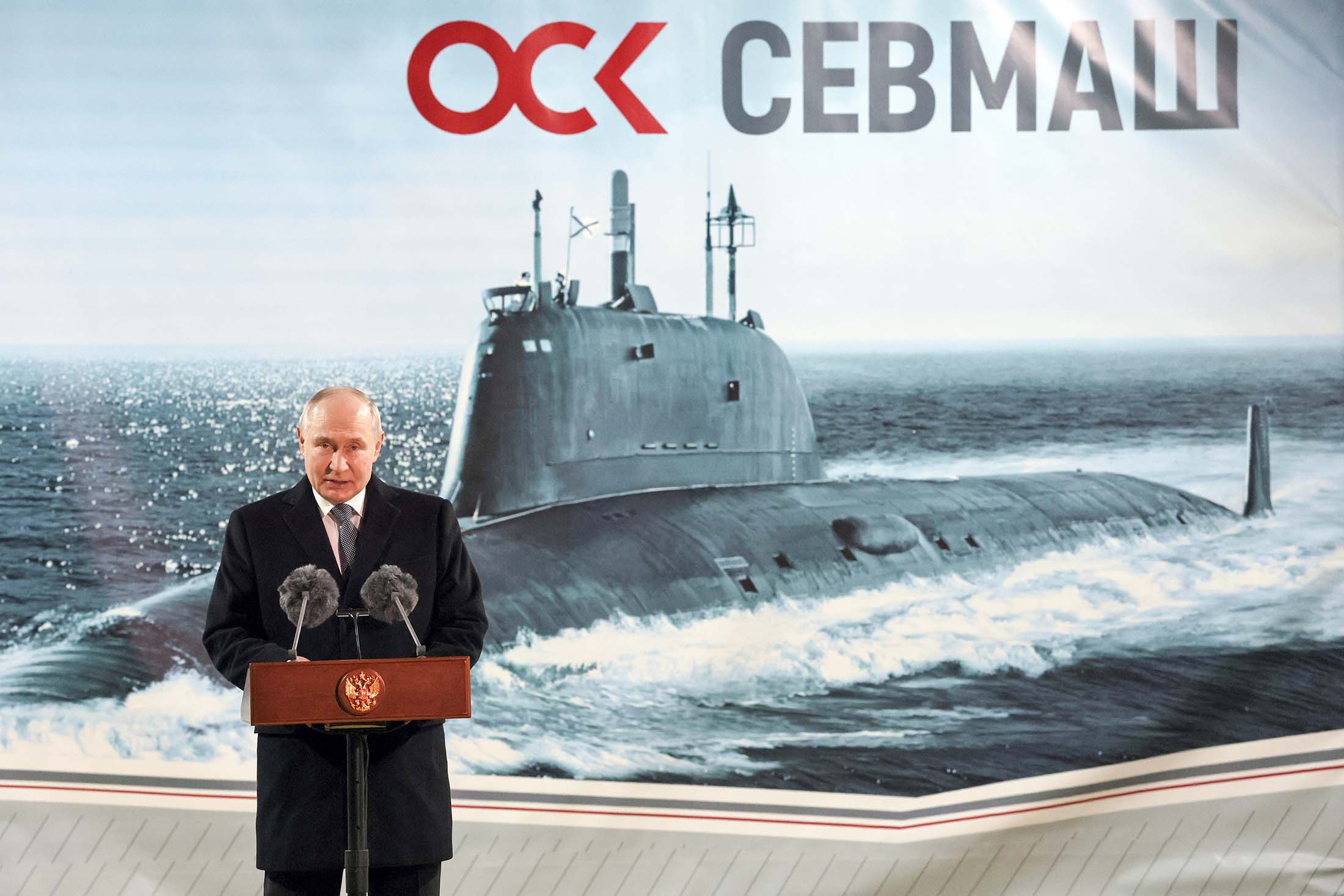
In the industrial landscape of Severodvinsk, where the cold winds of the Arctic meet the heavy machinery of the Sevmach shipyard, a new chapter in Russia’s naval strategy has been inaugurated. On November 27, 2026, the atmosphere was one of calculated significance as the nuclear-powered submarine Perm was officially commissioned into the Russian Navy. This was not merely a routine handover of hardware; it was a demonstration of maritime capability and a signal of intent directed toward the global stage.

At the center of the ceremony was President Vladimir Putin, whose presence underscored the strategic weight of the vessel. The Perm, a nuclear-powered ballistic missile submarine, represents a specific class of naval power designed to operate beneath the waves, largely undetected, carrying the capacity for long-range strikes. In the complex calculus of modern geopolitics, such vessels are more than just ships; they are the foundational elements of a nation's ability to project power across vast distances.
To understand the importance of the Perm, one must understand the role these vessels play in the architecture of global security. Because they operate in the deep, silent reaches of the ocean, they are difficult to track, making them a central component of what military strategists call nuclear deterrence.
This planned influx of vessels indicates that the current focus on the Perm is part of a continuous cycle of naval renewal.
During the commissioning, the gravity of this role was made explicit. The vessels are not intended for mere coastal defense, but serve as instruments of global reach. As Putin noted during the event, these are "weapons of grand scale and global range," a phrase that captures the essence of why the Sevmach shipyard remains a focal point of Russian military priority.
While the commissioning of the Perm marks a milestone, it is also a waypoint in a much larger, decade-long trajectory. The arrival of this submarine is not an isolated event but part of a broader, structured expansion of the Russian Navy’s undersea fleet. The commitment to modernization is not limited to the current year; rather, it is a sustained effort to replenish and upgrade the nation's strategic assets.
Looking ahead, the scale of this naval buildup is ambitious. The Russian military fleet is expected to receive five additional nuclear-powered ballistic missile submarines by the year 2030. This target suggests a steady cadence of production and deployment, aimed at ensuring that the submarine fleet remains a potent force throughout the end of the decade. This planned influx of vessels indicates that the current focus on the Perm is part of a continuous cycle of naval renewal.
The shipyard in Severodvinsk, Sevmach, serves as the industrial heart of this endeavor. The ability to move from the commissioning of one vessel to the planned delivery of five more by 2030 places a significant operational and industrial burden on the shipyard.
This industrial momentum is essential for maintaining the continuity of the fleet. The timeline established by the Russian leadership suggests a high level of confidence in the shipyard's ability to meet these rigorous production schedules.
The emphasis placed on these submarines reflects a specific strategic stance. This focus is not merely about numbers, but about the qualitative impact these vessels have on the global balance of power.
As the Perm begins its service, the eyes of the international community remain on the progress of the Sevmach shipyard. The roadmap toward 2030 is now set, and the success of this naval expansion will be measured by the steady arrival of the five submarines promised to bolster the Russian Navy's presence in the deep.