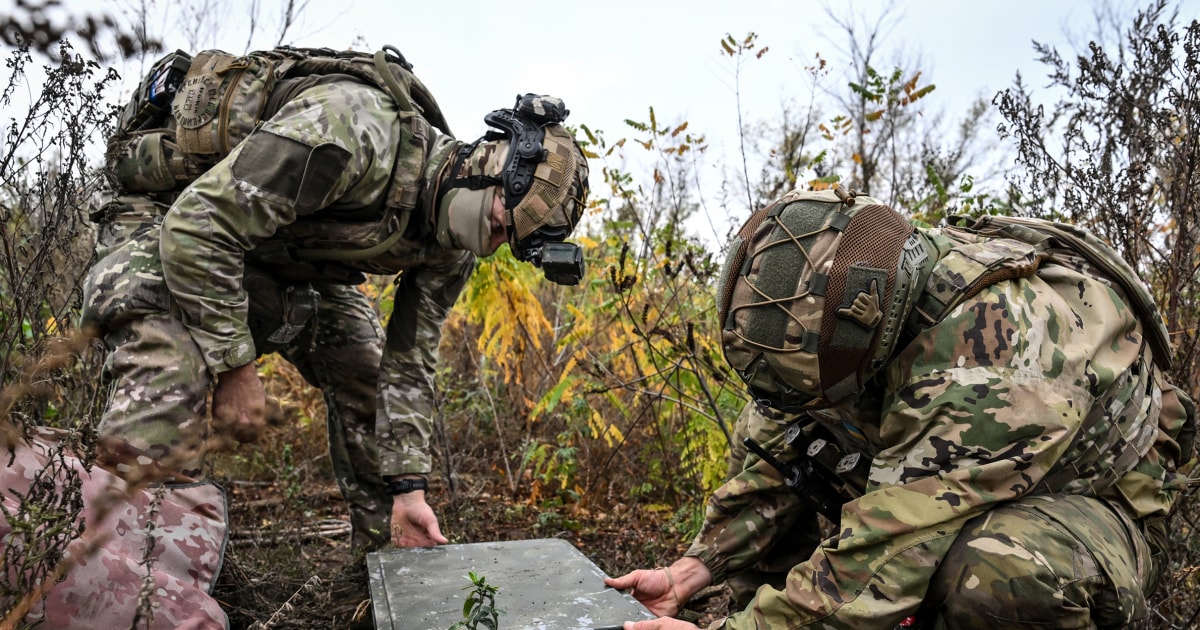
On a Thursday in November, the technological lifeline that has sustained Ukrainian military operations for years felt suddenly, dangerously fragile. President Volodymyr Zelenskyy announced that Ukrainian military units are once again facing significant disruptions to Starshield, the specialized satellite communications service provided by the American firm SpaceX. For the soldiers on the front lines and those operating within occupied territories, these are not mere technical inconveniences; they are life-altering constraints that dictate who lives and who dies in the modern era of electronic warfare.

Zelenskyy’s report highlights a growing crisis where the very tools meant to provide a tactical edge are being throttled. The disruption is not a total blackout, but a systemic restriction that limits the speed at which the service can be utilized. Specifically, the service is being restricted to 161 kph. In the high-stakes environment of the Ukrainian theater, where seconds and meters determine the success of an intercept, this artificial ceiling is proving catastrophic.
The math of the modern battlefield is often measured in velocity. Ukraine relies heavily on drone technology to counter the constant threat of Russian incursions, particularly jet-powered drones that move with terrifying speed. When Starshield’s capabilities are capped at 161 kph, it creates a critical vulnerability. Interceptors, which rely on high-speed data links to track, target, and destroy incoming threats, find themselves unable to effectively counter drones that exceed this threshold.
The announcement from Zelenskyy came just one day after peace talks were held in Abu Dhabi.
This technical bottleneck does more than just slow down communications; it shifts the tactical advantage toward the aggressor. Zelenskyy was blunt about the human cost of these limitations, noting that the inability to track fast-moving targets effectively allows for more successful incursions. "This helps Russians kill more Ukrainians and carry out more accurate strikes on Ukraine," the President stated, framing the technical restriction as a direct contributor to the loss of life on the ground.

The King of Denmark 🇩🇰 STANDS WITH UKRAINE 🇺🇦 https://t.co/Q1WUYlFY5H
This is not the first time the digital infrastructure of the Ukrainian defense has been hampered by speed caps. The current disruptions follow a precedent set in mid-October, when SpaceX abruptly capped the speeds of both Starlink and Starshield. That previous move effectively cut off drones moving faster than approximately 160 kph, a threshold that sits right at the edge of the current 161 kph restriction.
While that mid-October cap was eventually lifted on October 24, the return of these limitations suggests a recurring instability in the service that Ukraine relies upon. The suddenness of these shifts creates a landscape of uncertainty for military commanders who must plan operations around the assumption of reliable, high-speed connectivity — an assumption that is increasingly being tested.
The timing of these renewed disruptions is particularly striking. The announcement from Zelenskyy came just one day after peace talks were held in Abu Dhabi. Interestingly, the issue of satellite service restrictions and the technical limitations imposed by SpaceX did not appear on the agenda during those discussions.

As the diplomatic machinery moves in the background, the reality on the ground remains dictated by connectivity. While the world watches the high-level negotiations, the technical parameters of the war are being reshaped by service providers. The disconnect between the diplomatic efforts to end the conflict and the technical realities of the battlefield highlights the complex, multi-layered nature of the current struggle.
While the technical battle rages, the political battle is entering a new phase of high-stakes engagement. Russian President Vladimir Putin is meeting with US negotiators Jared Kushner and Steve Witkoff to discuss the possibility of ending the war. These meetings represent a critical juncture in the conflict, as the parties attempt to find a path toward a cessation of hostilities.
However, for the Ukrainian military, the immediate concern is not the long-term diplomatic outcome, but the immediate survival of their units. The gap between the political discussions in Abu Dhabi and the technical disruptions in the field underscores a fundamental tension: the war is being negotiated in rooms of diplomacy, but it is being fought through the bandwidth of satellites.
Ukraine is now turning its attention toward the United States, seeking clarification on why these restrictions are occurring and what they mean for the future of the defense effort. The reliance on a private American company for critical military infrastructure creates a unique set of challenges, where the policies of a corporation can have direct, kinetic consequences on a sovereign battlefield.
As of now, the situation remains volatile. The military units on the front lines continue to operate under the shadow of these speed caps, navigating a battlefield where the speed of a drone can outpace the speed of the data required to stop it. The struggle for Ukraine is no longer just about territory or manpower; it is increasingly a struggle for the bandwidth necessary to defend it.