
In the high-stakes theater of international football, momentum is often a fleeting thing, a gust of wind that shifts with a single misplaced pass or a controversial refereeing decision. But for the Spanish national team, momentum has become a permanent state of being. They arrive in Prague not just as competitors, but as a juggernaut, carrying an extraordinary 43-match unbeaten run in official matches. This streak is more than just a statistical anomaly; it is a psychological weight that hangs over every opponent they face, a testament to a level of consistency that few modern squads can claim.
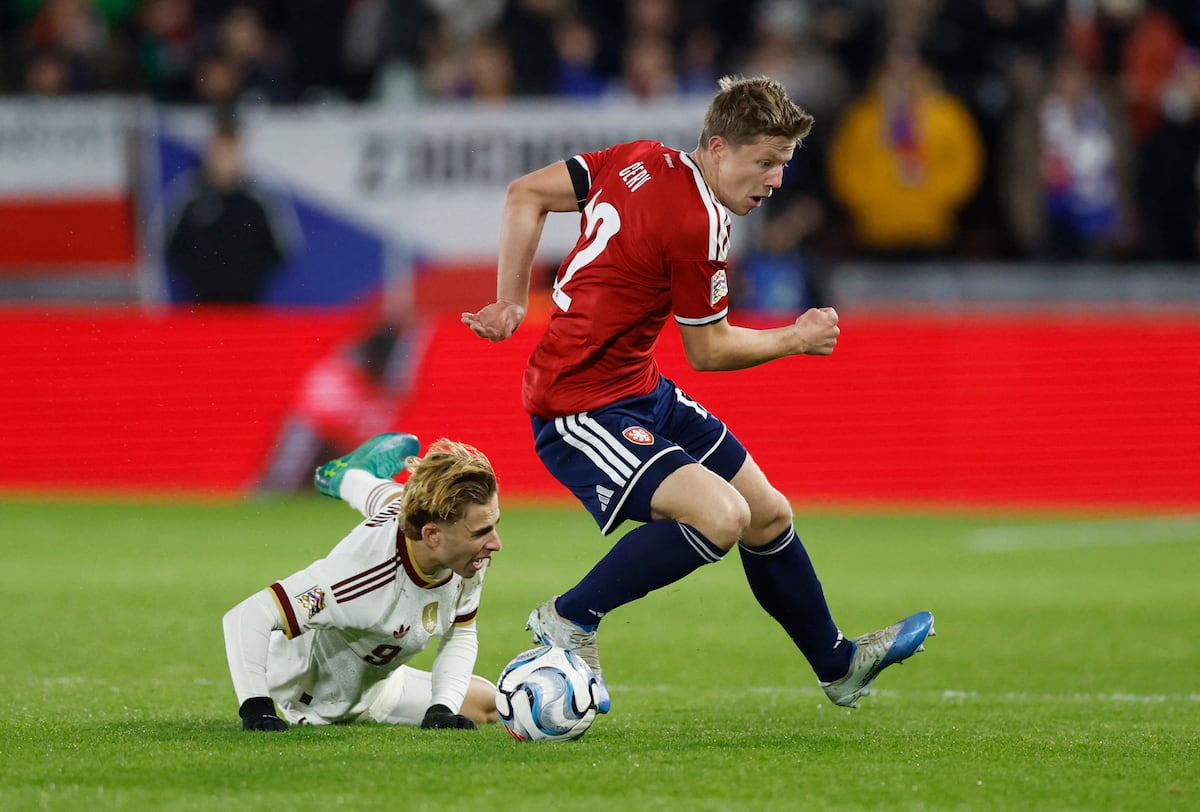
When Spain steps onto the pitch for their fifth-round Nations League group stage fixture, they aren't just playing for a result; they are playing to preserve a legacy of invincibility. For the Spanish side, the mission is one of refinement and dominance. Having already secured their qualification for the quarter-finals, the pressure of advancement has been lifted, replaced by the pursuit of perfection. A victory in Prague would do more than just add another win to their tally; it could mathematically secure them the top spot in their group, cementing their status as the team to beat in this stage of the tournament.
While the Spanish side travels with the confidence of a champion, the atmosphere at the Epet Arena in Prague will be markedly different. For the Czech Republic, this match represents a desperate struggle for footing in a tournament that has, thus far, been unkind. Under the guidance of coach Santi Denia, the Czech squad finds itself in a precarious position, navigating the difficult waters of a group stage where points have remained elusive.
As the date of November 12, 2026, approaches, the narrative of the match is set by the diverging objectives of the two sides.
To understand the gravity of this moment for the hosts, one must look at the scoreboard of their recent campaign. The Czech Republic enters this penultimate group stage commitment with zero points to their name. It is a stark reality for a national team that has struggled to find its defensive footing or its offensive rhythm. In the matches played thus far, they have managed to score only two goals, while simultaneously conceding ten. This goal difference is a heavy shadow, reflecting a campaign defined by missed opportunities and defensive lapses.
Despite the grim statistics, the story of the Czech Republic is not yet a finished one. In the complex mathematics of the Nations League, hope is rarely entirely extinguished until the final whistle of the final matchday. Even with a tally of zero points and a struggling goal difference, the Czech Republic remains in a position where survival is still possible. They possess a mathematical chance to avoid direct relegation to League B, a prospect that provides the necessary fuel for their upcoming clash in Prague.
For coach Santi Denia, the task is to transform this mathematical possibility into a tangible reality. The upcoming match is not merely a game; it is a defensive and psychological battle to keep their status within the current tier of competition. For a team that has conceded ten goals, the priority will likely be a tightening of the ranks, an attempt to stem the tide of scoring that has characterized their recent outings.
As the date of November 12, 2026, approaches, the narrative of the match is set by the diverging objectives of the two sides. Spain plays with the luxury of a secured future, looking to polish their record and claim group supremacy. They are the hunters, seeking to extend a streak that has become one of the most talked-about narratives in the sport. Their objective is clinical: win, secure the top seed, and continue the march toward the quarter-finals.

Conversely, the Czech Republic plays with the urgency of the cornered. They are the defenders of their own standing, fighting to prevent a slide into League B. Every movement on the pitch for the Czech side will be colored by this necessity. They cannot afford the luxury of experimentation; they need results, and they need them immediately to offset the zero-point deficit that currently haunts their campaign.
When the whistle blows at the Epet Arena, the tactical battle will likely be a study in contrasts. Spain’s approach, fueled by a 43-match period of not knowing defeat, will naturally lean toward control and dominance. They will look to dictate the tempo, using their technical proficiency to stretch the Czech defense and exploit the gaps that have allowed ten goals to slip through in recent weeks.
For the Czech Republic, the geometry of the match will be about contraction. To survive, they must close the spaces that Spain thrives in. The challenge for Denia’s men is to bridge the gap between their two goals scored and the ten they have conceded, finding a way to be both a wall and a weapon in the same ninety minutes. It is a daunting task, but in the context of the Nations League, it is the only path forward.
As the group stage winds down, the landscape of the tournament is beginning to crystallize. Spain’s path is clear, their qualification a settled matter that allows them to play with a certain degree of freedom, even as they chase the top spot. They are moving toward the quarter-finals with the momentum of a runaway train, a force that seems increasingly difficult to derail.
For the Czech Republic, the path is a narrow ledge. The outcome of this fifth round will dictate whether they can maintain their position or if they will be forced to regroup in a lower league. The match in Prague serves as the ultimate litmus test for a team in transition, a moment where the mathematical hope of staying up meets the harsh reality of their current form.