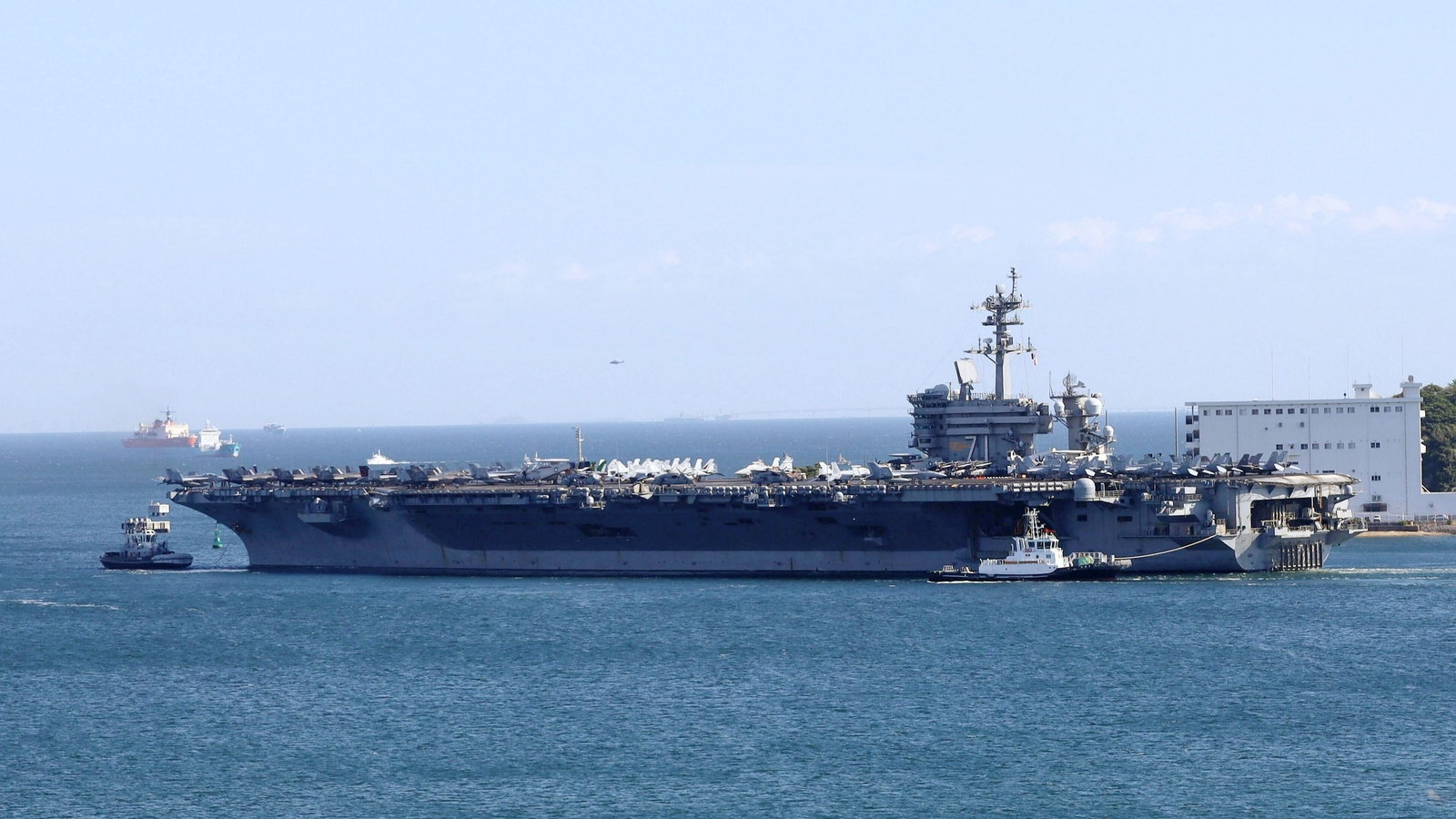
For anyone following global security, the image is stark: three US aircraft carrier strike groups operating simultaneously in the Middle East. It’s a display of force rarely seen, and it’s unfolding now. The latest addition, the USS Theodore Roosevelt, arrived on Sunday, joining the USS George H.W. Bush and the USS George Washington. Each carrier is a self-contained city at sea, capable of launching waves of aircraft and projecting power across vast distances.

This isn’t a routine rotation. It’s a response to a volatile situation, one where accusations are flying and the potential for miscalculation feels dangerously high. The Middle East is, of course, no stranger to conflict, but the current dynamic – specifically the relationship between the United States and Iran – is particularly fraught. Aircraft carrier strike groups aren’t sent to calm waters; they’re sent to signal resolve, and sometimes, to prepare for action.
The timing of the Roosevelt’s deployment is inextricably linked to a series of events that unfolded over the weekend. Iran claimed to have successfully struck US assets in Bahrain. This assertion, however, was swiftly and firmly rejected by the US military.
The relationship between the US and Iran has been strained for decades, marked by periods of confrontation and limited cooperation.
This isn’t simply a disagreement over facts. It’s a pattern. Iran has a history of making accusations against the US and its allies, often without providing concrete evidence. The US, in turn, routinely challenges those claims, accusing Iran of destabilizing the region through its support for proxy groups and its own aggressive rhetoric. The situation is further complicated by the fact that both countries operate in a region crowded with military assets and sensitive infrastructure.
F/A-18 Super Hornets prepare to take off from the flight deck of USS George Washington (CVN 73). https://t.co/LKHSvTkSMK
The USS Theodore Roosevelt didn’t materialize in the Middle East overnight. Its journey began on November 8, when it departed Singapore. The ship, part of Carrier Air Wing 11, and its accompanying escort vessels have been steadily making their way towards the region. The Roosevelt’s destination was the area of responsibility for US Central Command, or CENTCOM, the military command responsible for operations in the Middle East, Central Asia, and parts of South Asia.
CENTCOM’s area of operations is vast and strategically crucial, encompassing some of the world’s most important energy resources and key shipping lanes. The US has maintained a significant military presence in the region for decades, largely to ensure the free flow of oil and to counter perceived threats to its allies, like Bahrain. The arrival of a third carrier strike group dramatically increases that presence, signaling a heightened state of alert.
The current escalation isn’t happening in a vacuum. The relationship between the US and Iran has been strained for decades, marked by periods of confrontation and limited cooperation. Under the administration of Donald J. Trump, tensions reached a fever pitch after the US unilaterally withdrew from the Iran nuclear deal in 2018 and reimposed crippling sanctions on the Iranian economy.

The nuclear deal, formally known as the Joint Comprehensive Plan of Action, was an agreement reached between Iran and several world powers – including the US – to curb Iran’s nuclear program in exchange for sanctions relief. Trump’s withdrawal from the deal and subsequent “maximum pressure” campaign aimed to force Iran back to the negotiating table, but instead, it led to a cycle of escalation.

🇺🇸 🇮🇷 US naval forces blockading Iranian ports gained a third aircraft carrier strike group, which reached the Middle East on Sunday, a US official said The USS Theodore Roosevelt group crossed into the area of US Central Command
The deployment of three aircraft carrier strike groups isn’t just about firepower; it’s about signaling. It’s a message to Iran – and to other actors in the region – that the US is prepared to defend its interests and its allies. “The USS Roosevelt aircraft carrier has arrived in the U.S. military central command (CENTCOM) area of responsibility earlier on Sunday, a U.S. official tells me,” Barak Ravid reported. “The U.S. military now has three air craft carrier strike groups in CENTCOM.”
While the Pentagon and CENTCOM have not yet officially confirmed the timeline of the Roosevelt’s deployment, the fact that the information has leaked suggests a deliberate effort to convey a sense of strength and resolve. The presence of three carriers also provides the US with greater flexibility in responding to any potential crisis that may arise.
As of now, the situation remains tense but contained. The US military has dismissed Iran’s claims of striking its assets, and there have been no reports of retaliatory action. However, the risk of miscalculation remains high. A small incident could quickly escalate into a larger conflict, with potentially devastating consequences for the region and the world.
The arrival of the USS Theodore Roosevelt is a clear indication that the US is taking the threat seriously. Whether this buildup of force will deter Iran or further escalate tensions remains to be seen. For now, the Middle East is bracing for an uncertain future, with three US aircraft carriers standing as a visible symbol of the region’s precarious state.

A third American aircraft carrier is expected to be added to US naval forces in the Middle East in the coming days, as the USS Theodore Roosevelt (CVN-71) is en route to the US Central Command area of responsibility. https://t.co/DBs6qTEfAw