
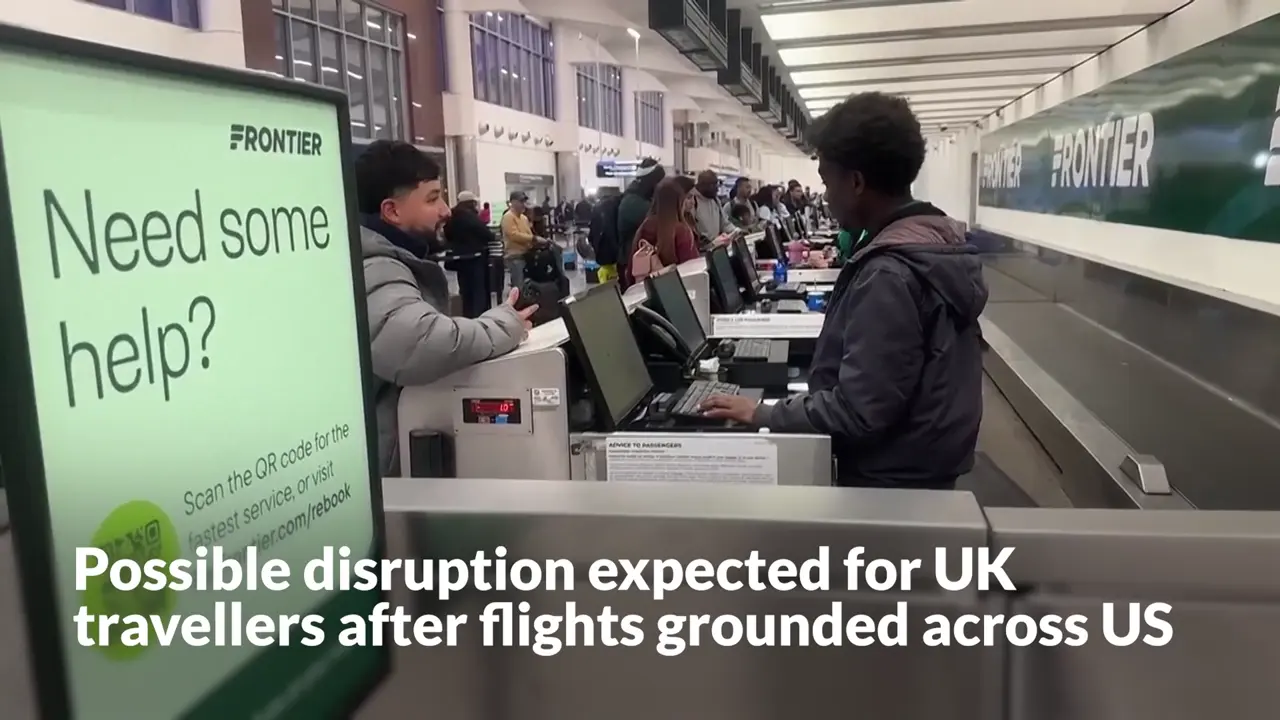
On November 14, 2026, travelers across the United States faced an extraordinary scene: all flights were grounded. The order, described as the longest nationwide ground stop since the terrorist attacks of September 11, 2001, brought air travel to an abrupt halt. This marked only the second such event in 25 years, sending shockwaves through the global aviation network. The immediate consequence was felt thousands of miles away in the United Kingdom, where passengers suddenly found their journeys transformed into ordeals of uncertainty and delay.
What made this particular ground stop so remarkable was its timing. The same day the flights were grounded, a new AI 'Smart' tool was launched—a detail that has raised eyebrows across the industry. While officials haven't explicitly linked the system failure to this new technology, the coincidence hasn't gone unnoticed. The simultaneous occurrence of these events has naturally led to speculation about whether the AI tool somehow triggered or exacerbated the system failure.

UK flight disruption expected after 'extraordinary circumstances' saw planes grounded in US https://t.co/Ba2MHuHUbZ
For travelers caught in the chaos, the technical explanations mattered little compared to the immediate reality of stranded journeys. At London's Heathrow Airport, one American Airlines passenger found herself stuck for five hours after her flight was canceled. The experience was shared by many, as Virgin Atlantic and other carriers reported similar disruptions. "Her flight was cancelled after she had boarded the plane," one Virgin Atlantic passenger recounted, describing the frustration of being so close to departure only to have plans suddenly unravel.
As the situation unfolded, public attention turned to the causes of such a massive system failure.
The initial US ground stop quickly rippled across international borders. In Miami, passengers who had managed to rebook faced extended layovers, with one traveler reporting being stuck for four hours between connections. The UK Civil Aviation Authority was quick to warn that this was likely just the beginning. "Potential 'follow-on disruption'" was their measured assessment, acknowledging that the initial crisis would continue to affect travel patterns for days to come. This domino effect is a well-understood phenomenon in aviation—when one part of the system fails, the repercussions cascade through the entire network.

BREAKING: The FAA has grounded flight departures across the United States, and nearly 7,000 flights have reportedly already been delayed or canceled. According to CNN, the issue started with air traffic control communications failures in the Northeast before spreading nationwide. The FAA is dealing with equipment outages that are disrupting its ability to coordinate aircraft safely, forcing a nationwide ground stop. And this is a pretty serious situation because air traffic controllers depend on constant communication with pilots to safely manage thousands of aircraft. Without reliable communications, allowing additional planes to take off creates unnecessary risks. According to FlightAware data cited in reports, nearly 7,000 flights have already been delayed or canceled, and that number could continue climbing. The FAA is also warning that aircraft may experience airborne holding at airports across the national airspace system. The ground stop is reportedly expected to last until 10 PM CT, although that could change depending on how quickly the equipment issues are resolved. What makes this particularly concerning is how interconnected the aviation system is. Even after the FAA fixes the underlying problem, airlines could be dealing with delays, canceled flights, displaced aircraft, and crews being out of position for hours afterward. We still don't know exactly what caused the communications failure, but this is an extremely rare disruption to US aviation.
As the situation unfolded, public attention turned to the causes of such a massive system failure. Former President Donald Trump offered his perspective, suggesting that the crisis "could" have been caused by "old broken stuff." This comment reflected a broader skepticism about the reliability of critical infrastructure, particularly as it becomes increasingly automated. While aviation officials worked to restore normal operations, questions lingered about whether this was simply an unavoidable glitch in a complex system or a sign of deeper vulnerabilities that needed addressing.
The last comparable event occurred 25 years prior, making this a once-in-a-generation occurrence. For an industry that prides itself on efficiency and reliability, such a complete shutdown represented a significant challenge to public confidence. The fact that it happened during what should have been a routine day of operations made it all the more concerning for travelers and industry watchers alike.

https://t.co/Y9qoWwkVyT #StormIsha has caused air traffic chaos as strong winds batter the country. #UK #Tornado #Breaking 📹 Twister/tornado just hit Dublin The Met Office has issued a rare amber warning for wind for the entire country with gusts of 80mph expected. The vast gusts have caused travel disruption up and down the UK from trains, planes and cars. Strong winds began to affect air travel, with over 100 flight cancellations out of Dublin Airport, which had a knock-on effect at Scottish terminals.
As flights gradually resumed, airlines worked to clear the backlog of delayed and canceled journeys. The process was painstaking, with each restored connection potentially triggering another delay elsewhere. For passengers, the experience served as a stark reminder of how dependent modern travel has become on complex technological systems that remain, at times, frustratingly fragile. The incident prompted discussions about whether sufficient safeguards exist in critical infrastructure to prevent such widespread disruptions in the future.

Even as normal operations resumed, fundamental questions remained unanswered. The precise cause of the system failure that triggered the ground stop had not been definitively established. The relationship between the new AI tool and the disruption remained unclear, with officials offering no definitive connection. For now, travelers and industry stakeholders alike were left to contemplate the implications of an event that, while resolved for the moment, had revealed potential vulnerabilities in the global aviation network that might require attention in the years to come.