
For those living in the densely populated prefectures of central Japan, a recent morning began with a sudden, violent reminder of the geological instability that defines their home. A strong earthquake, measured at a preliminary magnitude of 5.7 by the Japan Meteorological Agency, struck the region, sending shockwaves through communities in Aichi and Shizuoka. While the United States Geological Survey offered a slightly adjusted reading of 5.5, the impact on the ground was immediate and palpable. Across the affected areas, the shaking was severe enough to shatter store windows and cause falls, leading to at least 20 reported injuries as residents scrambled for safety.
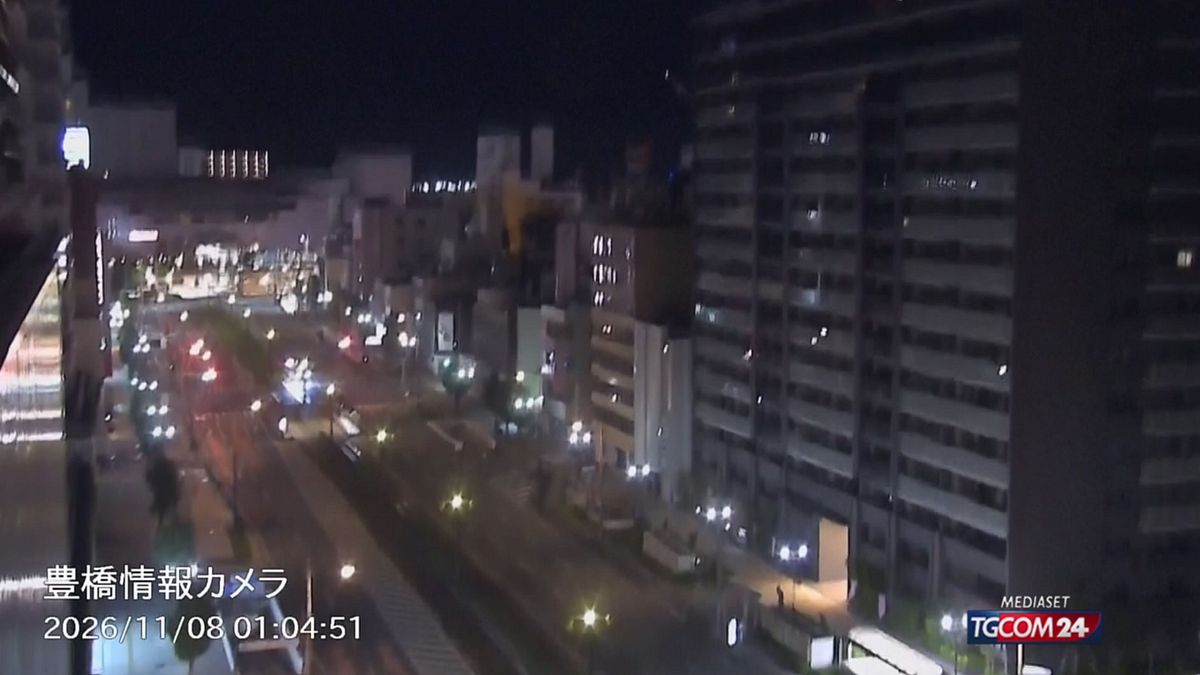
The epicenter of the tremor was located in the western reaches of Shizuoka prefecture. According to the Japan Meteorological Agency, the rupture occurred at a depth of 40 kilometers—a distance that, while deep, was not enough to prevent the surface from experiencing significant jolts. Japan's position on the Pacific Ring of Fire makes such events a recurring reality; the archipelago sits at the intersection of several tectonic plates, creating a landscape where the earth is in constant, subtle motion, occasionally punctuated by events like this one.

A strong earthquake with a preliminary magnitude of 5.7 strikes Japan, meteorological agency says https://t.co/7eskie2Uyj
In the immediate aftermath, the primary concern for authorities was the integrity of critical infrastructure. Japan's reliance on high-speed rail and nuclear power necessitates rigorous safety protocols, which were activated the moment the ground began to heave. The Hamaoka nuclear power plant, a facility operated by Chubu Electric Power Co. located within the affected region, became a focal point of anxiety. However, operators quickly confirmed that no abnormalities were detected at the site, providing a measure of relief to a public hyper-aware of the risks associated with seismic activity near energy facilities. Meanwhile, the transit network faced significant disruption, with local train services suspended and Shinkansen bullet trains forced to implement precautionary slow-downs to ensure the safety of passengers.
While smaller in scale than the main event in Shizuoka, the tremor served to heighten the sense of unease across the country.
As the day progressed, the central region began to assess the damage, but the earth remained restless. Later that same morning, a separate 4.3-magnitude earthquake struck Kumamoto prefecture. While smaller in scale than the main event in Shizuoka, the tremor served to heighten the sense of unease across the country. The Japan Meteorological Agency and other monitoring bodies continued to track smaller aftershocks following the initial 5.7-magnitude quake, a standard but nerve-wracking process for those living in the shadow of these geological forces.

A strong earthquake with a preliminary magnitude of 5.7 strikes Japan, meteorological agency says https://t.co/xC8VWny7YZ https://t.co/bacI6ArUgq
By the time the dust settled, the focus shifted from emergency response to the long-term reality of life in Japan. With at least 20 people injured and the memory of the shaking still fresh, the event serves as a testament to the resilience required of the population. No tsunami warning was issued, sparing the coastal communities from the most feared consequence of such tremors, yet the incident remains a potent illustration of the unpredictability of the region. As the country moves forward, the events of this day stand as another chapter in Japan's ongoing, complex relationship with the tectonic plates that shape its geography.