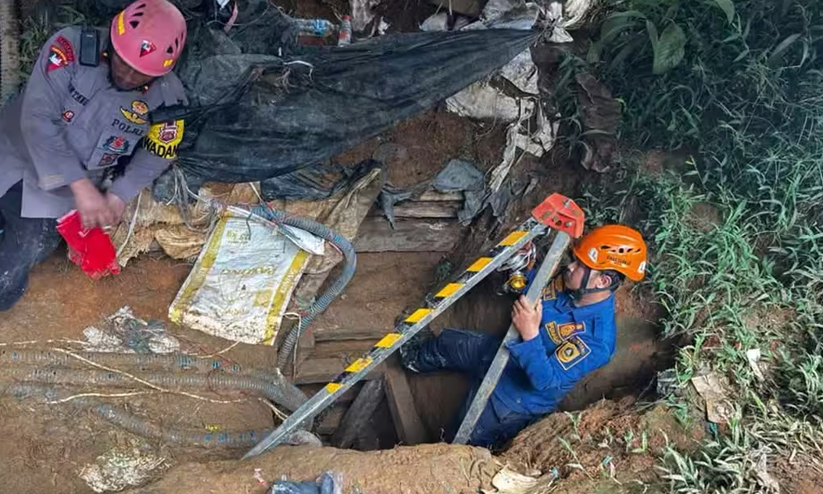
On November 25, 2026, the earth gave way beneath the feet of miners in West Java, Indonesia. A landslide collapsed an illegal gold mine, instantly trapping dozens of workers deep underground. The remote location of the mine, typical of many unregulated operations in Indonesia, meant that help would not arrive quickly. As news of the collapse spread, families gathered at the mine entrance, their faces etched with fear and uncertainty, knowing that their loved ones were buried alive beneath tons of soil and rock.

Rescue teams from the Jakarta Search and Rescue Department immediately mobilized, facing what would become an increasingly desperate operation. The narrow, winding paths leading to the mine shaft made it nearly impossible to bring in heavy equipment. "Rescue teams have found the bodies of 9 deceased miners," confirmed the Head of the Jakarta Search and Rescue Department, his voice heavy with the grim reality of the situation.
As the hours turned into days, the grim reality of the situation became clearer. While 9 bodies had been recovered, 17 miners remained missing, their chances of survival diminishing with each passing hour. The miners, many of them local villagers drawn to the dangerous work by the promise of gold, represented the human cost of Indonesia's unregulated mining industry. Their families, waiting anxiously at the mine entrance, became the face of a tragedy that repeated itself too often in resource-rich regions of the country.
Flooding in the mine shafts made progress difficult, while poor lighting underground added another layer of danger for the rescue teams.
The collapse of this particular mine was a tragic reminder of the risks these workers take every day.
The rescue operation faced numerous challenges that hampered efforts to reach the trapped miners. Flooding in the mine shafts made progress difficult, while poor lighting underground added another layer of danger for the rescue teams. The narrow paths leading to the deepest parts of the mine meant that rescuers could only proceed slowly, carefully navigating unstable terrain. Despite these obstacles, rescue teams refused to give up, knowing that every minute counted for the missing miners.
The collapse of this illegal gold mine shines a spotlight on the broader issue of unregulated mining in Indonesia. Miners, many of them poor and with few other options for employment, risk their lives for the chance to strike it rich. The tragedy in West Java is not an isolated incident but rather a symptom of a larger problem that has plagued Indonesia's mining sector for years.
As rescue operations continue, questions remain about the future of the missing miners and the broader implications for Indonesia's mining industry. Will this tragedy lead to increased regulation of illegal mining operations, or will the cycle of danger and death continue? For now, the focus remains on the desperate search for survivors, a race against time that has already claimed too many lives. The families of the missing miners can only wait and hope, their futures hanging in the balance as rescue teams dig through the rubble, searching for any sign of life.