
For the workers at the metallurgical complex in Aliağa, the shift on November 9, 2026, likely began with the usual roar of furnaces and the rhythmic clank of machinery. But on that day, the routine was shattered not by a planned shutdown or a minor snag, but by a mechanical failure that would prove fatal. The specific mechanism of the disaster began high above the workshop floor: an overhead crane, the kind used to move heavy loads and slag with precision, snapped. In industrial settings like this, cranes are critical infrastructure. When one fails, the consequences are immediate and violent. As the crane collapsed, it did not merely drop a load; it caused a spill of molten metal that cascaded directly into an electric arc furnace. This furnace is a massive vessel used to melt and refine metal, and when uncontrolled, searing liquid steel or iron meets it under the wrong conditions, the result is not just a fire, but a violent chemical and physical reaction. The energy released was so great that it triggered an explosion, turning a routine operational moment into a catastrophic structural failure.
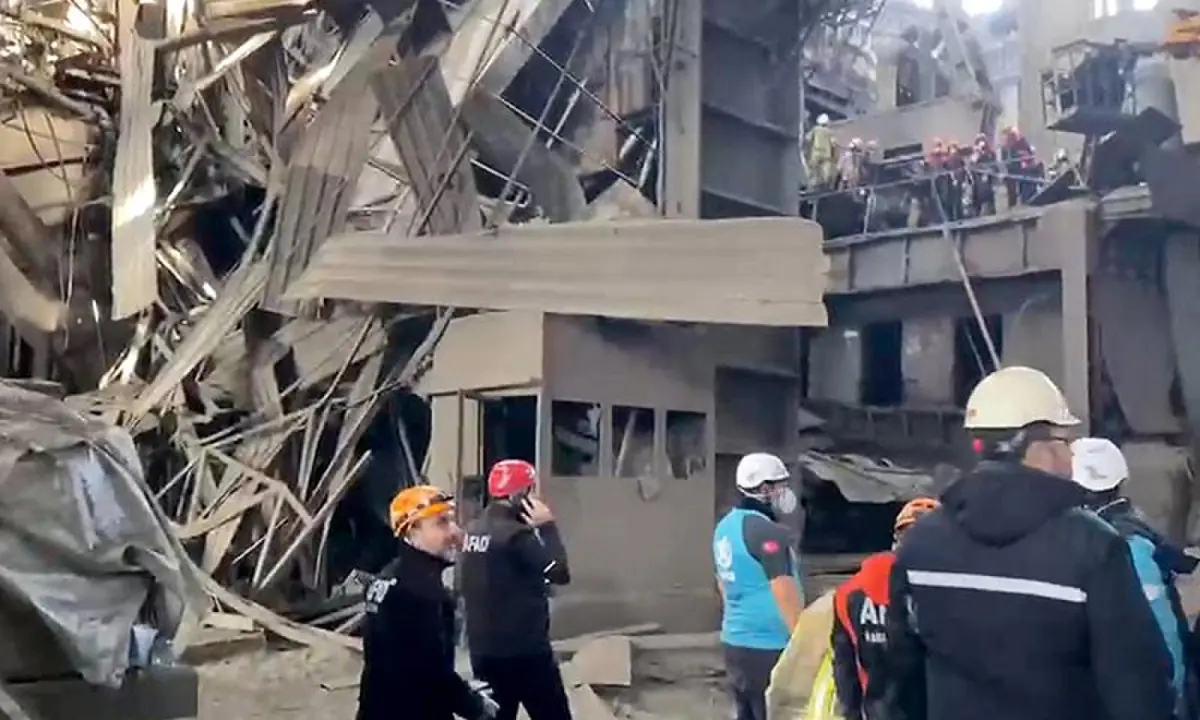
The explosion was not a single, distant boom, but a near-total collapse of the structure housing the furnace. In metallurgical plants, the architecture is designed to contain extreme temperatures, but it is not designed to withstand the internal pressure of a violent, uncontrolled eruption of molten material. As the furnace breached its containment, the structural integrity of the workshop began to fail. Plumes of smoke, thick and billowing, rose into the air, visible from kilometers away. This visibility was a stark marker of the scale of the disaster; it was not a contained incident that workers could manage from behind safety walls. It was a scene of total industrial collapse that could be seen by residents and commuters far removed from the plant floor. The smoke served as a beacon to the wider community of Izmir, signaling that something catastrophic had occurred within the Aliağa district, an area long associated with heavy industry and shipbuilding. The sight of such massive smoke columns likely triggered immediate alarm, drawing in emergency services and local authorities who would soon be overwhelmed by the sheer magnitude of the event.

🇹🇷 A MASSIVE explosion ripped through a steel factory in western Turkey, triggering a major fire and sending thick clouds of smoke into the sky. 3 people have reportedly been killed, with 14 injured. The blast occurred around midday at the HABAŞ Iron and Steel Factory in the town of Aliağa, in the western Izmir province, prompting an emergency response from firefighters and medical teams. Preliminary findings suggest an overhead crane collapsed into an electric arc furnace during molten steel casting, triggering the explosion. Authorities are investigating the cause of the disaster, with the casualty figures expected to change as emergency crews search the wreckage. Source: Hurriyet / Writer: Mhedi https://t.co/NwxI84O8u4
In the immediate aftermath of such a structural collapse, the focus shifts from the machinery to the people who were inside. The initial confusion of an industrial explosion gives way rapidly to a grim accounting. Turkish President Recep Tayyip Erdoğan addressed the nation, providing the first official confirmation of the scale of the tragedy. He stated that 16 people had died in the incident at the metallurgical plant in the Aliağa district. This figure is not just a statistic; it represents 16 individual lives, likely a mix of experienced engineers, floor managers, and laborers who were performing their duties that morning. Alongside the dead, 13 others were injured, with two of those individuals reported to be in critical condition. The fact that two remained in serious condition even as the news broke suggests that the injuries were not minor scrapes or smoke inhalation, but severe trauma resulting from the collapsing structure and the heat of the molten spill. For the families of the victims and the injured, this confirmation by the head of state is the first moment of national acknowledgment, a signal that the tragedy has crossed the threshold from a local industrial accident to a national incident.
Alongside the dead, 13 others were injured, with two of those individuals reported to be in critical condition.
The specific cause of the accident—the snapping of the overhead crane—raises immediate questions about the maintenance protocols and safety standards within the plant. Overhead cranes in steelworks are subjected to intense loads and temperatures; their integrity is vital for the safety of the entire facility. A failure of this magnitude suggests that a critical safety limit may have been exceeded or that a component had degraded beyond safety margins. For a long-time industrial zone, the question is not whether accidents can happen, but why this specific chain of failures—a crane snap leading to a molten spill into a furnace—was not prevented by automated safeguards, regular inspections, or structural reinforcements. The near-total collapse of the structure indicates that the plant’s ability to contain a catastrophic failure was exceeded. As investigators begin their work, they will look at the engineering records of the crane, the logs of the furnace, and the safety briefings given to the workers that morning. The presence of injured workers in critical condition adds another layer of urgency, as their survival and recovery will depend on the quality of medical care available in the region.

Explosion at a steel plant in Turkey sparks massive fire — TV100 A thick cloud of smoke blankets the sky, emanating from the Habaş steel plant near Izmir. Firefighters and medical teams rush to the scene. https://t.co/P05Dt5KBF2
President Erdoğan’s address was neutral in tone, focusing on the factual count of the victims and the location of the accident. By confirming the numbers, the President effectively placed the burden of investigation and accountability on the state. In Turkey, major industrial disasters often lead to calls for regulatory reform, particularly in sectors like metallurgy that have historically suffered from safety lapses. The visibility of the smoke from kilometers away ensured that the disaster could not be hidden or downplayed. It was a public event, witnessed by thousands. The 16 dead and 13 injured represent a profound loss for their families and a significant setback for the plant. As the dust settles in Aliağa, the focus will shift from rescue operations to forensic analysis. The snapping of that single overhead crane is now at the center of a national inquiry, a mechanical failure that unravelled the safety of an entire workshop and claimed so many lives in a matter of moments.