In the high-stakes world of international intelligence, the most dangerous communications often bypass traditional channels, hiding instead in the mundane rhythms of daily life. For Mohammad Baqer Saad Dawood Al-Saadi, an Iraqi national currently detained in New York, the walls of a prison cell were not a barrier to global operations, but rather a staging ground. According to the US Justice Department, Al-Saadi allegedly utilized his time in incarceration to orchestrate a violent campaign, using the very tools intended for human connection to transmit something far more sinister.

While held in New York, Al-Saadi is accused of attempting to pass coded messages to two other alleged operatives. These were not the blunt directives of a typical criminal enterprise, but subtle, encrypted communications disguised as routine phone calls to immediate family members. Through this veil of domesticity, the US Justice Department alleges that a plot was set in motion—one that reached across the Atlantic to strike at the heart of British military infrastructure.
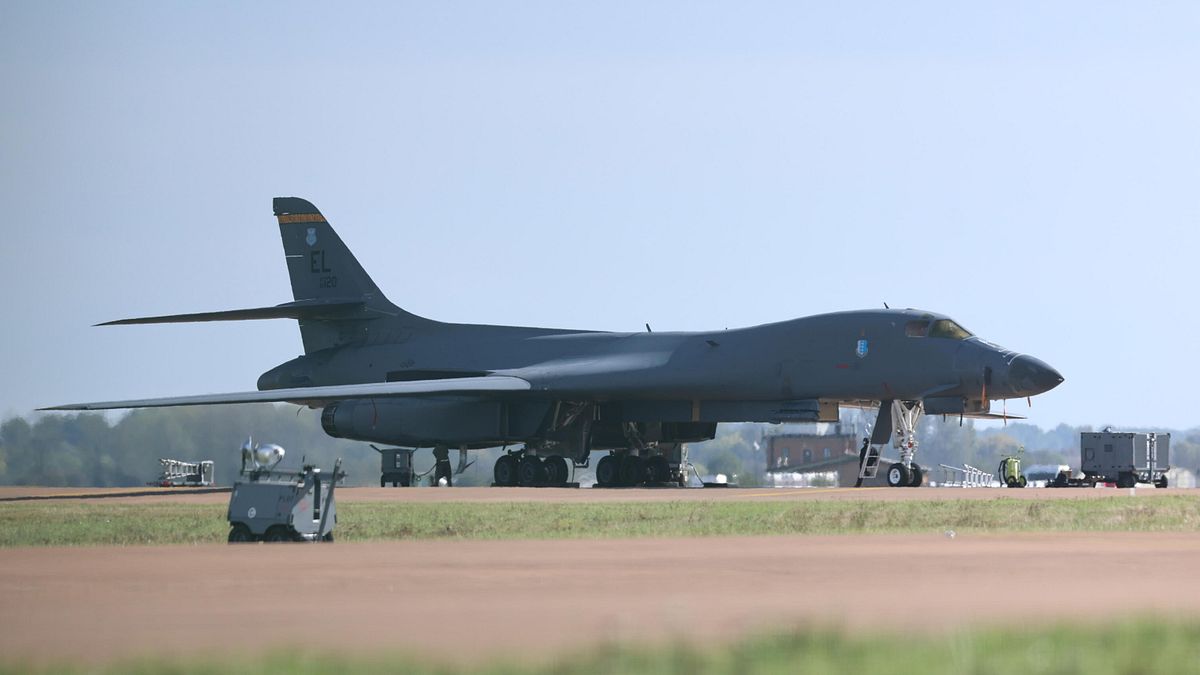
The focus of this alleged conspiracy was RAF Fairford, a critical airbase in the United Kingdom. The base holds significant strategic importance, having served as a launch point for US bombers to carry out strikes on Iran. This history makes it a high-value target for those seeking to retaliate against Western military presence in the region.
If the coordination indeed originated in Iran, it transforms a criminal conspiracy into a significant act of international tension.
The gravity of the threat was underscored by the nature of the target itself. An attack on a facility like Fairford is not merely a local security concern; it is a direct challenge to the operational capacity of the United States and its allies. The alleged plot suggests that even from within the confines of the American justice system, operatives sought to strike at the very assets that have shaped the geopolitical landscape of the Middle East.

US charges three 'Iranian operatives' over RAF Fairford terror plot ➡️ https://t.co/FWTifLgbP3 https://t.co/utEyZEzSAB
As the details of the plot emerged, the focus shifted from the mechanics of the communication to the origin of the command. British Prime Minister Andy Burnham has pointed toward a specific direction for the coordination of these activities. Burnham stated that the suspected plot targeting the base was "highly likely" to have been coordinated in Iran.
This connection places the alleged activities within the sphere of Iran-backed groups, suggesting a level of state-level or state-sponsored sophistication. If the coordination indeed originated in Iran, it transforms a criminal conspiracy into a significant act of international tension. While Iran has denied these claims, the suspicion remains a central pillar of the investigation into Al-Saadi and his alleged associates.
The path to justice is rarely a straight line, especially when national security and international diplomacy intersect. As the US Justice Department moved forward with its charges, the defense prepared to challenge the very foundation of the prosecution's case. Following the charges, Al-Saadi's lawyers filed a response disputing the claims brought forth by the government.
This legal maneuvering highlights the complexity of prosecuting cases involving alleged state-backed terrorism. The defense seeks to dismantle the narrative of a coordinated plot, while the prosecution relies on the intercepted, coded messages as evidence of a broader, more organized threat. The tension between these two accounts—the government's view of a structured terror plot and the defense's dispute of those claims—will likely define the coming legal proceedings.

🚨🇺🇸🇮🇷🇬🇧 The US has charged three alleged Iranian operatives over the plot against its bomber base in England, and the FBI ties them to nearly 20 attempted attacks across Europe and America The Justice Department says the three men, citizens of Iran and Iraq, had a role in September's alleged terror plot at RAF Fairford, the base that launched bomber strikes on Iran. The charges include conspiring to bomb a public place and financing terrorism. FBI Director Kash Patel described the wider case this way: "The subjects have been allegedly involved in nearly 20 attempted attacks throughout Europe and the United States." He says they worked for Iran's Revolutionary Guard and Kata'ib Hezbollah, the Iraqi militia it backs. These are allegations, and no trial has happened. The indictment landed a day after American tankers were moved out of a second English base over an Iranian threat. Source: Department of Justice, CBS News / Writer: Daniel
The case of Mohammad Baqer Saad Dawood Al-Saadi serves as a stark reminder of the evolving nature of modern threats. The ability to weaponize personal communication, even from within a controlled environment like a New York jail, demonstrates a persistent effort to circumvent traditional security measures. The transition from a single detainee to a suspected international plot involving RAF Fairford illustrates how localized incidents can rapidly escalate into matters of global security.
As the investigation continues, the world watches to see if the connections between the New York cell and the coordination in Iran can be definitively proven. For now, the alleged plot remains a chilling example of how the lines between personal contact and geopolitical warfare can become dangerously blurred.