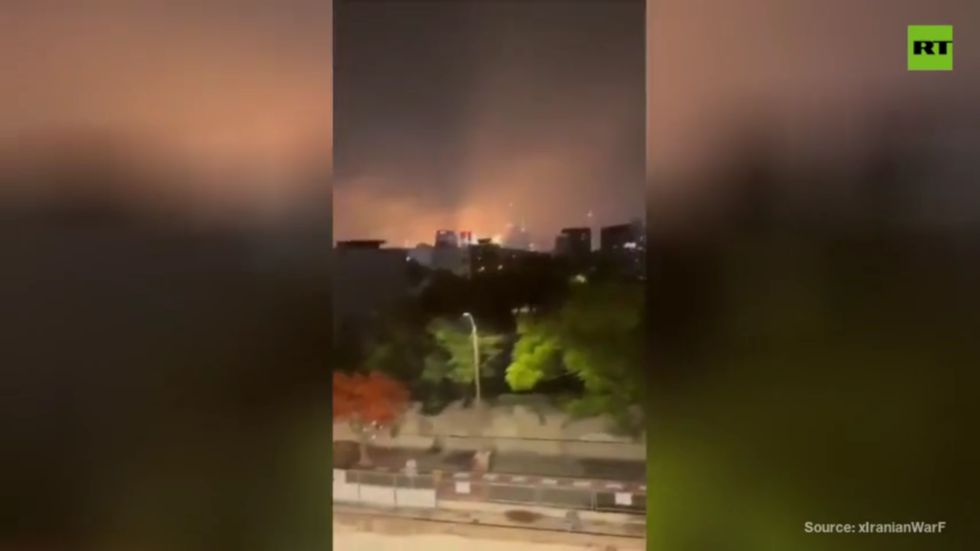
On Sunday, November 15th, residents of Bahrain reported a series of explosions, prompting safety alerts from authorities. The Bahraini Ministry of Interior urged “inhabitants to remain calm, to go to the nearest safe place and to follow the information from official channels.” These weren’t isolated incidents; they followed a similar claim just days earlier, on November 13th, when the Islamic Revolutionary Guard Corps (IRGC) asserted responsibility for an attack on a US radar system within the country. Bahrain, a small island nation in the Persian Gulf, is strategically important, hosting a significant US naval base – a key element in understanding why it has become a focal point in the escalating regional conflict.

The IRGC quickly claimed responsibility for the latest events, stating they launched six drones at the Al-Riffa US helicopter base. According to the IRGC, the attack specifically targeted air defense radar systems. This claim was delivered with a precise detail: “The American air defense radar system of the Al-Riffa helicopter base, in Bahrain, was targeted by six drones belonging to the aerospace force of the Islamic Revolutionary Guard Corps.” However, Bahraini military officials presented a different picture. They maintained that their forces successfully intercepted all incoming aerial threats before they could reach their targets, effectively neutralizing the attack. This is a critical distinction – a successful interception versus a successful strike – and highlights the ongoing struggle for control of the narrative.
The Bahraini response was swift and forceful. The country’s Foreign Ministry condemned the incident as “brutal Iranian aggression,” signaling a clear escalation in diplomatic tensions. This isn’t simply a military matter; it’s a direct accusation of hostile intent. Bahrain’s strong condemnation underscores its close relationship with the United States and its reliance on US security guarantees. The IRGC’s repeated targeting of Bahrain, a key ally, is a deliberate challenge to American influence in the region.
” He characterized the current situation as “neither war nor peace,” suggesting a willingness to negotiate but also a firm stance on Iran’s core demands.
The current situation didn’t emerge in a vacuum. The attacks are part of a broader conflict that has been simmering for nine months, sparked by US-Israeli strikes on Iran on February 28th. This initial action set off a chain reaction of retaliatory strikes and counter-strikes, primarily focused on maritime security in the Strait of Hormuz – a vital waterway for global oil supplies – and attacks on hydrocarbon transport ships, with two such vessels targeted in recent months. The Strait of Hormuz is a choke point for a significant portion of the world’s oil, making any disruption there a matter of global economic concern.
Amidst the escalating tensions, a surprising note of potential de-escalation emerged from within Iran. Mohammad Bagher Ghalibaf, the Speaker of the Iranian Parliament, stated on the same day as the drone attack that a path to ending the nine-month conflict remains open, but only if Washington meets “logical conditions.” He characterized the current situation as “neither war nor peace,” suggesting a willingness to negotiate but also a firm stance on Iran’s core demands. Ghalibaf also alluded to the possibility of Iran being able to “determine the geography of battle” if talks fail, a veiled threat of further escalation.
Interestingly, the response from the United States has been comparatively muted. President Donald Trump, speaking on the situation, characterized the conflict as “fini militairement” – militarily finished. This suggests a desire to avoid further entanglement in the region and a preference for maintaining the status quo. This stance contrasts with the aggressive actions of the IRGC and the strong condemnation from Bahrain, raising questions about the coherence of US policy. It’s a position that, while seemingly aimed at preventing wider war, could also be interpreted as a signal of weakness by regional actors.

Iran Launches Attack On US Base: On Sunday, Iran’s Islamic Revolutionary Guard Corps (IRGC) confirmed it has launched six drones at a United States (US) air defence radar system at Bahrain’s Riffa Air Base in response to what… newtelegraphng.com/iran-launches-attack-on-us-base/ https://t.co/JBbfimj9AO
As of now, the situation remains highly volatile. The IRGC continues to demonstrate its ability to project force throughout the region, while Bahrain remains a staunch US ally and a target for Iranian aggression. The possibility of a negotiated settlement exists, as suggested by Ghalibaf, but hinges on the fulfillment of unspecified “logical conditions” by the United States. Trump’s declaration of a “finished” conflict doesn’t seem to reflect the reality on the ground, where tensions continue to rise. The future of the region remains uncertain, balanced precariously between further escalation and a potential, albeit fragile, path to de-escalation.