
On November 18, in Mumbai, Shaina NC, the national spokesperson of the Shiv Sena (Shinde faction), took the stage to denounce Sonia Gandhi's autobiography Belonging: A Journey of Love. Shaina NC had come to protest, pages in hand, ready to tear them apart in symbolic anger. As the event unfolded, the act of shredding became the center of what would soon go viral.
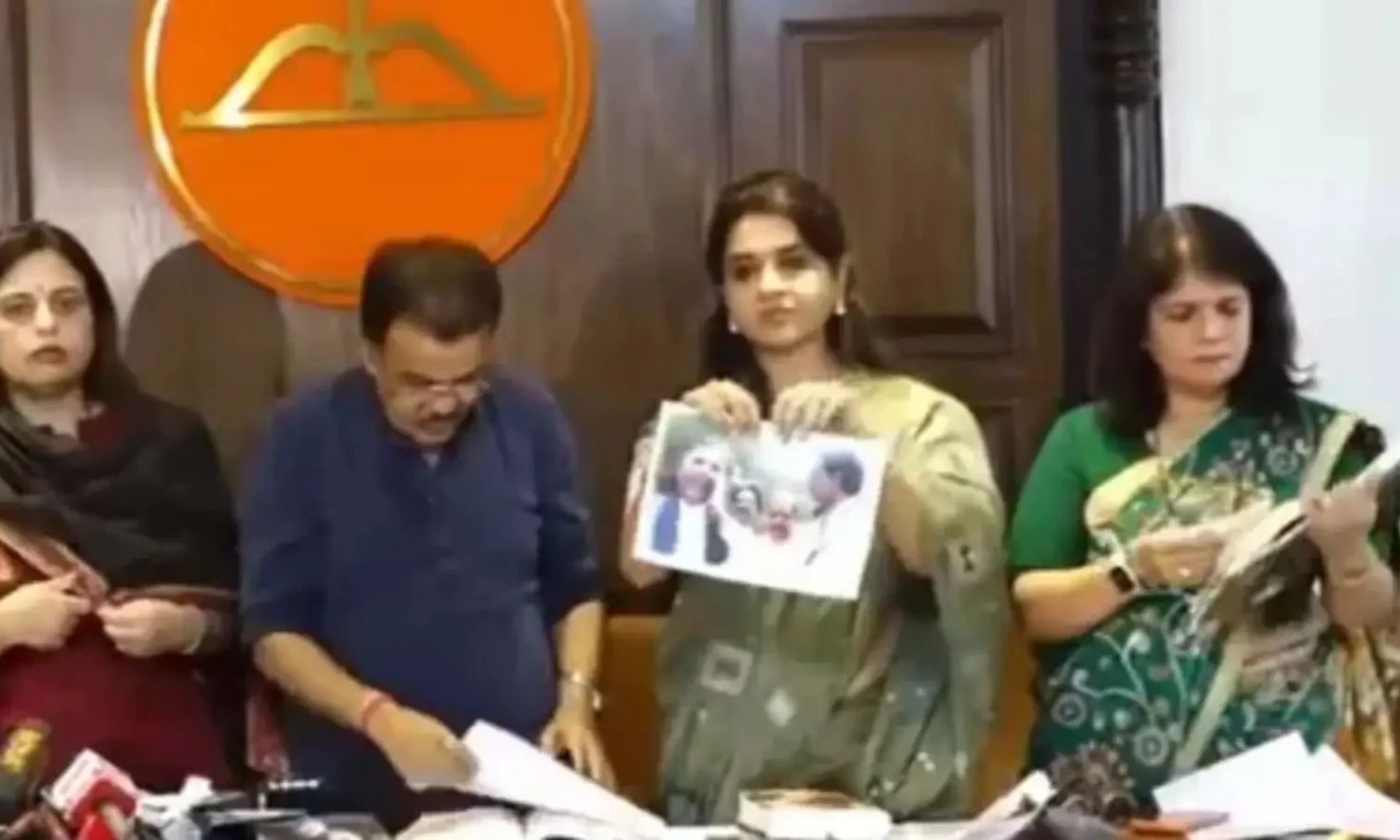
As Shaina NC tore through sheets to express her disdain, the footage shows her inadvertently catching a photograph of Balasaheb Thackeray—the late founder of Shiv Sena—in the crosshairs. The paper tore, and the image of Thackeray was ripped. In the video, Shaina NC immediately registers the error, her hands moving to conceal the damaged sheet beneath the remaining stacks. The moment is brief but telling: a protest about one book's contents had, in a single gesture, touched another's image. No one on stage intended the tear; it was, as later described, an accident born of fervor.
Within hours, the clip circulated widely on social media. The visual of a Shiv Sena leader destroying a photograph of the party's own founder became a talking point across platforms. Supporters and critics alike shared the clip, framing it through their own political lenses. The incident amplified existing tensions between the Shinde faction and the party's original wing, and it gave opposition parties a ready-made image to seize upon. The speed of the clip's spread underscored how quickly a local political moment can become a national talking point.
The incident amplified existing tensions between the Shinde faction and the party's original wing, and it gave opposition parties a ready-made image to seize upon.
The clip did not stay confined to social media. Opposition parties, including Shiv Sena (UBT) and the Congress, pounced. In the days following the press conference, leaders from these parties launched a fierce verbal attack on the ruling Shinde faction, arguing that the incident proved a lack of genuine respect for Thackeray among those who routinely invoke his name for politics. They pointed to the accident as evidence that the Shinde faction's professed reverence was, at best, performative. The demand quickly solidified: Shaina NC should apologize for the blunder, they said, and the incident should serve as a reckoning for the faction's relationship with its founding figure.

BIG BREAKING NEWS 🚨 Shiv Sena leaders tear pages from Sonia Gandhi’s book. They said - "Sonia Gandhi's book insults Veer Savarkar and Marathi identity" "The words used on pages 201 and 443 of the book give the impression that there was a fascist Hindu rule in India" "Who gave Sonia Gandhi the right to comment on the sacrifices made by Veer Savarkar?"
For the opposition, the incident was not merely a mistake but a symptom of a deeper political calculus—one that uses historical figures as pawns while accidentally (or otherwise) sidelining their legacy. For the Shinde faction, the incident represented an unfair twist: a protest against a Congress leader had inadvertently caused pain to the memory of Shiv Sena's own patriarch. Whether an apology would follow remained uncertain, but the pressure was on. The demand highlighted how a single torn page could become a metric for measuring political respect in a city where history and headline politics are never far apart.
The incident had laid bare the fragile line between political protest and historical reverence, and it served as a reminder that in the heat of the moment, the past can be accidentally reshaped by the present.

Let the people of Maharshtra know that how much @sanjaynirupam ji from Shiv Sena (Eknath Shinde faction) and clan hate Veer Sawarkar sorry ji. These are not private tweets. All are public. 😁😁 https://t.co/qpa72jFAtA