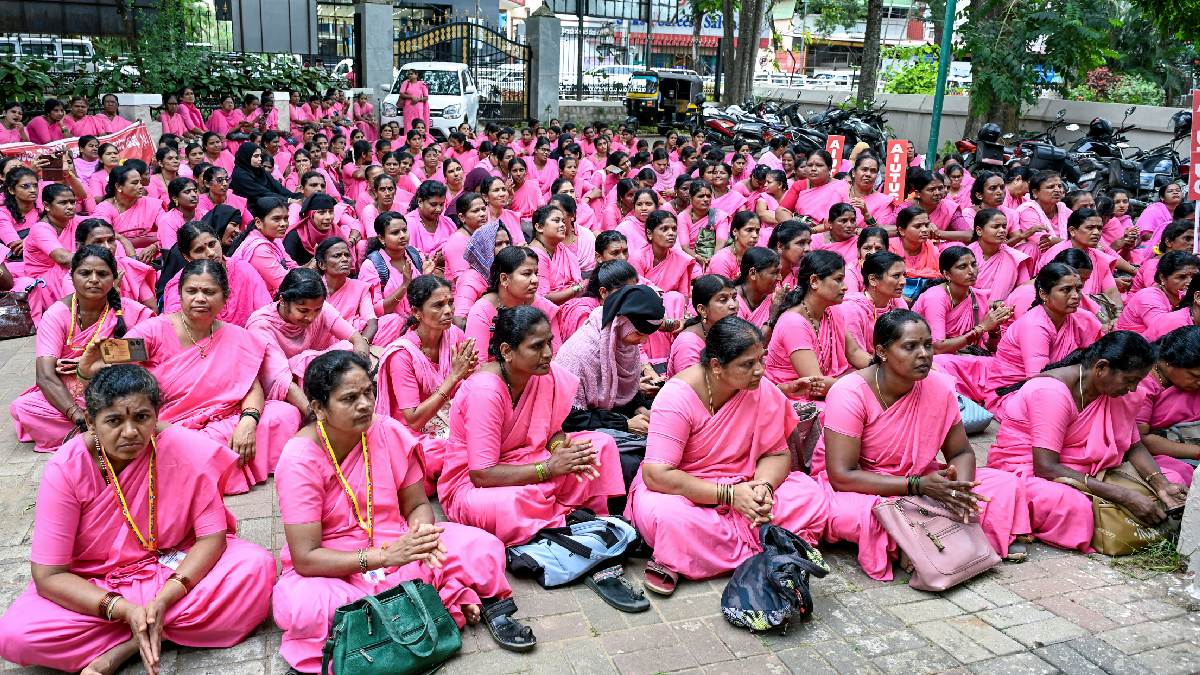
For the thousands of women who serve as ASHA workers across Karnataka, the role is less a job and more a civic calling. These Accredited Social Health Activists are the primary bridge between the formal healthcare system and the most remote corners of the state, navigating the narrow lanes of urban slums and the dusty roads of rural villages to ensure that basic health care reaches every doorstep. But for years, the economic reality of this essential work has lagged behind its social importance, leading to a breaking point that recently manifested in the heart of Bengaluru.
The tension reached a crescendo on November 17, 2026, when the Karnataka State United ASHA Workers Association began a continuous protest at Freedom Park. For twelve days, these women transitioned from their usual roles as caregivers to activists, occupying a public space to demand a fundamental shift in how their labor is valued. The protest was not a sudden outburst but a calculated stand against long-standing financial instability, turning a park into a temporary headquarters for a workforce that felt invisible to the bureaucracy it served.
While the headlines often focus on a single number, the demands brought to Freedom Park were systemic. The workers were not merely asking for a raise; they were seeking a comprehensive safety net. At the center of their plea was a demand for a minimum monthly honorarium of ₹15,000, a figure they argued was necessary to sustain a dignified life. However, the grievances extended further, encompassing the release of pending incentive funds that had been promised but not delivered, as well as the establishment of retirement benefits and guaranteed job security—protections that would transform their precarious positions into stable careers.
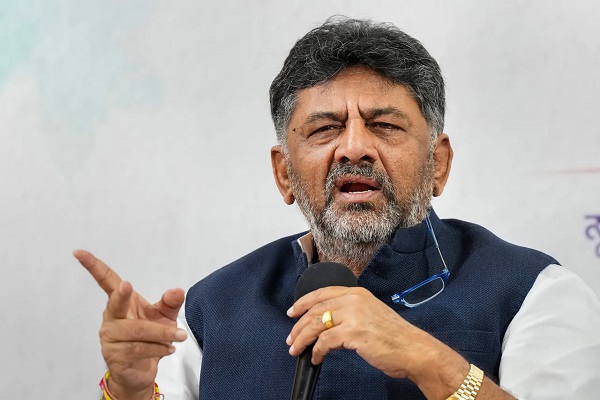
Taking to social media to frame the decision, Chief Minister Shivakumar emphasized the indispensable nature of their work.
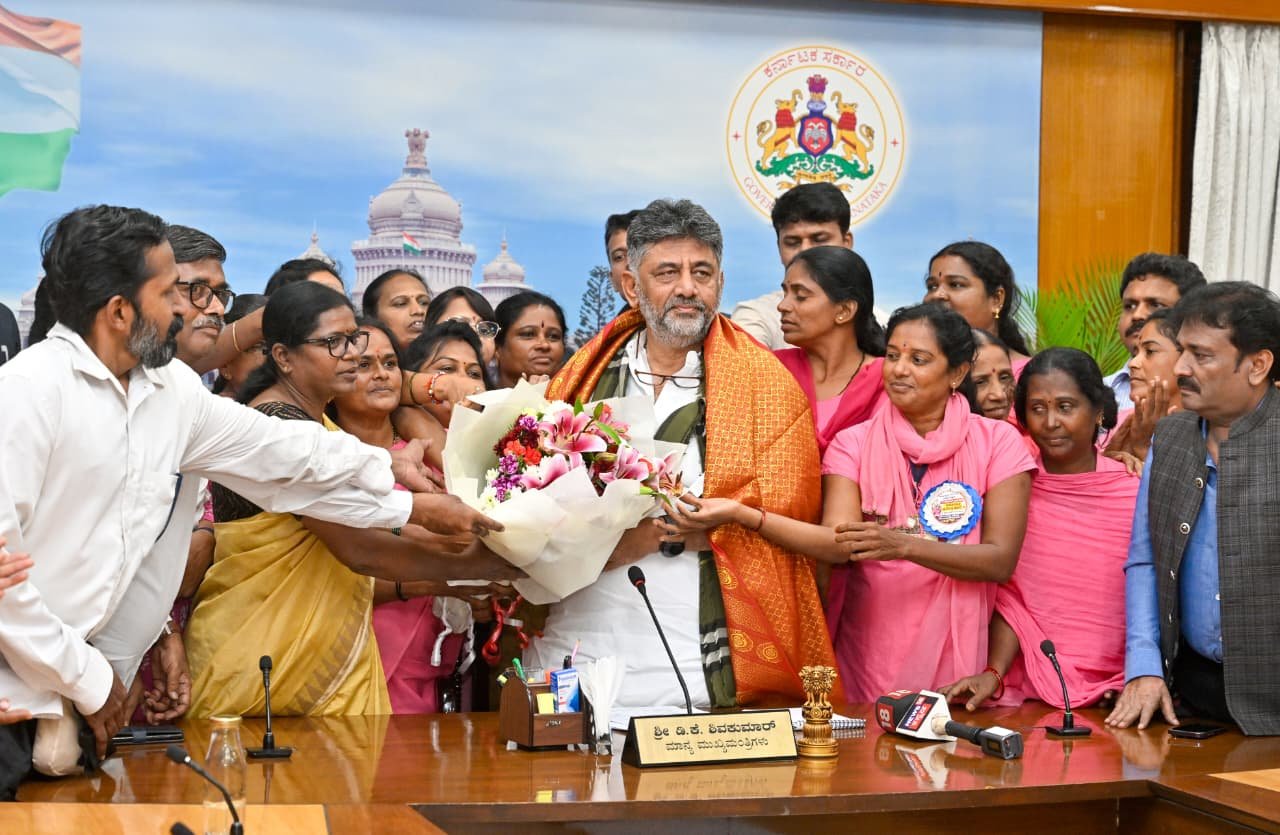
As the protest entered its second week, the Congress-led government, headed by Chief Minister D.K. Shivakumar, moved to resolve the deadlock. On November 28, 2026, the government announced a decision to increase the monthly honorarium for ASHA workers by ₹2,000. Taking to social media to frame the decision, Chief Minister Shivakumar emphasized the indispensable nature of their work. He noted that the service of ASHA workers, who visit homes in both rural and urban areas to care for the health of the people, is unique, and asserted that the state government is committed to providing economic security to their lives.
To understand the scale of this decision is to understand the scale of Karnataka’s health infrastructure. This pay increase is slated to benefit approximately 41,000 to 42,000 ASHA workers operating under the National Health Mission (NHM). The NHM is the overarching framework that coordinates these community health workers, ensuring that maternal health, immunizations, and disease prevention are managed at the grassroots level. By adjusting the honorarium for such a massive cohort, the government is acknowledging that the stability of the state's health outcomes depends directly on the financial stability of these 42,000 individuals.
Despite the government's announcement, the atmosphere following the decision has been one of tempered relief rather than triumph. The revised rate is not scheduled to take effect until January 1, 2027, leaving a gap between the current struggle and the eventual payout. More significantly, the ₹2,000 increase falls short of the ₹15,000 minimum monthly honorarium the workers had demanded. For many in the Association, the government's response is seen as a partial gesture rather than a full fulfillment of their needs, leaving the core issues of retirement benefits and job security in a state of lingering uncertainty.
As the protest at Freedom Park concluded, the state of play in Karnataka remains a delicate balance. The government has signaled its support and provided a tangible, if modest, financial boost, but the workers have demonstrated a newfound capacity for collective action. While the increase in honorarium provides a measure of immediate relief, the distance between the government's offer and the workers' aspirations suggests that the conversation regarding the true value of community health work is far from over.