
The tarmac in Shenzhen was busy that day, but nothing quite prepared the world for the specific choreography of handshakes and hugs that unfolded. It was a scene that had become almost inconceivable in recent years, yet here it was, centered on the Asia-Pacific Economic Cooperation summit. Donald Trump arrived to a warm greeting from Chinese President Xi Jinping, an embrace that signaled a moment of intense diplomatic engagement between the two heavyweights of the Western and Eastern hemispheres. However, the temperature shifted when Russian President Vladimir Putin arrived. While Xi did not meet Putin at the airport, the eventual three-way meeting promised a different kind of intensity. This was not just a summit; it was a pivotal turn in the diplomatic playbook, driven by a desire to salvage a fractured global order.
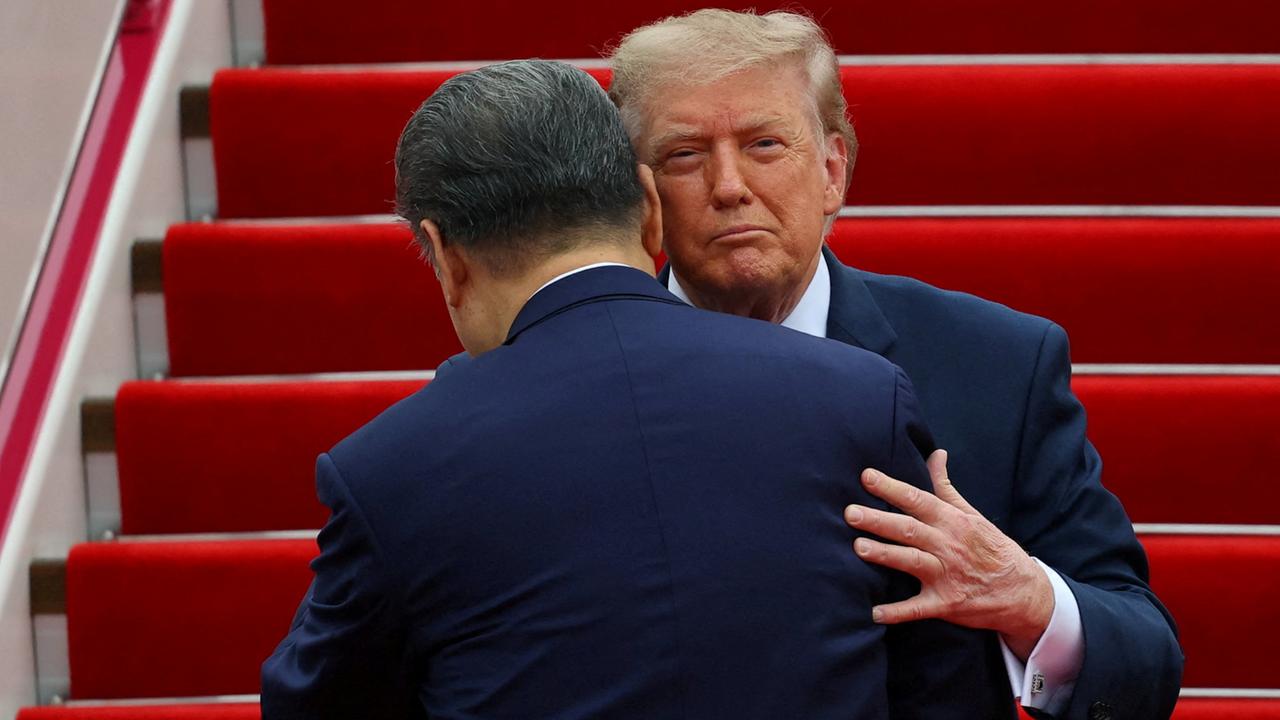
The atmosphere in the meeting rooms was a mix of formal rigidity and strategic warmth. Xi Jinping, framing the event as an exchange on 'safeguarding world peace and promoting strategic stability in major-power relations,' set a tone of constructive engagement. He argued passionately for the necessity of open markets, declaring that opening brings progress while isolation leads inevitably to falling behind. This was a clear signal to the international community, suggesting that the era of zero-sum competition was not the only path forward. For Xi, the summit was an opportunity to position China not just as a player, but as a stabilizing force in a world increasingly defined by tension.
Across the table, Vladimir Putin offered a more restrained, though no less significant, message. He expressed hope that the discussions would be 'highly useful' and noted with a notable warmth that he was 'very happy to be here among friends.' This language of friendship, coming from a leader currently at the center of a massive conflict in Europe, was a diplomatic signal that could not be ignored. It suggested that despite the invasion of Ukraine and the sanctions imposed by the West, the door was not fully shut. For Putin, who had not appeared in person at an APEC summit since 2017, the event was a chance to normalize his presence on the global stage and break the diplomatic isolation that had surrounded Russia in recent years.
He made it clear that his primary objective was to discuss ending the war in Ukraine, a topic he claimed was 'very close' to a resolution.
The center of gravity, however, remained with Donald Trump, who approached the summit with a characteristic blend of confidence and transactionalism. He made it clear that his primary objective was to discuss ending the war in Ukraine, a topic he claimed was 'very close' to a resolution. 'I think it’s very close to getting it done,' Trump stated, a claim that surprised many observers who saw the conflict as entrenched and unlikely to see a swift end. He followed up with a pledge that 'we are going to have a good meeting on that,' positioning the United States not just as a participant, but as a mediator with unique leverage. This approach leaned heavily on personal relationships, a hallmark of Trump’s diplomatic style, as he attempted to use his direct lines of communication with both Xi and Putin to drive breakthroughs that traditional diplomatic channels had failed to achieve.
Beyond the Ukraine crisis, the agenda expanded to include discussions on reducing global nuclear arsenals. This was a historic inclusion, acknowledging the existential stakes that transcend any single geopolitical conflict. The leaders engaged in warm greetings, including hugs and handshakes, which served as a visual narrative of potential cooperation. Yet, behind these gestures lay the complex machinery of statecraft. The summit was less about immediate, concrete results—which were not expected—and more about establishing a new framework for dialogue. It was a starting point, a fragile bridge between powers that had spent years digging in their respective trenches.
The context of this meeting cannot be separated from the broader strain in relations with traditional allies, particularly in Europe. As these three powers converged, the question lingered: was this a path toward stability, or a realignment that would further marginalize established Western institutions? Unconfirmed reports suggested that private meetings with other leaders, such as North Korea’s Kim Jong-un, might also occur, hinting at a web of back-channel diplomacy that extended well beyond the trilateral summit. The world was watching not just for what was said, but for what was implied by the very fact that these leaders were willing to sit together. In a moment of global uncertainty, the room in Shenzhen represented a rare, if cautious, light of engagement.