
The air over Independence Day in Albania usually hangs heavy with national pride, confetti, and the rhythmic drumming of military parades. It is a day meant to bind the country together, a pause in the political calendar that allows citizens to look forward with a shared sense of identity. But on November 4, 2023, that shared sense fractured violently. In the heart of Tirana, the celebratory mood was shattered by the sharp hiss of tear gas canisters and the roar of water cannons, marking a turning point in a social movement that has simmered for months. The government had expected a controlled holiday; instead, it faced thousands of people who had transformed their specific grievances into a broad denunciation of the state’s authority.
To understand the shock of that November afternoon, one must rewind the clock to the spring of that year. The movement did not begin with abstract complaints about democracy or economics; it began with a concrete, tangible target. In early May 2023, protests erupted in opposition to a luxury hotel project linked to Donald Trump. For a small European nation, the association with a polarizing American political figure was enough to trigger immediate backlash. The protesters saw the project as a symbol of elite entrenchment, a shiny veneer of global connectivity that offered little in the way of local benefit. It was a fight over space, over who the city belonged to, and over the optics of a new era in Albanian politics.
For several months, the movement maintained this focused energy. But the political landscape is rarely static. As summer bled into autumn, the narrative expanded. By late October, the anger that had been directed at a single construction site had metastasized into a systemic critique. The protests, which had originally been a reaction to a specific development deal, began to denounce corruption, inadequate healthcare, and the crushing weight of youth unemployment. The interim government found itself isolated not just from its critics, but from the economic realities facing a generation of Albanians who felt that the country’s rapid modernization had been built on a foundation of opacity and mismanagement.
The Transport Ministry and the Central Bank, symbols of state infrastructure and economic control, became targets of attack.
The stakes rose further as the country approached its Independence Day. This was no longer a weekend rally; it was a symbolic confrontation. The protesters intended to use the national holiday to highlight the gap between the state’s self-image and the lived experience of its citizens. The government, led by an interim administration grappling with these escalating demands, attempted to maintain order. The friction between the two groups was inevitable, a collision of civic duty and civic defiance playing out on the streets of Tirana.
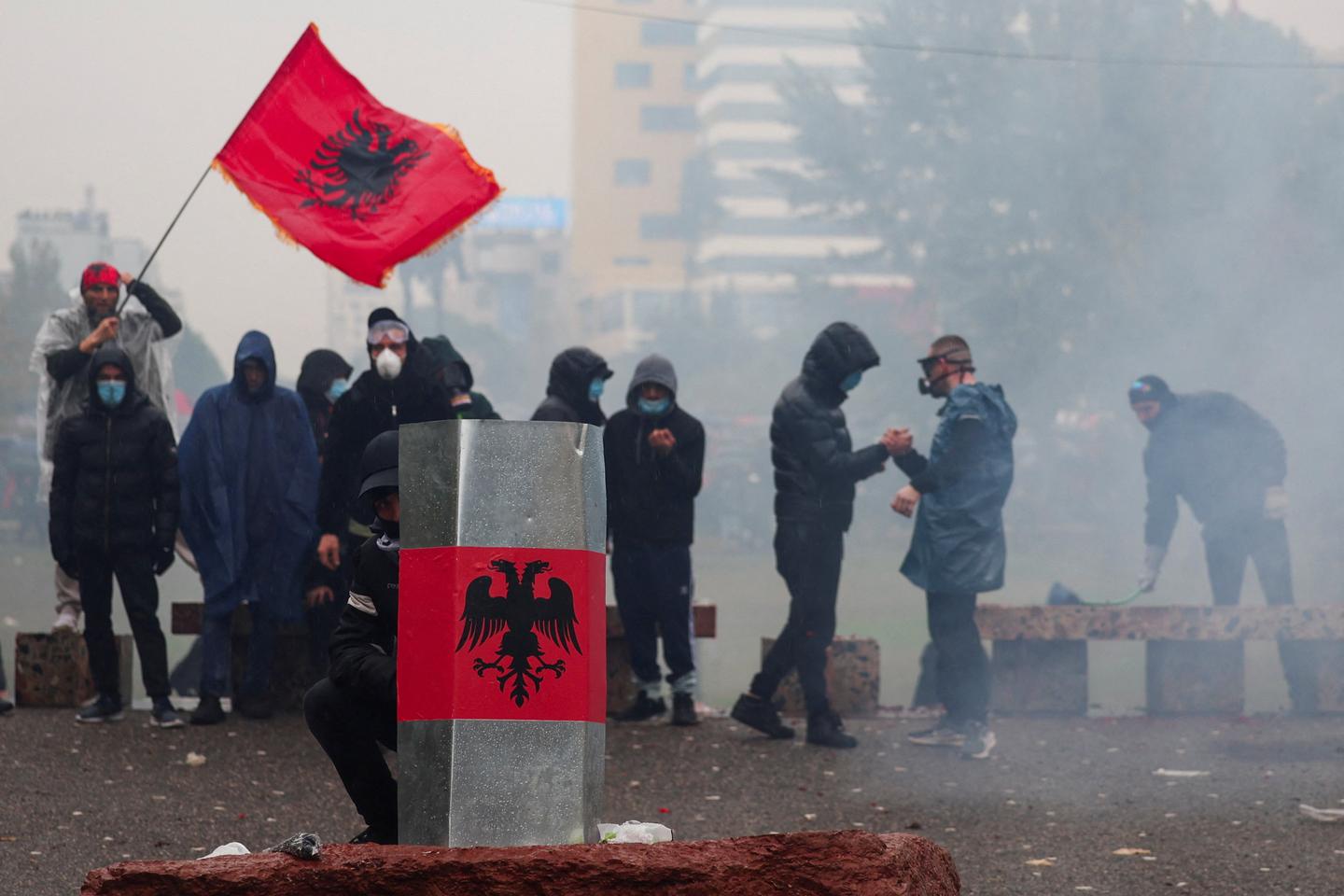
On November 4, that friction became violence. Reports indicate that masked protesters moved beyond peaceful marching, turning their attention to official institutions. The Transport Ministry and the Central Bank, symbols of state infrastructure and economic control, became targets of attack. The escalation was stark: the crowd was no longer just demanding change; they were physically assaulting the apparatus of the government. In response, the police deployed force. Tear gas filled the streets, and water cannons were turned on the crowds, creating a chaotic and dangerous scene that defined the day.
The human cost of that confrontation was immediate and visible. Eight people were injured in the clashes. Among them were two journalists, a detail that highlighted the volatility of the environment for those trying to document the event. One police officer was also injured, a reminder that the violence was not one-sided. These injuries were not just physical; they represented the breaking of a social contract. The presence of wounded media personnel signaled that the space for free expression and observation had been compromised by the intensity of the state’s response and the aggressiveness of the protesters.
In the aftermath of the holiday, the political figure most critical of the events was Prime Minister Edi Rama, who viewed the attacks on government buildings as a dangerous deviation from democratic protest. The government framed the day’s events as an attack on the rule of law, emphasizing the illegitimacy of the assault on the Transport Ministry and the Central Bank. However, the protesters and their supporters offered a different framing, casting the violence as a necessary reaction to years of ignored grievances. They argued that the interim government had failed to address the root causes of unemployment and healthcare deficits, forcing the public to take drastic action.
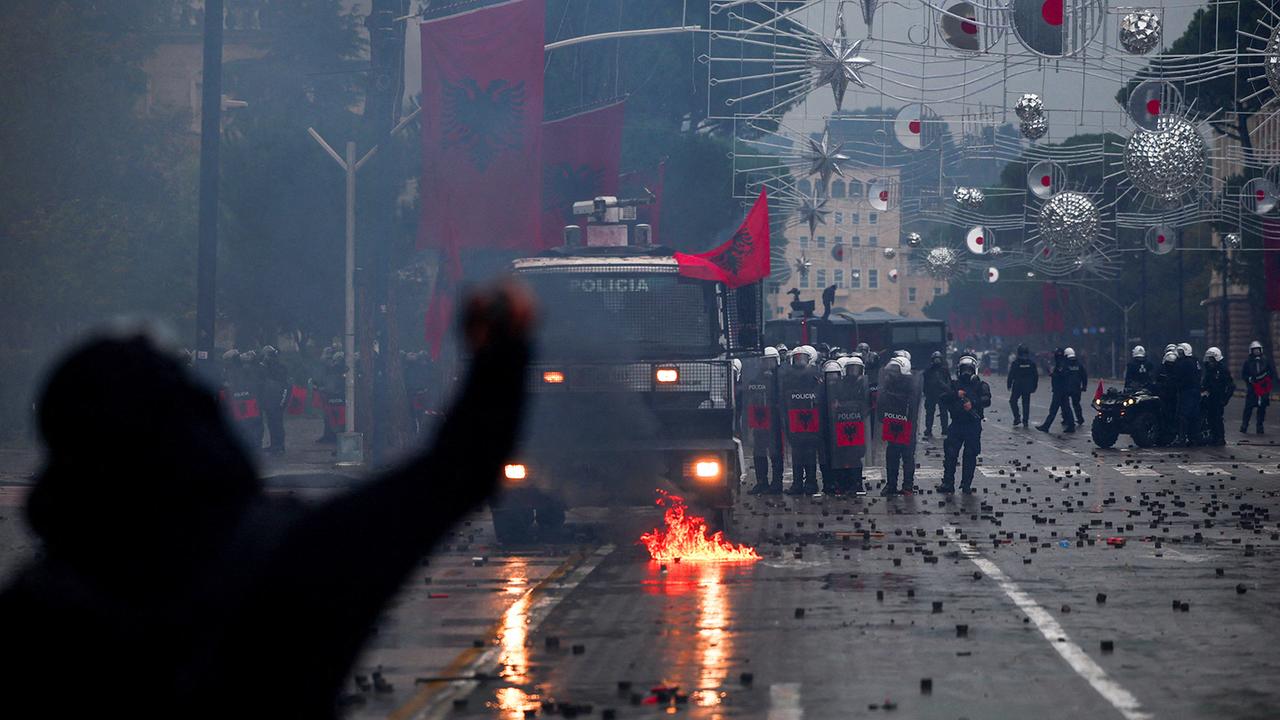
The incident left the country in a state of suspended animation. The luxury hotel that started the movement in May was now just one footnote in a much larger story about governance and trust. The clash of November 4 did not resolve the tensions; it codified them. The injuries to the two journalists and the police officer served as markers of a new, more hostile relationship between the state and the street. For now, the interim government stands firm in its denunciation of the attacks, while the protesters maintain that their demands for transparency and economic opportunity remain unmet. The independence celebrated that weekend felt less like a milestone and more like a test, one that both sides are still trying to pass.