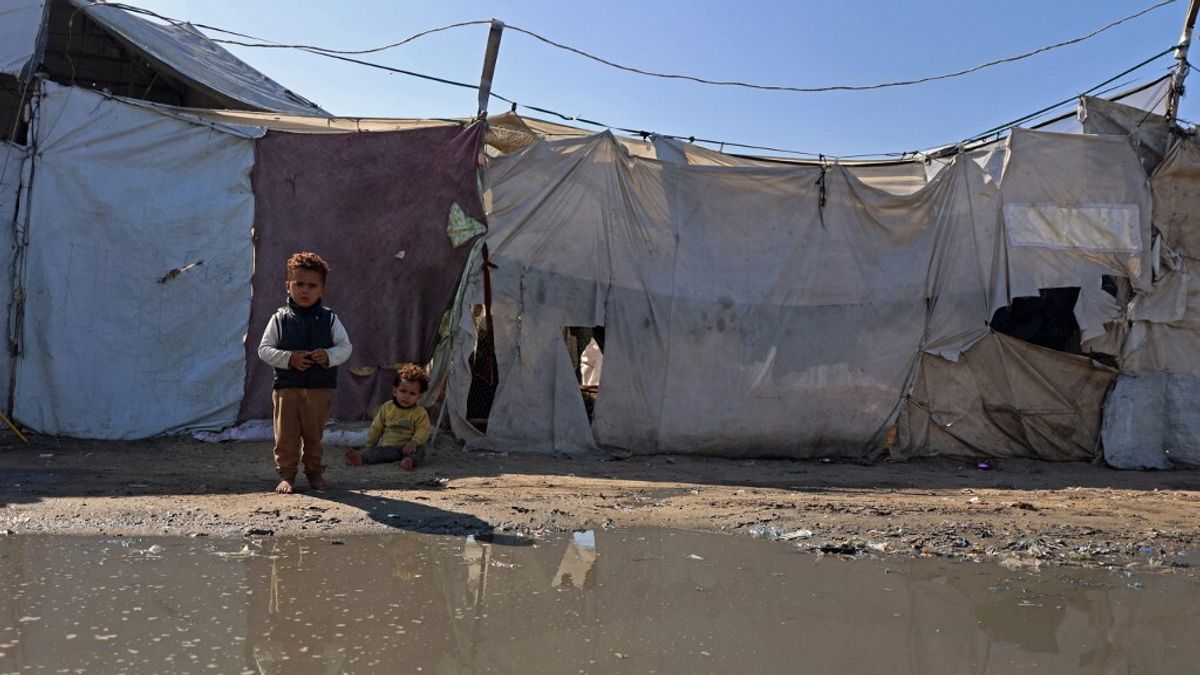
The rain that has recently lashed the Gaza Strip did not just bring water; it brought a reckoning. For the first time this winter season, the region experienced a severe storm that turned already precarious conditions into a crisis of survival. It was in the wake of these recent floods that a diplomatic front formed, led by a statement from the foreign ministers of four of the world’s largest economies: Italy, Australia, Canada, and the United Kingdom. On Sunday, November 15, 2026, these ministers issued a joint declaration that cut through the usual diplomatic caution to deliver a stark message to the Israeli government: the humanitarian situation is dramatic, and it demands immediate, unimpeded access for aid workers and supplies.

At the helm of this coordinated effort was Italian Foreign Minister Antonio Tajani. Working alongside his counterparts from the other three nations, Tajani articulated a shared view that the delay in allowing aid into Gaza had reached a critical threshold. The joint declaration was not merely a suggestion; it was a direct appeal to end what the ministers described as persistent delays. They argued that the physical infrastructure of relief is already prepared and waiting, but it is being held back at the line. The core of their argument rested on a simple, urgent reality: the goods needed to keep people alive are not far away, they are just outside the gate.
The ministers did not wait for a broader geopolitical shift to make their case. Instead, they grounded their urgency in the immediate, brutal weather. The declaration noted that recent inondations had caused further suffering, describing these floods as only the first storm of the winter season. This framing was deliberate. It moved the conversation from abstract political debates to the visceral experience of cold and wet. For thousands of people in Gaza, the arrival of winter is not a calendar event but a survival challenge. Without shelter, the transition from a difficult situation to a humanitarian disaster is swift. The ministers emphasized that the current conditions are making the ground situation truly dramatic, a phrase that encapsulates the desperation of those on the receiving end of this administrative delay.
This language was designed to provide a path forward rather than just a list of grievances.

The humanitarian situation in Gaza is dire. Today the UK and our partners send a simple message to the Israeli government: let the aid in. There must be no more delays. Israel must allow rapid and unimpeded humanitarian access to let vital shelter and supplies into Gaza. https://t.co/1GQ1qGdwx6
The single most concrete figure in the declaration is the number of tents blocked at the border: 150,000. These are not theoretical supplies; they are physical objects, loaded and ready to provide shelter. The joint statement specified that these tents, along with other first-necessity goods, are currently trapped. The ministers stressed that this blockage is what prevents the relief from reaching the people who need it most. The image of 150,000 tents sitting idle while families face the cold is the central visual argument of the declaration. It is a testament to the readiness of the humanitarian pipeline, which is functioning perfectly up until the final, most critical step: the crossing point.
Perhaps the most significant diplomatic move in the text was the framing of the crisis as reversible. The ministers argued that there is still time to intervene before winter fully sets in. They posited that the situation, while severe, is not irreversible if action is taken immediately. This language was designed to provide a path forward rather than just a list of grievances. It implied that the window for preventing catastrophic loss of life or health is open, but it is closing. The declaration called for the crossing points to be opened and for the entry of these tents to be allowed without obstruction. It is a call for a specific, physical act: opening the gate.
Beyond tents, the ministers also called for the entry of dual-use goods. In humanitarian terms, these are items that can serve both civilian and military purposes but are essential for infrastructure and survival in a crisis zone. The declaration explicitly linked the movement of these goods to the support of humanitarian operations and the broader ceasefire plan. By insisting on unrestricted access for these specific items, the ministers were attempting to decouple humanitarian aid from the broader political stalemate. They argued that allowing these goods in is a prerequisite for any meaningful progress on the peace agenda, creating a bridge between immediate relief and long-term stability.
The power of this declaration lay in its origin. It was not a unilateral demand from one small nation; it was a concerted effort by Australia, Canada, Italy, and the United Kingdom. These are four distinct diplomatic powers, each with its own foreign policy challenges, yet they found common ground on this specific issue. The joint nature of the statement amplified its weight, signaling that this was not a fringe position but a shared concern among major international actors. By signing this document, these ministers aligned their public stances, making it politically costly for any of them to back down or dilute the message subsequently.


-Bombing a hospital is not normal. -Killing people every day is not a ceasefire. -Blocking aid is not a weather crisis. -Collective punishment is not a pressure tactic. -Genocide is not self-defense. Calling Israel’s actions anything else is propaganda.
Underpinning the immediate demand for tent entry was the reference to the Gaza peace plan. The declaration did not view the humanitarian access as an isolated issue. Instead, it framed the unimpeded entry of aid as a necessary component of implementing the ceasefire plan. This linkage suggests that the ministers believe that without the physical reality of aid reaching the population, the political framework of a ceasefire will remain theoretical. They argued that the support for the peace plan requires the logistical reality of a stabilized population, which in turn requires the tents and goods they are currently blocked from delivering.
As of Sunday, November 15, 2026, the 150,000 tents remain at the border. The winter season is just beginning, and the first major storm has already passed through, leaving damage and hardship in its wake. The ministers have laid out their case: the situation is dramatic, the supplies are ready, and the delay is the primary obstacle. They have issued an ultimatum of sorts, not with threats, but with the logic of necessity. The window for intervention is open, but it is narrowing. The world is now waiting to see if the gate will open, allowing those 150,000 tents to finally do their job.