
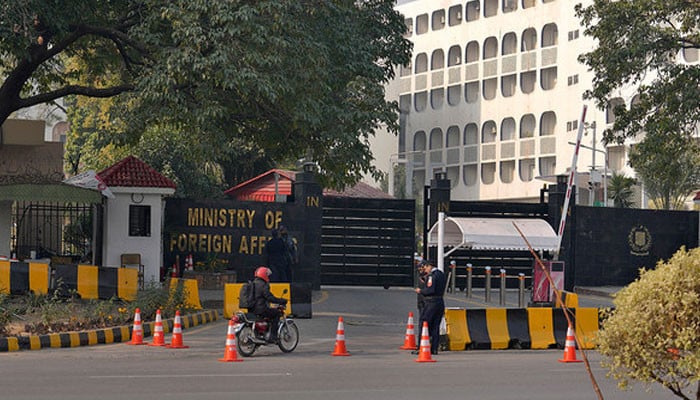
In the high-stakes theater of the United Nations, words are rarely just words; they are instruments of statecraft, designed to shape perception and assert sovereignty. On November 20, 2026, that theater became the site of a sharp diplomatic collision. The Pakistani Foreign Office issued a formal and stinging rejection of statements made by India at the UN, characterizing the Indian remarks as "undiplomatic, irresponsible and baseless."

This is not merely a disagreement over policy, but a fundamental dispute over the legitimacy of the claims being leveled. For Pakistan, the Indian intervention at the international forum was not a constructive dialogue but an unacceptable interference in its internal affairs—a move that Islamabad argues stands in direct violation of the UN Charter. When nations accuse one another of violating the very rules that govern their coexistence, the friction threatens to move beyond rhetoric and into the realm of systemic instability.
While the exchange at the UN focused on allegations regarding Pakistan's internal landscape, Islamabad quickly sought to shift the lens toward what it considers the true drivers of regional tension. Central to Pakistan's counter-argument is the issue of water security, a vital resource that underpins the survival and economic stability of the region.
However, the path to resource development is being obstructed by a deeper, more violent conflict.
The Foreign Office spokesperson did not shy away from the gravity of this issue, asserting that India has failed to address Pakistan’s legitimate concerns regarding the "weaponization of water." In the context of South Asian geopolitics, water is more than a commodity; it is a lifeline. By framing the issue this way, Pakistan is signaling that the security of its water supply is being used as a tool of hostility, complicating the nation's ability to manage its natural resources and ensure the stability of its populations.
This tension extends into the very earth beneath Pakistan's feet. The diplomatic friction has touched upon the development of Pakistan's mineral resources, a sector critical to the nation's economic future. However, the path to resource development is being obstructed by a deeper, more violent conflict.
Pakistan has leveled serious accusations against India, claiming that there is a pattern of patronage toward terrorist activities within its borders. Specifically, the Foreign Office pointed to the Balochistan and Khyber Pakhtunkhwa regions, noting that these concerns regarding instability and terrorism have been raised repeatedly. By linking Indian diplomatic remarks to the security situation in these specific provinces, Islamabad is attempting to paint a picture of a neighbor that is not merely critical in speech, but actively undermining Pakistan's internal security and its ability to harness its own natural wealth.
As the dust settles on this particular exchange at the United Nations, the underlying fault lines of the subcontinent remain visible. The Pakistani Foreign Office concluded its response with a call for a change in priority. Rather than what it termed the spreading of "falsehoods" on the international stage, Islamabad urged India to focus on the implementation of United Nations resolutions concerning Indian-occupied Kashmir.
This remains the central, unresolved pivot of the relationship. By directing the conversation back to Kashmir, Pakistan is attempting to frame the current diplomatic spat as a distraction from long-standing international mandates. For now, the exchange on November 20 serves as a stark reminder that at the UN, the battle for legitimacy is fought through a relentless cycle of accusation and rebuttal, leaving the core issues of water, security, and territory as deeply contested as ever.