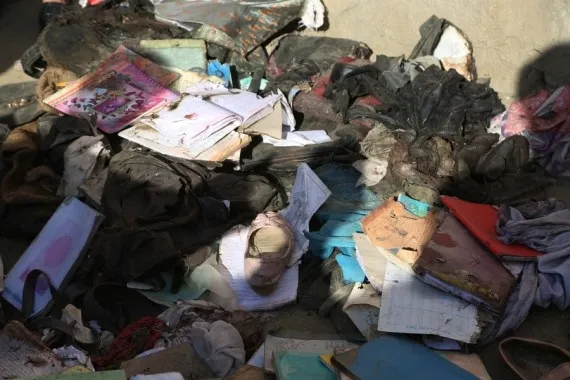
On the morning of 27 November 2026, the quiet rhythm of school life in the Andarsir district of Asadabad was shattered by a roar that sent shockwaves through the rows of desks and the unsteady steps of students. Preliminary reports, later confirmed by the regional hospital, placed the detonation just before noon. The explosion did not come from a distant artillery strike; it sprang from a residential house next to the school, where piles of industrial explosives intended for mining were stored.

The house that border‑lined the school was a makeshift depot for the same blasting agents that clear hazardous rocks from the rugged Kunar‑Nuristan highway. Samiulhaq Haqbayan stated that these explosives, meant for mining operations and clearing hazardous rocks from the mountains along the Kunar‑Nuristan highway, were stored in a residential building adjacent to the educational facility. The proximity of the stored ordnance to the school turned an ordinary classroom into a powder keg, turning a routine lecture into a sudden, deadly nightmare.
Mula Dad, head of the regional hospital, reported that at least seven students had died and 97 people were injured in the initial assessment. The building’s walls sagged under the blast’s force, scattering wreckage among the frightened survivors. Even as ambulances slammed into the crowded streets, distant sirens echoed the escalating urgency; the hospital’s waiting rooms filled with a cacophony of cries and antiseptic breath.
The recurring pattern indicates that the invisible threat of residual explosives is cloaking the nation’s schools, turning corridors into corridors of fear.
The Interior Ministry was quick to respond, attributing the tragedy to negligence and insufficient precaution. Abdul Matin Qani, speaking to the press, relayed that “preliminary findings showed the blast occurred just before noon at an explosives storage site belonging to mining companies near a school in the Andir Sir area of Asadabad.” The ministry’s statement amplified a larger conversation: who is accountable for ensuring that explosives never end up in a child’s corner?
Andarsir’s loss was not an isolated incident. In the span of a week Afghanistan witnessed three blasts at educational facilities: the earlier tragedies in Kapisa and Farah provinces were likewise linked to unexploded ordnance. The recurring pattern indicates that the invisible threat of residual explosives is cloaking the nation’s schools, turning corridors into corridors of fear.
Yousuf Hammad’s stark statistics punctuated the broader crisis: since the beginning of 2026, 344 people—most of them children—have been killed or injured by landmine and unexploded ordnance explosions across Afghanistan. The land, sprawling over 900 square kilometres, remains ruggedly littered with dormant threats. Haroon Yousufi warned that the mental well‑being of Afghans has been profoundly shaken by the invisible menace that lingers long after conflicts end.
Today, the Andarsir school stands half‑collapsed, its corridors still echoing with the immensity of loss. The investigation continues to unravel how industrial explosives, stored heedlessly beside a classroom, became the agent of catastrophe. As the province rehearses the word ‘negligence’ in official statements, the very same word rings in the halls of education—an unsettling reminder that the price of progress in Afghanistan often comes at the cost of unborn futures. The tragedy remains a stark, living testament to the war’s lingering shadows and the urgent need to secure schools from the very tools that build roads.