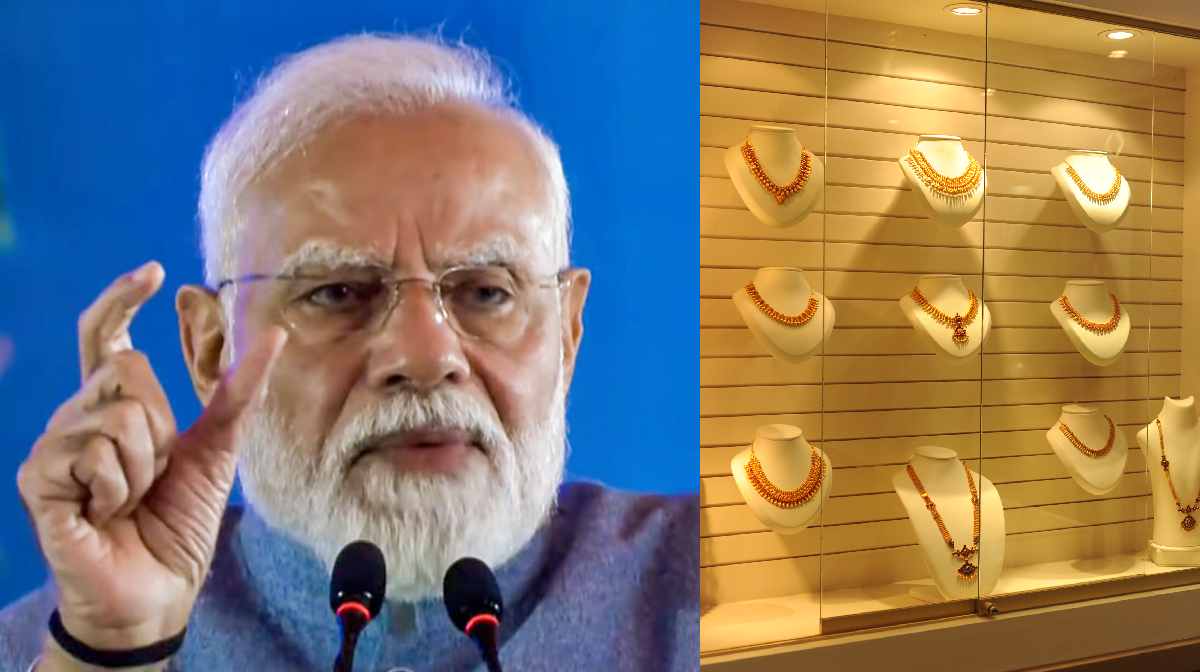
In the bustling markets where gold has long been the ultimate symbol of security and status, a subtle but significant shift has taken place. It is a change not driven by market volatility or central bank interest rates, but by a collective decision made by the people themselves. Prime Minister Narendra Modi recently observed that his recent appeal to the public—to refrain from purchasing gold unless absolutely necessary—has been met with a surprising and effective response. This wasn't merely a suggestion; it became a movement of economic restraint that has directly influenced the cost of the precious metal.

Speaking at the 5th National Skill Dikshaant Samaram in Lucknow on Saturday, the Prime Minister noted that the public's willingness to heed his advice has resulted in a tangible decrease in gold prices. In a world where consumer behavior is often dictated by impulse and tradition, the decision to step back from the jeweler's counter represents a rare moment of synchronized national discipline.
The appeal was not issued in a vacuum. It arrived during a period of heightened economic instability, a time when global tensions—specifically the conflict between the US and Iran—have created a sense of uncertainty regarding resources and currency. To manage these pressures, the Prime Minister's guidance extended beyond the jewelry box, encouraging citizens to adopt more sustainable habits: using public transport, working from home, and avoiding unnecessary expenditures of foreign currency, such as overseas travel or lavish weddings abroad.
The response was a testament to the nation's resilience, as the people chose shared sacrifice over individual comfort.
By curbing the demand for gold, the Prime Minister suggested that the nation is effectively managing its resources and saving currency, protecting the domestic economy from the whims of global instability. It is a strategy of defensive conservation, turning individual restraint into a collective economic shield.
To understand the weight of this moment, one must look back to a different era of crisis. During his address, Modi drew a profound historical parallel, connecting the current movement to the leadership of former Prime Minister Lal Bahadur Shastri. In 1965, India faced a severe food crisis triggered by a halt in the US grain supply, specifically wheat, under President Lyndon B. Johnson.
During that period of scarcity, Shastri did not merely issue policy mandates; he made a moral appeal to the heart of the nation. He asked citizens to voluntarily skip one meal a week to ensure the country could weather the storm. The response was a testament to the nation's resilience, as the people chose shared sacrifice over individual comfort. Modi argued that the spirit of that era has not faded; rather, it has evolved to meet the challenges of a modern, globalized economy.
This connection between a mid-century food crisis and a modern economic plea serves to highlight what the Prime Minister views as the enduring character of the Indian people. The ability to listen to a leader's call for restraint—whether it concerns a meal on a plate or a bar of gold—is presented as a fundamental trait of the national identity.
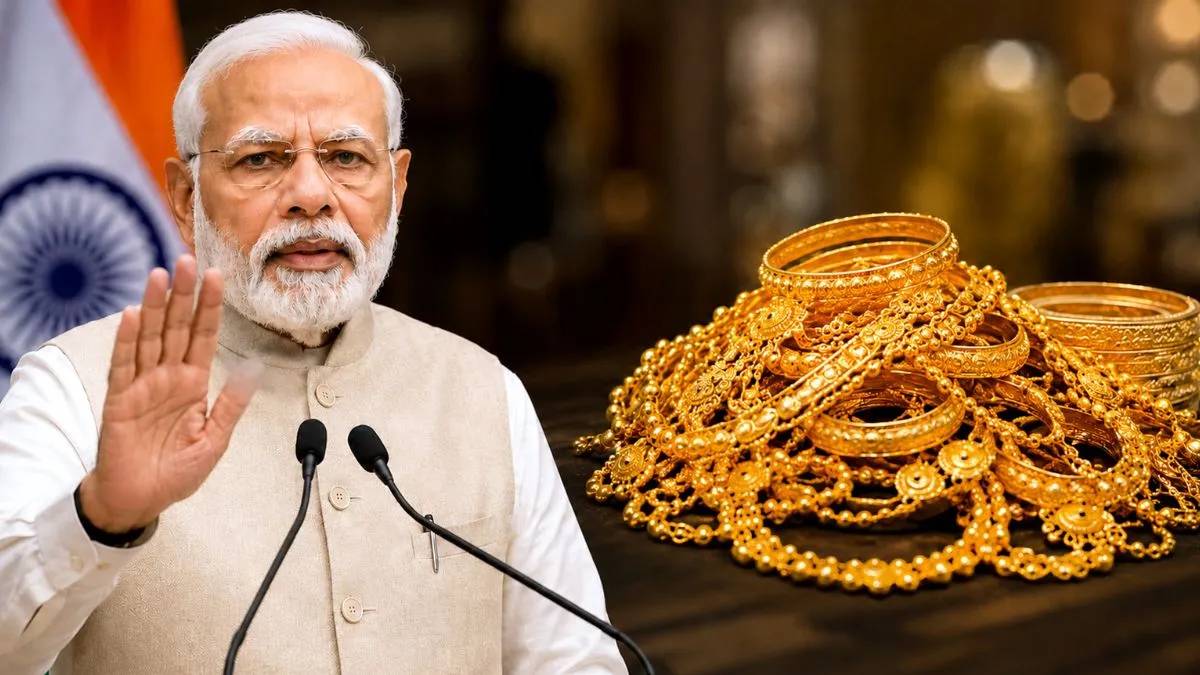
"Just as Lal Bahadur Shastri ji appealed to citizens to skip one meal and the country listened, my country's same character has remained today," Modi remarked. This sentiment suggests that the strength of the nation lies not just in its industrial or technological growth, but in the psychological unity of its citizens when faced with external pressures.
The mechanics of the current situation are straightforward but powerful. Gold is often viewed as a hedge against inflation and instability, but when a massive population simultaneously decides to hold back on purchases, the sudden drop in demand exerts downward pressure on prices. "If not necessary, do not buy gold," Modi had urged, and the market responded. "My appeal received a large response from citizens, who bought less gold and saved money."
This feedback loop—where a government appeal leads to reduced consumer demand, which in turn stabilizes or lowers prices—demonstrates a unique form of economic governance. It is a move away from traditional stimulus and toward a model of managed conservation.
As the world continues to grapple with the fallout of the US-Iran conflict, the importance of managing foreign currency and domestic resources becomes even more acute. The Prime Minister's broader strategy of encouraging public transport and reducing overseas spending is designed to insulate the Indian economy from the volatility of international markets.
By treating the economy as a shared resource that requires careful stewardship, the government is asking for a level of mindfulness that goes beyond simple budgeting. It is an invitation to view personal spending through the lens of national stability.
As the 5th National Skill Dikshaant Samaram concluded, the underlying message remained clear: the capacity for collective action is one of India's most potent tools. Whether facing a shortage of grain in 1965 or the complexities of global currency fluctuations in 2024, the mechanism of response remains the same. The Prime Minister's observations in Lucknow suggest that the nation's ability to pivot in times of uncertainty is not just a matter of policy, but a deeply ingrained social habit. For now, the gold markets reflect a public that is listening, choosing to save rather than spend, and proving that even in a modern economy, the power of a simple appeal remains undiminished.